

Social commerce – using social media to increase sales

Since the beginning of the 2000s, social commerce has made huge advances in popularity. In the early days, just a handful of companies were testing how they could implement strategic marketing goals like a tighter customer connection and product advertising. Now, social media networks are hugely popular among customers and brands. Facebook, Instagram, YouTube and co. enable even smaller and middle-sized businesses to directly sell their products to consumers.
What is social commerce?
The term “social commerce” was coined by technology blogger Steve Rubel and venture capitalist David Beisel back in 2005/2006. It describes digital commerce that has a social component. In this way, companies are able to attract potential new customers by utilizing network-based communication platforms. At the core, the definition of social commerce describes a form of modern recommendation marketing. It’s like Beisel said:
“What better way to advertise a product than to have a friend recommend it to you?”
David Beisel, Source: https://genuinevc.com/2005/12/06/the-beginnings-of-social-commerce/
When it comes to social selling, the following aspects play an important role:
- Active participation of the customer (for example, through comments, likes, shares, etc.)
- Direct integration of the customer in the design and development of products
- A personal connection and good communication among customers – word of mouth via the internet, messengers, or apps is particularly important, as it helps brands boost sales and customer engagement through offers or competitions
- Personal and emotional long-term connection between the customer and the brand
Social commerce harnesses these factors to reach its goals: social talk helps to advertise products and the brand. By tying a product to a target audience, entire communities can be built and fostered by a single brand. At the same time, social commerce is all about sharing product and brand information with customers. Businesses can even recruit brand ambassadors for their special events and campaigns. With social media usage spreading, customer conversion has become an increasingly important task among retailers. But how can you turn a targeted (and interested) individual into a potential customer of your products? Brands that succeed at turning a target audience into customers are said to have high conversion rates.
As social media became increasingly differentiated, marketing methods evolved. With the success of Instagram, for example, the connection between creators and fans has moved into the foreground. That’s where influencers come in. Influencers and creators are often treated like idols across popular social media apps. This has created an entirely new arm within marketing – influencer marketing – which harnesses the endorsement of branded or sponsored products by influencers. It’s a more organic way of achieving conversions compared to the often disruptive advertisement.
These strategies are useful because they boost the acceptance of sponsored posts and intensify the connection between the customer and a product. Customer willingness to engage with a product and their desire to own it increase. The emotional involvement and direct link to a product (for example, via a web shop link) make the purchasing experience much more efficient.
But trust remains the most important factor in turning potential customers into buyers. By using social media, brands can establish a more personal connection with their customer base.
Social proof is another important aspect of social commerce. Customers tend to trust in the collective intelligence: if other users in a community purchased and liked a product, it cannot be a bad product. That makes product likes, comments, and positive customer reviews all the more important as part of a successful social commerce strategy. If a product has positive reviews, other customers are more easily convinced to purchase the same. That psychological and social phenomenon is particularly evident on Amazon: Products with few or dominantly negative reviews rank lower in search results and are rarely bought. Sellers with positive reviews, on the other hand, profit from the social conclusiveness and tend to make more sales.
Selling on social media – what are the options and techniques?
Small and mid-sized businesses can choose from a wide range of social networks to advertise and sell their products on. The most important platforms for social shopping include: Facebook (founded in 2004), Twitter (founded in 2006), Instagram (founded in 2010), and Pinterest (founded in 2010).

Social commerce on Facebook
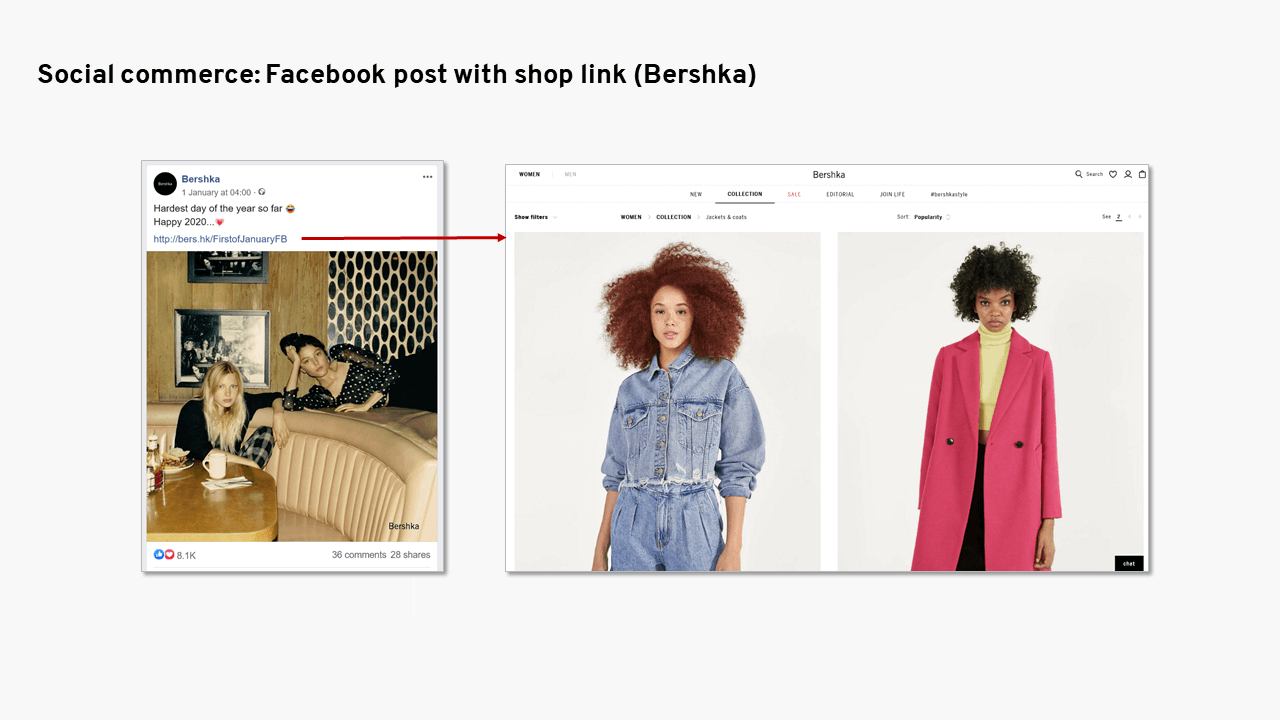
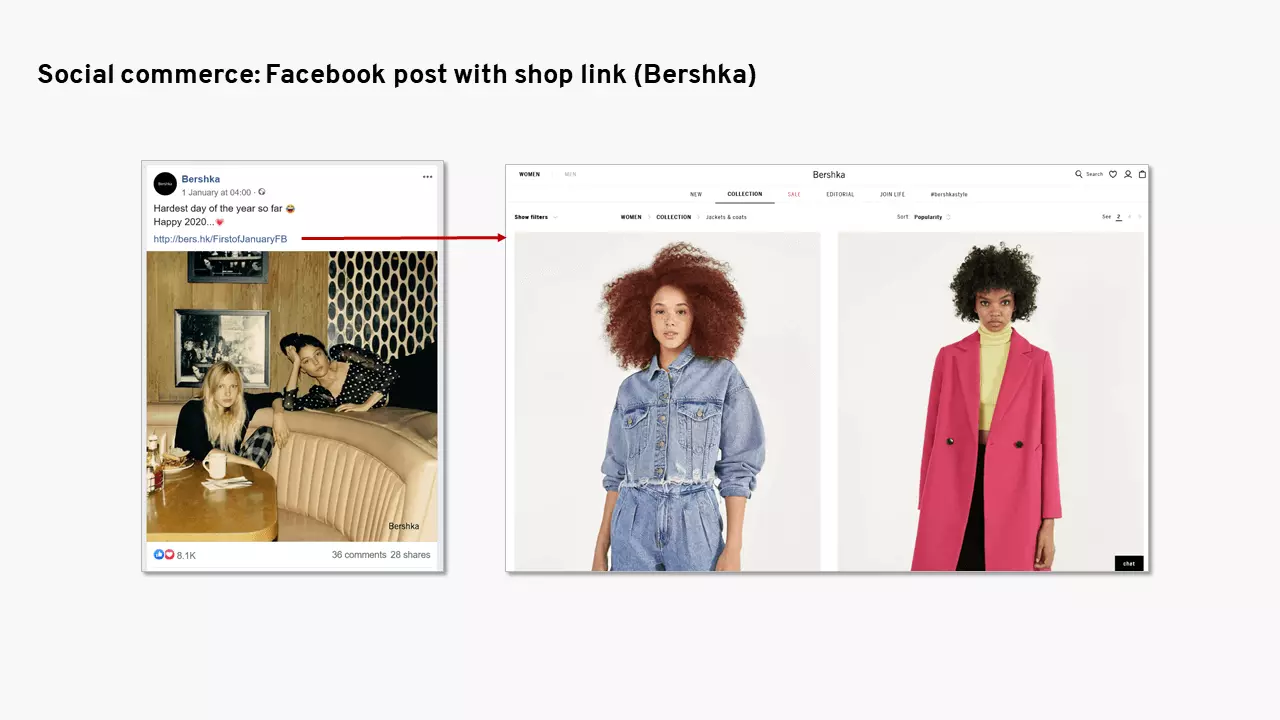
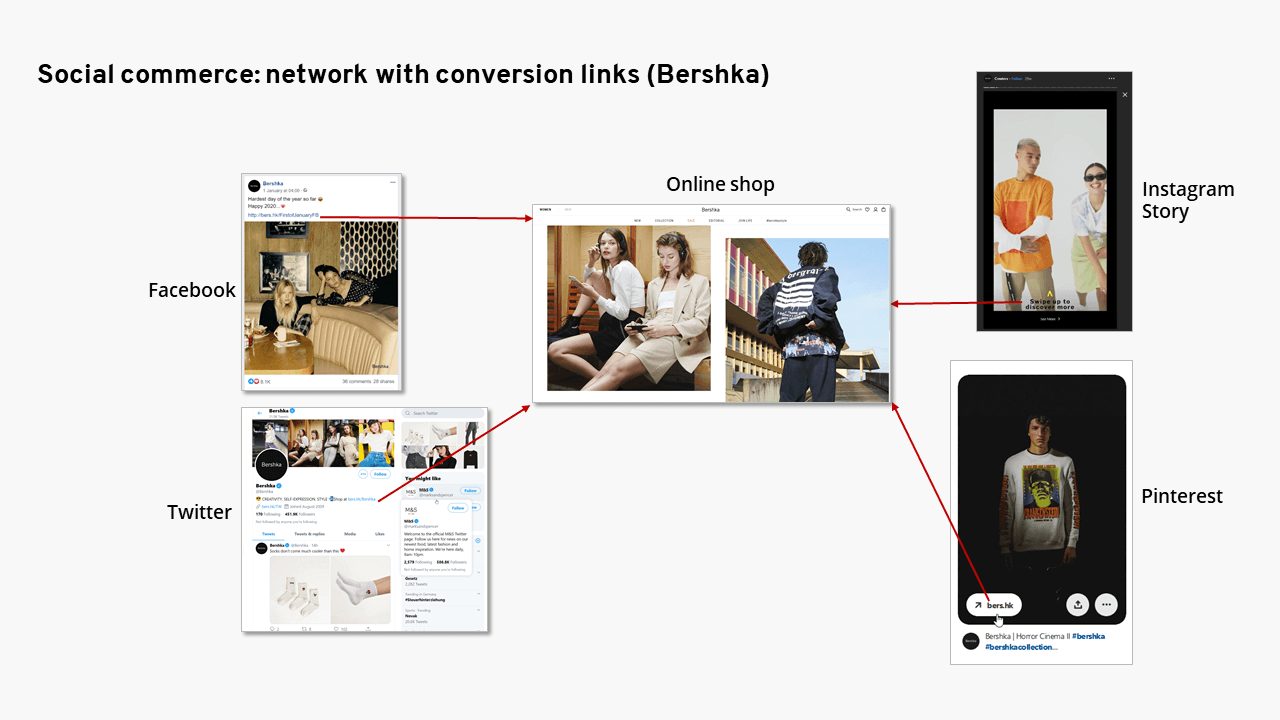
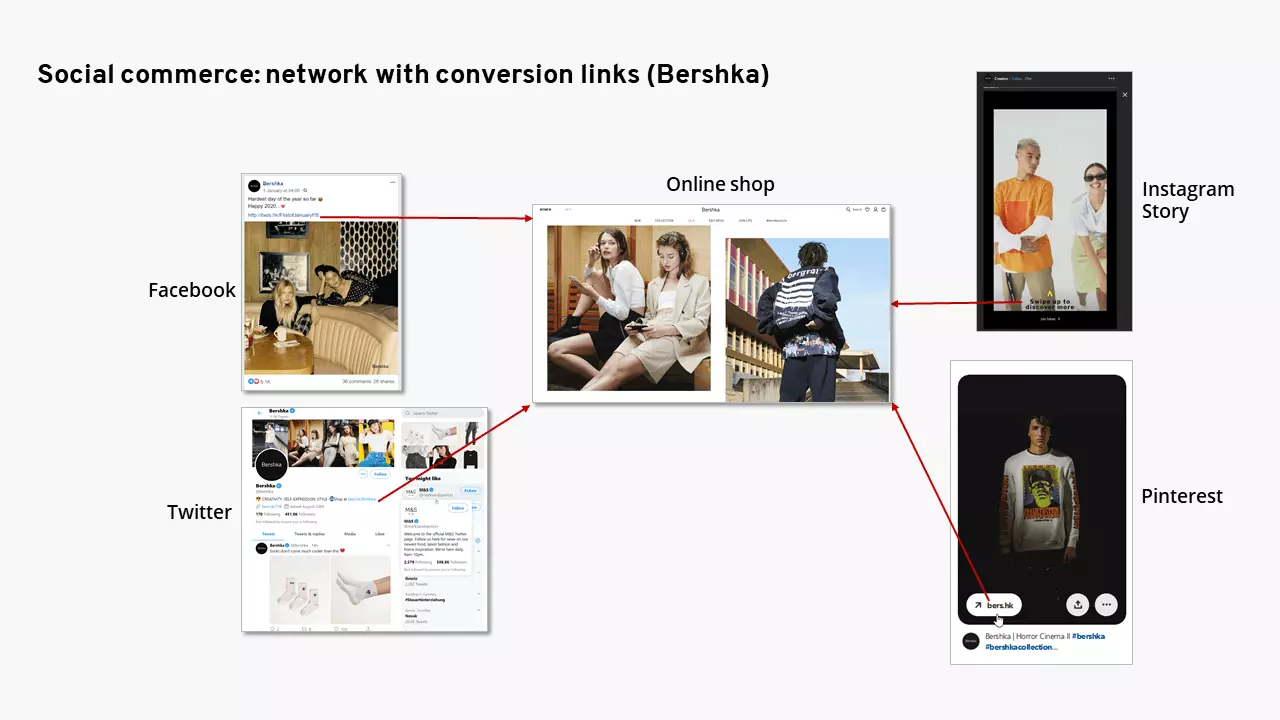
It’s easy to sell your products and services on Facebook. A business or fan page with images, graphics, videos, and text will usually suffice to get you started on the popular social network. Facebook even rolled out a “shop now” call-to-action button so customers can check out straight away. But there are also plenty of specialist e-commerce tools brands can choose from such as dynamic ads. Dynamic banner ads are great tools to automatically adapt ad content and ad campaigns to specific target audiences. With over 2.4 billion monthly active users globally, the potential reach of these marketing tools is enormous. Activities relating specifically to selling on Facebook are also referred to as f-commerce.
- Sell on social media in minutes
- Manage it all from one platform
- Works with any product or service
Social commerce on Instagram
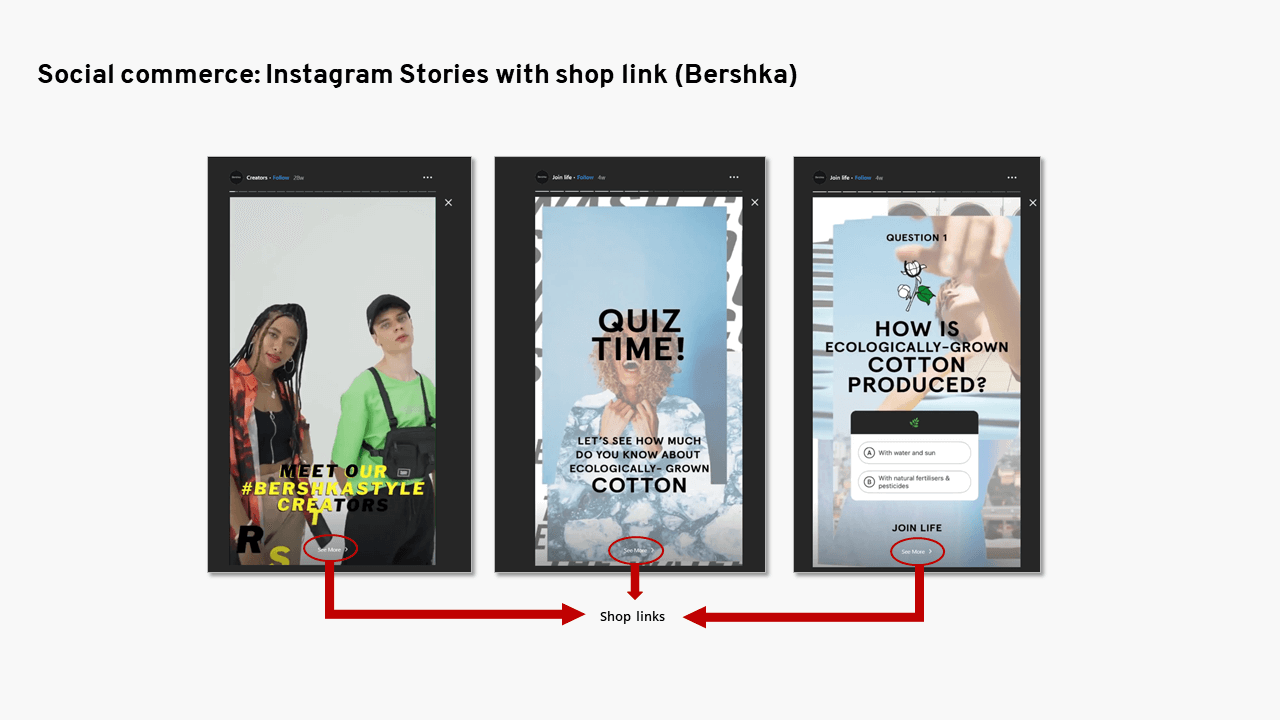
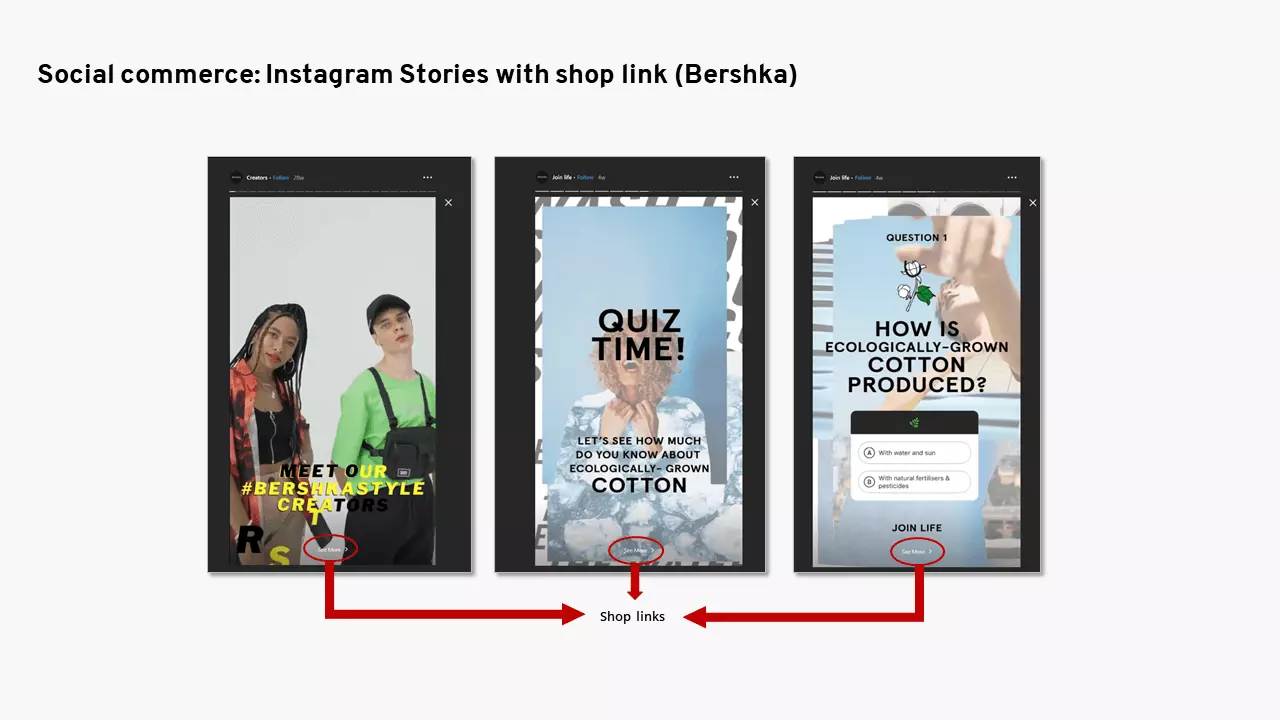
According to Instagram’s own data, the popular imaging app now has over 1 billion users worldwide. What started with photos and short video clips has turned into an app that now features opportunities for extended storytelling using Instagram Stories. Even special event live streams are possible. Favorite advertising tools include shopping ads, Stories ads, video ads, and swipeable carousel ads. Instagram is well-known for its influencer marketing which predominantly engages the younger generations – 60% of its users are aged 18 to 24 years.
Lifestyle brands (e.g. those in entertainment, fashion, beauty, design, and food) are particularly fond of using the app to promote their products. According to Adobe research, Instagram now drives 10.7 percent of social referral to retail sites. Another study found that brands were able to boost their traffic by 1,416% using shoppable posts on Instagram.
Learn more about "Live streaming shopping: the future of e-commerce?" in our Digital Guide article on the topic.
Social commerce on Pinterest
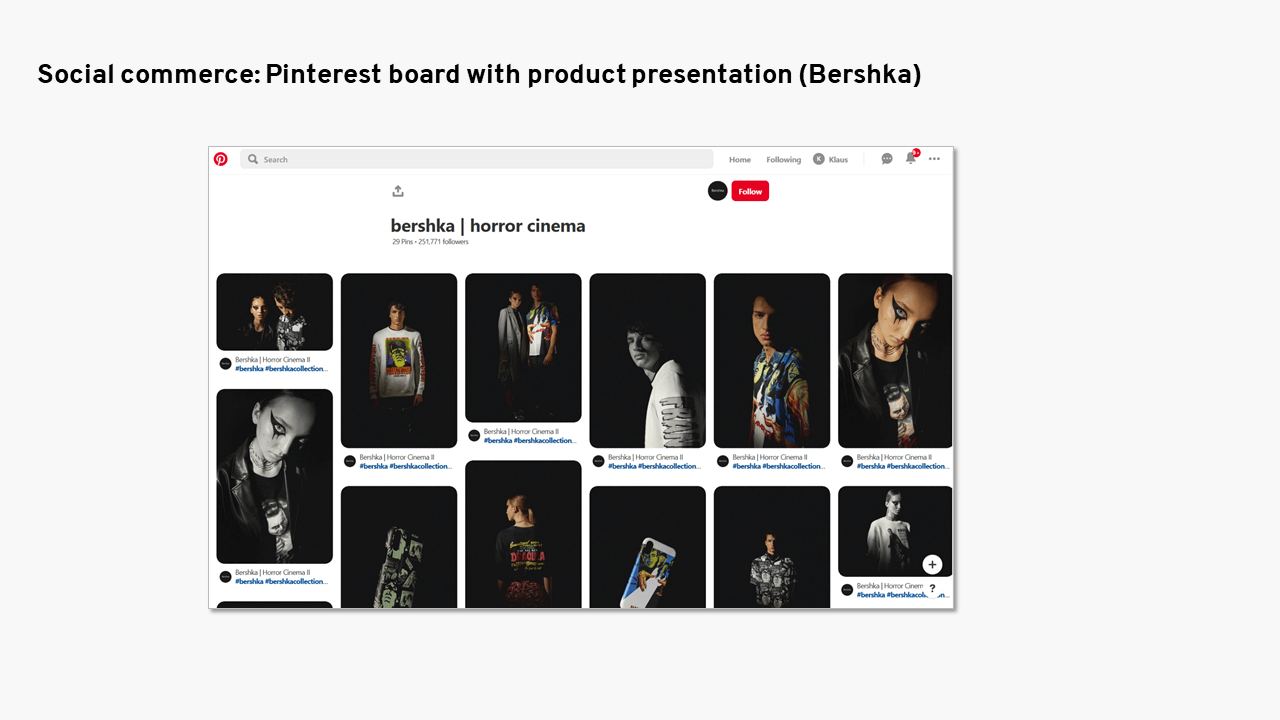
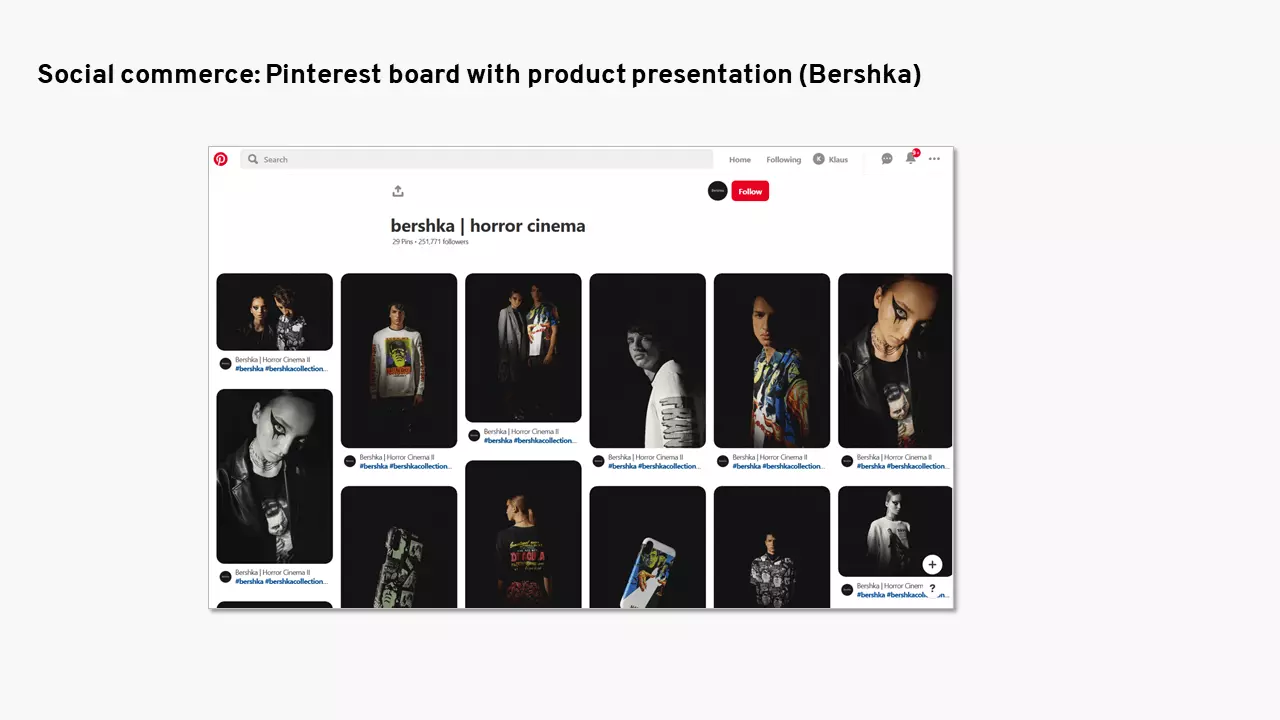
As of 2019, Pinterest, the online pin board for graphics and photos, had over 300 million users globally. Pinterest is a great platform for people actively looking for product and shopping inspiration. Given its focus on hobbies and DIY, it’s hardly surprising that lifestyle and fashion are among its dominant categories. Brands can now easily link their images (called Pins) to their web store. And in 2019, Pinterest officially unveiled its Pinterest Ads across multiple countries. Marketing and sales on Pinterest have since benefitted from the use of carousel and video pins. As part of a social media marketing strategy, Pinterest is primarily used to drive traffic to a website because ads can be connected to an online store. Women are the dominant target group on the platform, but its share of male users is growing.
- Sell on social media in minutes
- Manage it all from one platform
- Works with any product or service
Social commerce on Twitter
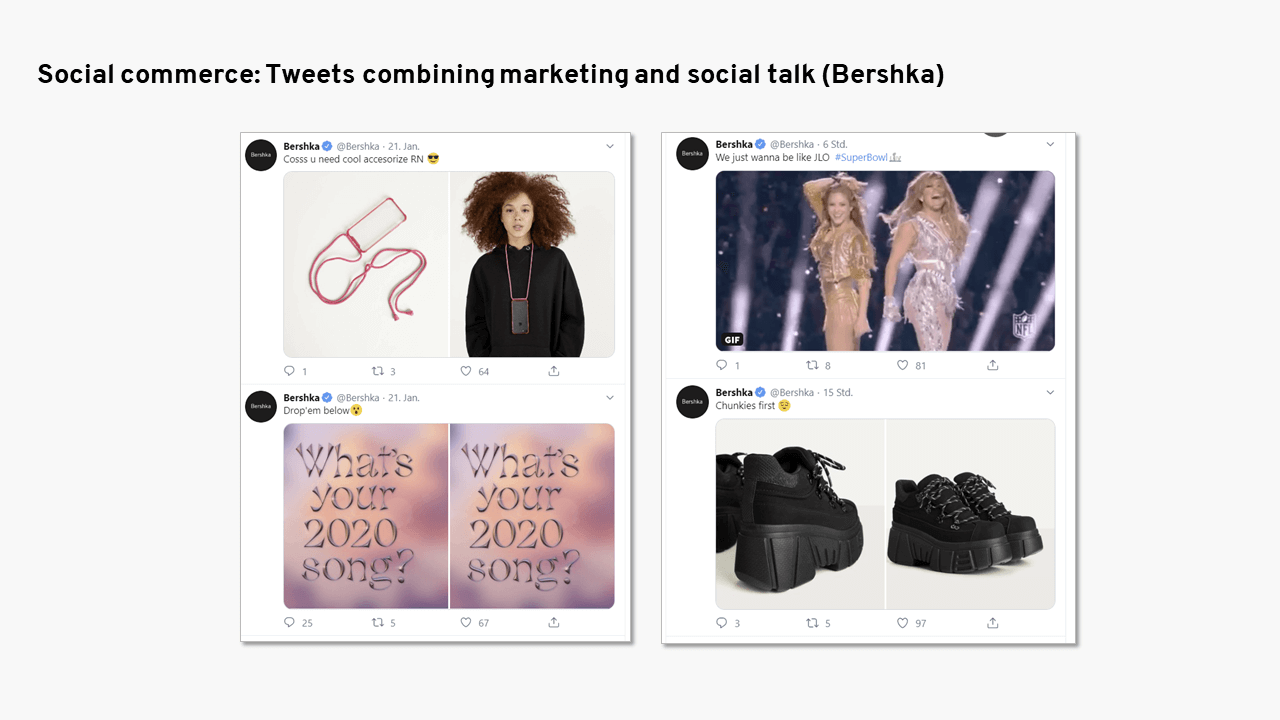
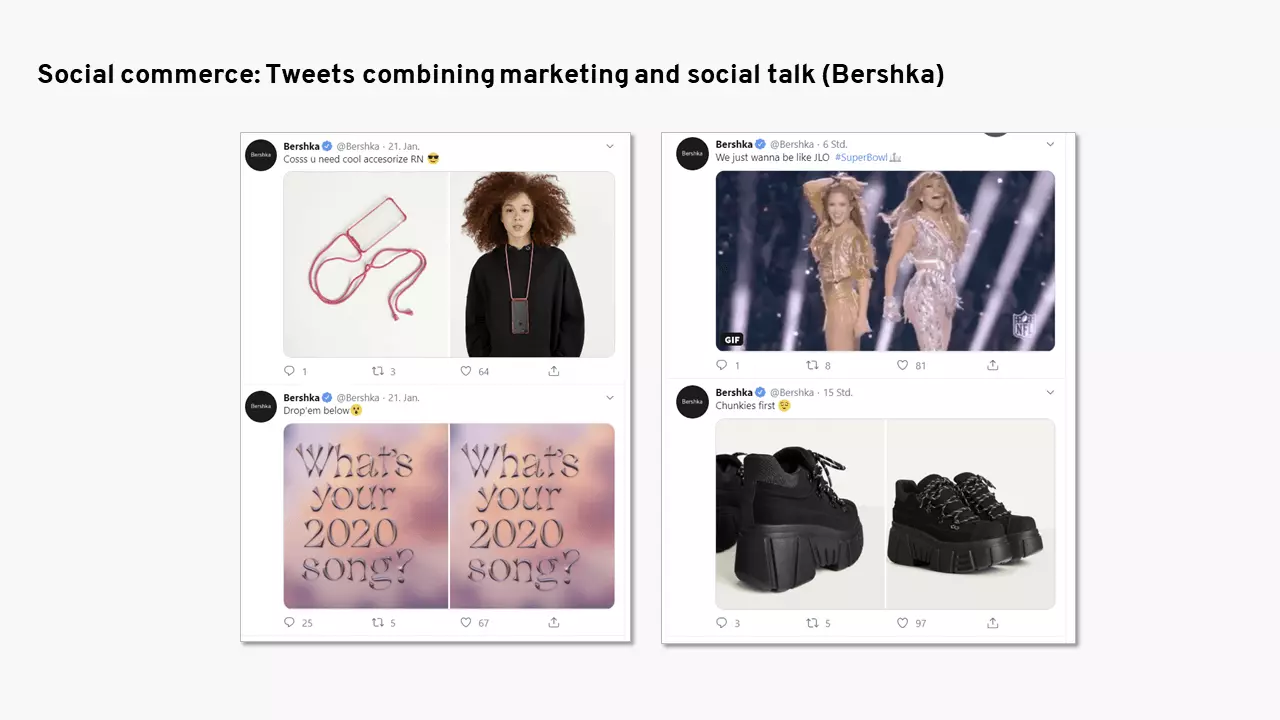
The micro-blogging platform Twitter now has more than 330 million monthly active users. Its claim to fame is that it’s always up to date. Twitter is interesting for retailers and brands whose audiences actively use the platform. That includes media, local services, and service providers. Many user profiles feature links to online stores. Twitter lets businesses embed campaign and product videos. But not all companies use Twitter for commerce; many businesses use it to boost their image and connect with marketers and customers. By using Twitter, businesses can engage in conversation, and discuss their brand and products using tweets and hashtags.
The six pillars of social commerce
To be successful in social commerce, a dedicated strategy should be in place. It’s imperative to establish a loyal community that regularly visits your company’s web pages and clicks on your calls-to-action. Here are the six key pillars of social commerce to look out for:
- Relevant content: Companies should provide content that is interesting to their customers. Content should be high in quality and optically engaging. To win the daily fight over customer attention, it’s important to match your content to your target audience(s). Content should never blandly focus on products or conversion rates. Social commerce content increasingly provides added value for customers, e.g. by offering advice, tips, and tricks. When it comes to cross-channel and multi-channel concepts, content should be created to suit the chosen platform. Yet, it must work in synergy with posts across other channels.
- Community: The basis of social commerce is the community that you want to establish a long-term relationship with. Businesses should nurture their audiences and harness the fact that customers talk to one another on social media. A great way to engage your audience is by speaking to the individual customers. That may sound time-consuming but it tends to pay off. Events and special activities provide further opportunities for bonding with customers. Brands and retailers should always be easy to reach, whether a customer is demanding a return or has product questions.
- Communication: By encouraging communication and activities in a community, businesses get to know their customers and are able to optimize their products accordingly. Likes are an excellent way to measure preferences and target them subsequently. Social commerce can even develop a dynamic whereby customers are actively included in the product development, ensuring the improvement of products. After all, many new ideas and services emerge through conversation.
- Create and strengthen connections: Businesses should be handling social media with confidence and take an active role in shaping and manifesting the connection to their customers through dedicated activities. In other words, it’s helpful to become an active player within the social media landscape and create a substantial basis for social commerce. The basis of a multi-channel concept can occur at three levels: professional (Xing, LinkedIn), social (Facebook, Instagram), and informational (Twitter).
- Context through data: The success of a social commerce strategy is measured in data. This helps to put results into context and uncover customer habits in the real and virtual world. Defining the audience you want to reach is referred to as targeting. Data on potential customers’ search and shopping behaviors and their social media use are useful to help brands target them in the future. With mobile end devices, real-time tracking is easier than ever before. Brands can now track a customer’s geographical location – also referred to as geo-targeting. One of the big advantages of social commerce’s data focus is that compared to classic advertising (TV, print), a company no longer targets just anyone but can single out customers who are more likely to purchase their products. In the long term, this saves businesses money. But the customers’ needs must remain central to the data-based context.
- Innovative commerce through digitalization: Social commerce forms part of an internet-based sales strategy and as such is able to offer a vast portfolio of products and services. Customers are no longer restricted to opening times. Similarly, brands can share emails and social media calls-to-actions on weekends. The event of social commerce has thus created an entirely new level of flexibility across many sectors, including business-to-business (B2B) and business-to-consumer (B2C) communication. Amazon is a great example because the e-commerce group regularly expands access to its product portfolio using digital tools (e.g. voice assistant Alexa) extending far beyond traditional retail approaches.
10 recommendations for a successful social commerce strategy
For a successful and sustainable social commerce strategy, here are our top 10 recommendations:
- Explore the needs and desires of your target audience(s) and then cater to them.
- Engage with social media and find out which platforms suit your brands and/or products the best; match your brand’s goals to the right social media channel. Due to the multitude of social platforms and differences in users’ age groups across them, your preferred audience targeting strategy should match the platform.
- When developing a social commerce concept, consider cross-channel strategies.
- Nurture the dialog with your customers and potential customers; pay attention to the communication methods employed.
- Communicate with your customers regularly and authentically. Be transparent.
- Invest in the quality and added value of your content.
- Say “yes” to conversion, but not by any means necessary. Maintain a balance between “social” and “commerce.”
- Make a long-term plan for your efforts and investments (e.g. channel and community maintenance, content development, planning of multi-channel campaigns, etc.).
- Prepare a de-escalation strategy to address communication or customer service issues. Brace yourself for criticism of your products or your entire company/brand.
- Pursue a data-based evaluation of your social media success by studying your customers’ shopping and community behaviors. An evaluation will help to optimize your brand’s engagement on social channels, but can also be a great way to help you develop audience-centered products and services.