

Second screen: when one simply isn’t enough

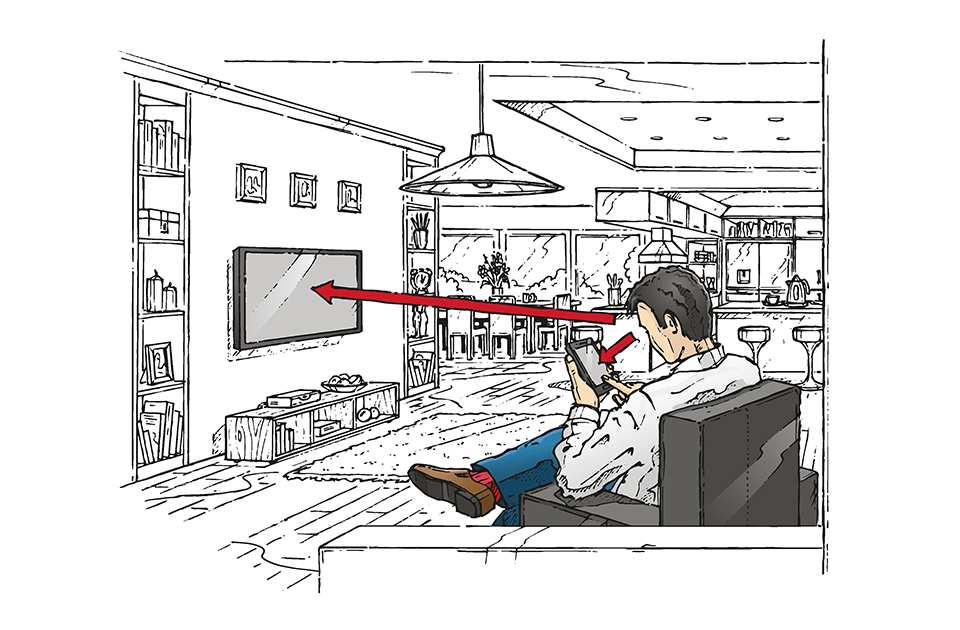
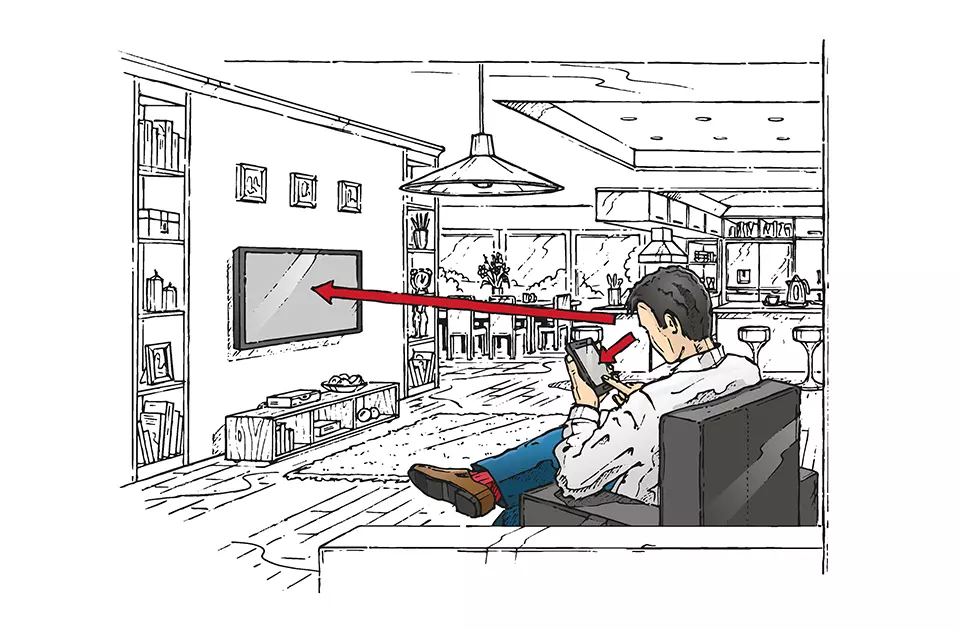
The way we use media in our everyday lives has undergone radical changes over the past few years. As its name suggests, the term, second screen (also called multi-screen or social TV), refers to the presence of an additional screen users employ while watching television. In addition to searching for information on their tablets, smartphones, or laptops, many users also head to various social networks to discuss the program with others as it’s being broadcast.
This additional screen is a potential boon for marketers, who are now faced with both new challenges and opportunities arising from this new way of media consumption. Second screen isn’t only supported by standard web applications; there are now also special apps, widgets, or online services available to viewers that are specially designed for parallel use. The idea behind this concept is to make TV programs more interactive by connecting different marketing channels with one another.
Always online: changing media use
The arrival of second screen coincides with new usage pattern developments, which have largely been brought on through the increased popularity of mobile devices. Whether you’re grocery shopping, commuting by rail or carpool, at the gym, or just loafing around on the coach: smartphones and tablets are almost always within arm’s reach. Some take advantage of this convenience to escape the commercial break by logging online, while others hunt down facts about the program they’re currently watching. ‘Don’t I know that actor from some other show?’, ‘Quick, what’s the answer to that tricky quiz show question?!’, ‘And who’ll be representing the US in men’s beach volleyball this year?’ When it comes to discussing media content, younger target audiences gravitate towards social networks, like Facebook and Twitter; often they label these topics with hashtags. Comments aren’t solely relegated to the turf of Facebook fan pages and the social media web presences of TV shows and actors; platforms designed specifically for fans are also highly frequented. TV series and films also often offer tailor-made apps.
Media in the living room: who rules the roost?
Second screen studies have confirmed that the television is no longer the center of attention it once was in many of the world’s living rooms. A report by consulting services company, Accenture, reveals that as of 2015, the attention of roughly 87% of consumers is occupied by more than one device at a time. Unsurprisingly, this trend is especially prevalent among younger audiences, with smartphones being the preferred device among this demographic worldwide. North American millennials, however, bucked this trend, with 59% of respondents reportedly opting for their laptops instead. With such strong figures coming out of these studies, there’s no doubt that both television executives as well as advertisers have their eyes on these developments.
Social TV: the app for TV programs
For some time now, TV stations have been offering custom downloadable apps to their viewers. These provide additional information on the regularly broadcasted programs, and often offer users with opportunities for interaction. An excellent example of a successful second screen app is ‘StorySych’ from AMC’s The Walking Dead. This program is an outlet for viewers to exchange information, answer show-related trivia, take surveys, and watch exclusive material. The public broadcasting channel, PBS has taken this interactivity to a new level with the introduction of PBS Kids’ Super Vision in 2014. Simply put, this program allows parents to find out what their children have been watching on the PBS Kids website. Based on this accrued information, the app gives parents tips on educational activities that might be of interest to the child. Parents can also set up timers that block the site during specific parts of the child’s day (read: dinner, homework, bedtime, etc.). And while the app isn’t specially made for television per se, it does cover all of the most important second screen concepts mentioned above: the use of multiple devices, opportunities for user interaction (in this case, parents with their children), all centered around regularly broadcast material. These approaches showcase how traditional media outlets, like television, can be connected with today’s most innovative digital strategies.
Second screen marketing advertising opportunities
A growing number of companies from the online sector, especially online retailers, are airing more and more television ads. But aren’t these advertisements going to waste if viewers are switching to their mobile devices during the commercial break? Well, they aren’t if the potential customers are also reached on their second screens. The keyword here is TV-digital ad synchronization. Simultaneously running ads on multiple devices allows companies to weave a seamless brand story. The groundwork for concept rests on the synchronization of both advertising channels, which can be achieved with the help of various technologies. Most of the time, ACR (automatic content recognition) is used. ACR gathers and analyzes television commercials as soon as they’re broadcasted. This real-time acquisition of TV ads is coupled with advertising and analytics platforms. Marketers can then activate digital ad campaigns that are in synch with television advertisements. For instance, television advertising can be synchronized with SEA campaigns.
The ideal outcome here is that the sales message is boosted through its presence on additional screens. This enables advertisers to ‘catch’ viewers who may have otherwise been lost after switching to an alternate device. Repetition furthermore increases the effect and memorability of the ad. And by establishing a bridge to the online advertising sector, the effects of televised messages can be measured. These effects can be tracked through the corresponding website’s KPIs (key performance indicators), and the customers’ behavior in turn becomes more transparent. Further tests on the interplay between TV campaigns and online marketing measures can be run and then later optimized.
Second Screen: a new challenge for marketers
When used in tandem with TV advertisements, online advertising adds an extra kick to a company’s message. Users that are already searching for information or have been prompted by a television commercial to search for products can be brought on board immediately. Second screen advertising keeps you closer to the customer and their needs.
Of course, there’s always the risk that such measures end up backfiring. The constant barrage of advertisements that interrupt regular programming is already a major irritant for many viewers. And should this flood of ads also find its way into such users’ mobile internet searches, then it could be the case that this perceived overreach is met with frustration. Users may either consciously or subconsciously develop what’s known as ‘banner blindness’ and no longer pay attention to ads. As an advertiser, this means having to find the right balance, a task that will surely prove to be quite the challenge for the budding online marketing sector.
Reviewer

Melissa Senn
Melissa Senn has been with IONOS since 2016 and focuses on the areas of websites, e-commerce, social media, and AI in the Digital Guide. As a digital strategist, she draws on her extensive SEO and GEO experience to translate complex technological trends into practical content.