

Selling online: the top English-speaking online marketplaces

The world of e-commerce grows year after year. In 2016, more than 322 billion dollars were generated in online sales in the US. If you want to sell a product these days, you can’t do without the possibility of selling it online. There are currently numerous online marketplaces competing on the internet on which small and medium-sized businesses can also offer their goods. But which portal should you place yourself on to generate the highest sales for your company? This guide presents the different e-commerce marketplaces available on the internet and discusses their advantages and disadvantages.
- Get started with stunning designs
- Grow with advanced marketing and admin tools
- Sell on social and online marketplaces
Online marketplaces: using the platforms correctly
If you would like to distribute your offers online, your first thought may be to create your own online shop – and this idea isn’t entirely wrong. If you set up your own online business, you have complete control over its design. You can completely customize your online store to fit your own needs. But like a retail store, guiding buyers into the shop and building up a loyal customer base is a big task. You also have to take care of all technical components yourself or hire IT experts. Therefore, it can make sense to offer your products instead on an already existing site, where users have already come to shop: an online marketplace.
These days, it’s easy to create your own e-shop: With the offer from IONOS, many professional design templates help you with the creation of your store. You can present your offer to a large audience with an interface in the big online marketplaces.
Online marketplaces function just like traditional marketplaces: Sellers assemble in a location to offer their wares. And as with offline selling, it’s not necessarily the market participant who provides the best offer that gets the most business – it’s also who can shout the loudest. It’s not enough anymore to simply make your product available on Amazon, eBay, or others and then hope for an increase in sales figures. The competition is fierce on the various platforms, which is why you should make an effort when posting your goods (or services). With most online marketplaces, you have several options for strengthening your product placement:
- Article title: Many customers on online marketplaces find offers using the search function. The title of the product page is the first thing that potential buyers see. It plays a big role in the decision: Click or not? So select a meaningful and appealing headline.
- Product description: Describe your offer exactly – and be creative with it. Especially in the B2C sector, clear facts are not enough to persuade customers to make a purchase decision. A product text should invoke emotions that suit the offer
- Photos: When it comes to content on the internet, text and images always go hand in hand – this goes for e-commerce as well. Pay particular attention that your product photos make a professional impression. Poor lighting, a cluttered background, or poor image quality will deter users immediately. Meaningful, professional photos, on the other hand, will spark interest and bring about a positive first impression.
- Facts: Most online marketplaces offer the possibility to present facts on the offered product in the form of keywords. This gives users the chance to quickly recognize whether the product matches their perception. You can compensate for a disadvantage of online retail by specifying sizes, weight, or materials used, for example: In contrast to physical sales, a customer in an online marketplace can’t hold the product in their hand before purchasing. Detailed information gives a better impression so they don’t have to make blind bargain.
- SEO: E-commerce marketplaces function in the exact same way as the internet in general: Search engines show users the way to the offers. That’s why it’s a good idea to pay attention to search engine optimization criteria when setting up the article. After all, you want to appear at the top of the search results, otherwise users may choose one of your competitors before they’ve even seen your listing.
In our guide, we specifically show you how to set up successful SEO with Amazon.
Find the right marketplace
Even though Amazon enjoyed a market share of 43% in the US for 2016, the online giant is not necessarily the best choice for your company. Depending on what and to what extent you want to sell, it’s worth taking a look at other online retailers. For offers that address a specific customer group, niche marketplaces can be interesting. Pay attention to the following points when deciding on an online marketplace:
-
Commission: Sales platforms see themselves as intermediaries between customers and providers. Understandably, they also want to be paid for this. This is usually done through commissions. Depending on the revenue that you earn from a successful sale, the marketplaces charge a fee. When selecting a platform, pay attention to whether or not these costs are reasonable for you.
-
Range: Different online marketplaces reach different numbers of people. But that doesn’t necessarily mean that the highest range is best for your business. A platform with a focused range of offers, for example, could help you avoid scattering losses.
-
Sales model: Not all e-commerce platforms function according to the principle of fixed prices. Auctions, like on eBay, pit buyers against one another: The highest offer wins the bid. In a reverse auction – also known as a Dutch auction – the bid price decreases continuously during the bidding period. If bidders wait too long, the offer could go to another interested party.
-
Focus: Some marketplaces have a very particular target group, or only offer a particular product range. On DaWanda, for example, users will mainly find handmade products and pieces of art.
-
Usability: For companies, how easy the e-commerce platform is to operate is also a decisive factor. The adjustment of products as well as the purchase transaction should be as simple and easy to handle as possible. The freedom of design on the article pages is also important when making a decision.
-
Competition: How is the competition positioned on the marketplace in question? Maybe it makes more sense for you to select another platform where you won’t get lost in the competition for customers.
-
Interface: Especially when you run your own online store, it’s helpful if the marketplace offers corresponding interfaces. Compatibility with existing enterprise resource planning (ERP) systems can also significantly simplify your workload. This means that you won’t have to manually add stock.
Places to sell online: a comparison of online marketplaces
In the US, e-commerce is dominated by the two online giants Amazon and eBay, with the relative newcomer Etsy providing fierce competition as well. These two e-commerce platforms are used by almost everyone who wants to shop online. Nevertheless, as a seller (and as a buyer) you should take a look at the other available online marketplaces, because there are some very interesting opportunities for small and medium-sized businesses.
- Great premium TLDs at affordable prices
- Simple registration & transfer
Amazon
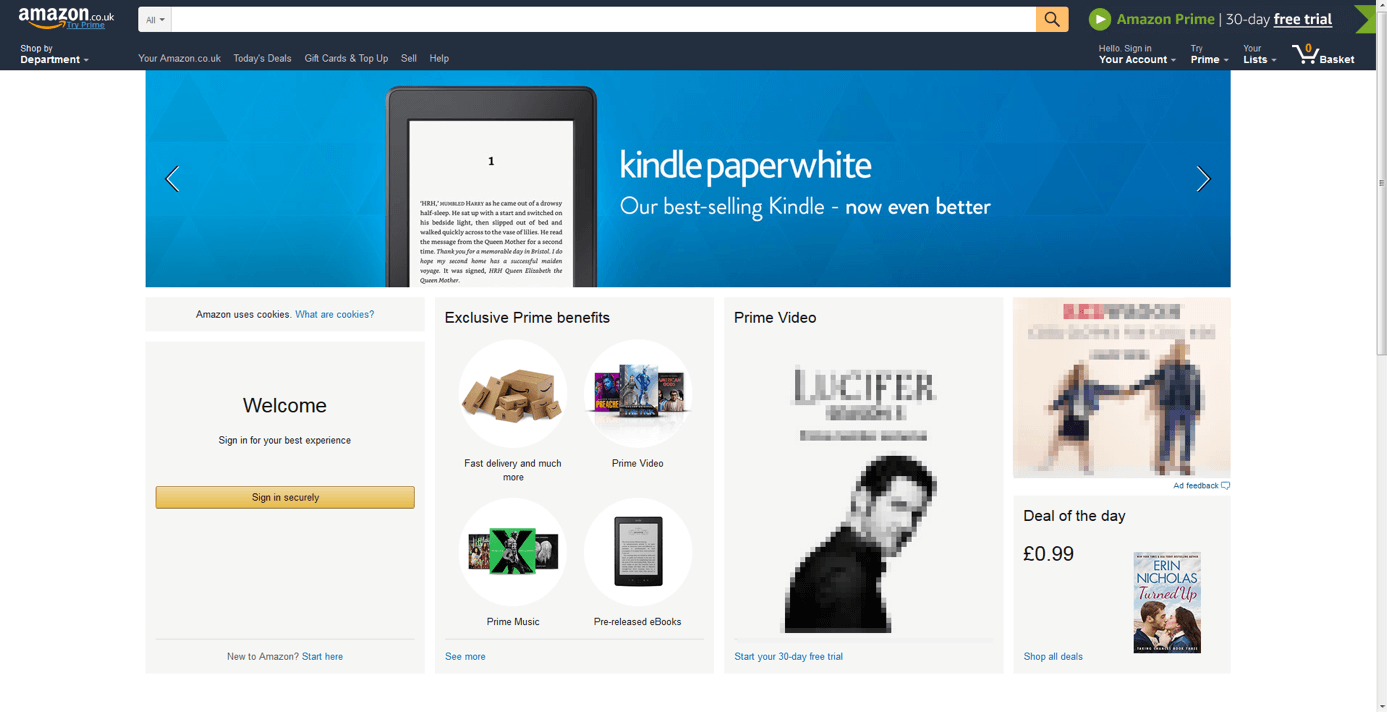
The online giant Amazon started in 1994 as an online bookseller. Now, the US group has grown into one of the largest logistics companies with a wide range of its own products, and offers virtual services as well as gives entrepreneurs an opportunity to sell their goods via the Amazon Marketplace. Amazon is clearly at the forefront of the online marketplaces available in the US: The retailing giant receives around 183 million unique visits each month. It’s one of the world’s most valuable brands (at appx. 139 billion US dollars) – overtaken only by Microsoft, Apple, and Google.
| Number of active sellers | 2 million (Worldwide) |
| Number of products traded | 353 million (Including the Amazon Marketplace) |
| Reach | 58.7 million unique monthly (USA as of December 2017) |
| Sales | 177,9 billion dollars (Worldwide/2017) |
| Fees | $39.99 |
| Commission | 7–15 % |
On Amazon, you can undoubtedly reach the most potential buyers. But at what price? If you want to sell more than 40 products a month, Amazon will charge you a monthly fee of 40 dollars. In addition, there are sales fees that depend on the category in which your products fit. For each sold product, you will have to fork over between 7 and 15 percent. It becomes a bit more expensive still if you want to ship your products using Amazon as well: You can store them in an Amazon logistics center. The online marketplace will then automatically take over the entire shipment for you. However, there are additional shipping and storage costs incurred.
Another disadvantage, apart from the high price: The enormously large customer group is also faced with a large number of sellers offering comparable products. On Amazon, the product is in the foreground – a relatively end-user-oriented setup. So, if multiple sellers are offering the same product, there’s still only one product page created. Then, it’s possible for the user to select alternative sellers. But if you don’t offer the cheapest price, there’s no reason for the customer to buy your offer. This can lead to enormous price pressure on Amazon, which is likely to be particularly problematic for small retailers. To act as a suggested retailer for the product in question, or to be the standard selected retailer, the lowest price as well as other factors such as customer satisfaction are decisive.
Integration of the product range on Amazon is possible relatively easily through Seller Central. If the product is already listed on Amazon, you can find it via EAN or ISBN, for example, or using the Amazon Standard Identification Number (ASIN) so you don’t have to enter your own product information (or can choose not to). If the product isn’t represented in the online marketplace yet, a new product page is easily created. Amazon will guide you through the creation process via several input masks. Entirely creating your own layout isn’t possible, though. As a seller, you can only get creative with the product description. Using several interfaces, you connect Amazon to a previously existing merchandise management system.
 To display this video, third-party cookies are required. You can access and change your cookie settings here.
| Benefits | Drawbacks | |
|---|---|---|
| ✓ High range | ✗ High competition | |
| ✓ Many interfaces | ✗ High fees | |
| ✓ Logistics through Amazon | ✗ No unique design possible | |
| ✓ Opportunities for (paid) offer promotions |
eBay
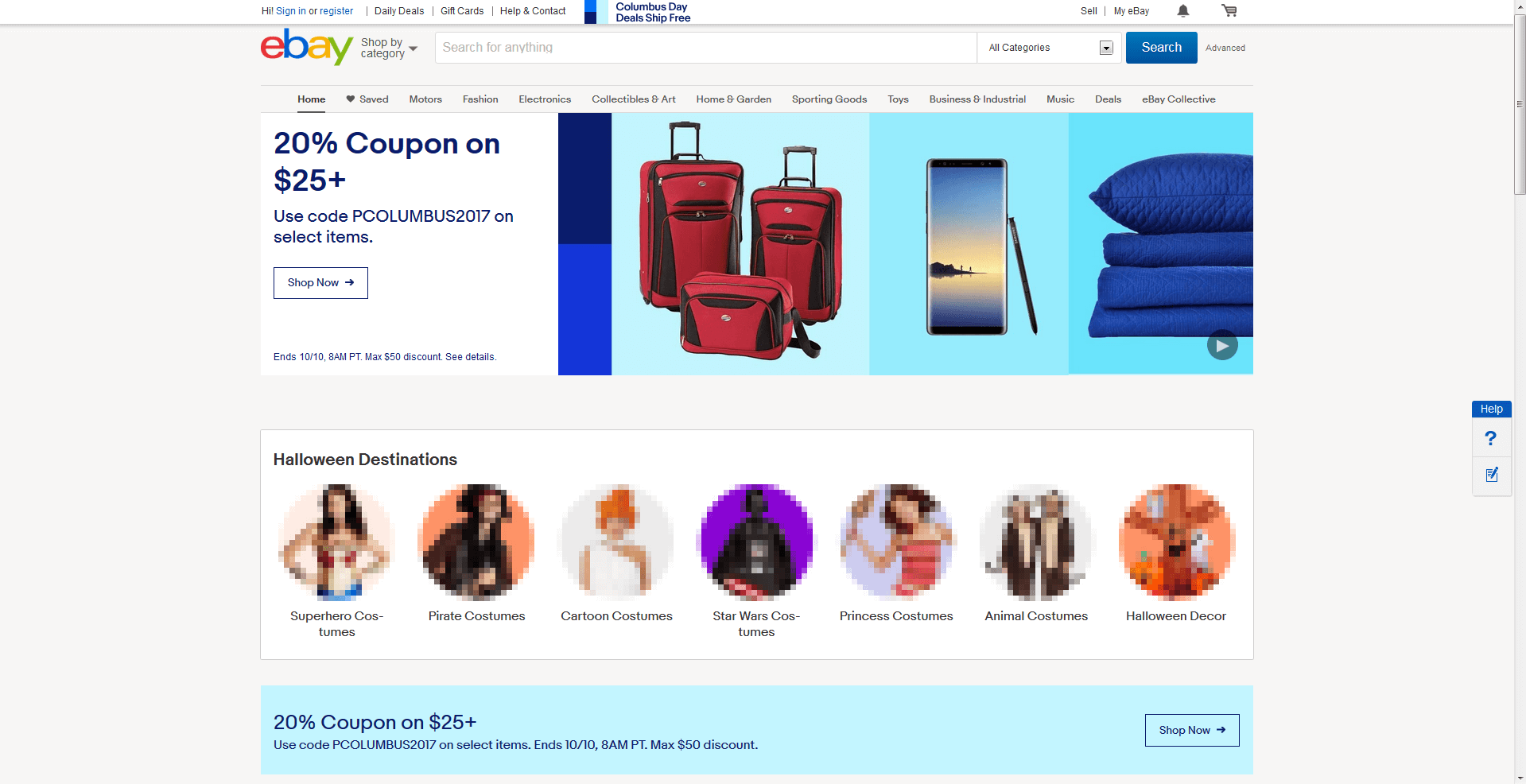
The flea market of online marketplaces: The popular e-commerce platform eBay was originally founded in 1995 as an auction house for second-hand items from consumer to consumer (C2C). eBay is primarily popular with collectors and bargain hunters. Users can still buy second-hand items on the platform today as well. But now, the majority of offers (now goods, in most cases) are placed by commercial sellers or manufacturers. In the US alone, eBay receives around 96 million unique visitors each month.
| Number of active sellers | 171 million (Worldwide /2018) |
| Number of products traded | 2 billion transactions daily (Worldwide) |
| Reach | 26.6 million unique monthly visits |
| Sales | 9,56 million US-Dollar (Worldwide/2017) |
| Fees | $39,95–4999,95 |
| Commission | 4,5–10,5 % |
The original sale principle on eBay is the auction: Sellers place items on the marketplace for a specified time, and the user who has placed the highest bid at the end of the time limit wins the bid. For professional sellers, though, the fixed price offer is more enticing. This is where the seller sets the price for the offered product. Just like with Amazon, the product range is incredibly large: From toilet paper to delivery trucks, you can acquire almost everything on eBay. Certain offers are banned on eBay, though, including animals, weapons, pharmaceuticals, securities, and human body parts.
The costs accrued for sellers on eBay depend on whether it’s a private or commercial account. As a private seller, you have to pay a selling commission of 10%. eBay doesn’t charge individuals any fees for the creation of an offer (if you sell fewer than 300 things per month). Some additional options, such as extended photo galleries or captions, cost extra.
The costs are of interest to SMEs, though, who fall under the category of commercial use: eBay provides various subscriptions for eBay shops. Depending on how many fixed-price offers you want to create per month, the price could be anywhere from $39.99 to $4999.99 monthly. If you decide against a shop, and so therefore don’t get a subscription, a fee of $0.35 per item will be charged after 40 listings. Even as a seller with a basic shop, you get 400 offers for free and then only pay $0.10 per offer. A sales commission of between 4.5 and 10 percent is charged, depending on the type of product.
An eBay shop has other advantages. What Amazon looks to minimize can be enforced on eBay through its own appearance on the sales platform: the presence as a seller. With your own layout, you can better present yourself as your own brand and build up a solid customer base. On their own shop pages, sellers can present their entire product range and inform buyers on their other offers. To create more security (for sellers as well), mutual evaluations are an integral part of the system. Sellers can therefore make convincing arguments for themselves in spite of whether or not their price is favorable.
Not only your own shop, but also individual product pages can be designed with eBay relatively freely. You can customize the layout with your own graphic elements based on HTML to fit your marketing strategy. External providers have also established themselves for the design of premade or individual templates. In this way, less internet savvy retailers can also create convincing and professional product pages. Just like its competitor, Amazon, eBay offers various interfaces that enable use with other software.
| Benefits | Drawbacks | |
|---|---|---|
| ✓ Large range | ✗ High competition | |
| ✓ Own eBay shop and product pages with own layout possible | ✗ Bound to PayPal | |
| ✓ Many interfaces | ||
| ✓ Opportunities for (paid) offer promotions |
Alibaba
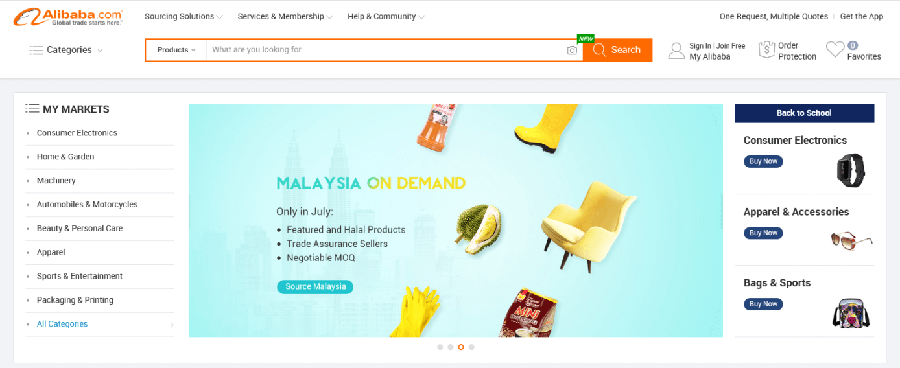
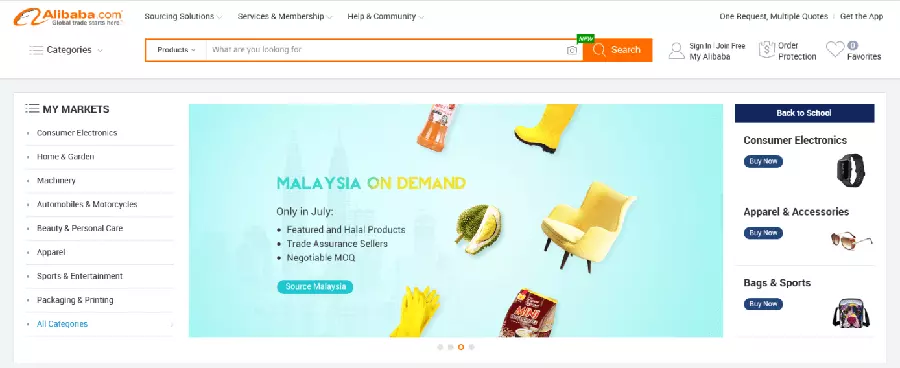
The Chinese Alibaba Group is represented online with several marketplaces: In addition to Alibaba.com (a B2B platform) and Taobao (a sales platform like eBay), the company also has an online marketplace for B2C, called AliExpress. On AliExpress, customers can shop globally, but the sellers themselves are all Chinese. Other online merchants are not allowed to sell their goods on the sales platform.
| Number of active sellers | 8,5 million (Worldwide/2015) |
| Number of products traded | Not specified |
| Reach | 18,24 billion visits a year (Worldwide/2017) |
| Sales | 39,9 billion dollars (Worldwide/2018) |
| Fees | 0–5.999 dollar |
| Commission | - |
Alibaba’s range is diverse – from baby dolls to insulated steel bowls to forklifts, everything can be found on the platform. As a seller you have a lot of leeway in the design of the article page. While the header of the page is always in the same design, the article text can be enriched with numerous pictures, videos and other design elements. Since the offer is aimed at major customers, some details are more prominently placed here than are known from other online sales platforms. For example, the order quantity plays a major role. As a retailer, you can therefore point out quantity discounts or minimum order quantities directly in the header of the page.
The ordering process is also different from that of Amazon, for example. As a buyer, it is possible to submit an offer for the item you want to buy –kind of like a bid, but more like an offer in a haggling process. You can also order a sample or special customizations. Sellers from specific nations can also be displayed collectively. If you want sellers just from the US, for example, you can filter this.
As a seller a membership with Alibaba.com is basically free. In the free version, however, only 50 products can be placed on the platform. Gold Supplier Memberships are due between $1,399 and $5,999 per year, depending on the package selected. All Gold Member Packages allow sellers to offer an unlimited number of products on Alibaba.com. Vendors also get more storage space for photos in the paid packages and can use Showcase: As a result, the online marketplace places the selected product more in the foreground and thus actively promotes it. The packages differ mainly in the number of possible showcases and the size of the online storage for photos.
Alibaba.com states that merchants outside China, Taiwan and Hong Kong cannot settle payments through the online sales platform. Instead, sellers must contact buyers directly to make the payment arrangements. In return, Alibiba.com apparently does not charge any commission for the sale.
| Benefits | Drawbacks |
|---|---|
| ✓ Wide reach | ✗ High competition |
| ✓ Article pages with own layout possible | ✗ Sometimes the translations into English are hard to understand |
| ✓ International platform | |
| ✓ Possibility of (paid) application of the offer | ✗ High fees |
| ✓ No commission | |
| ✓ Own software for easier sales |
Rakuten
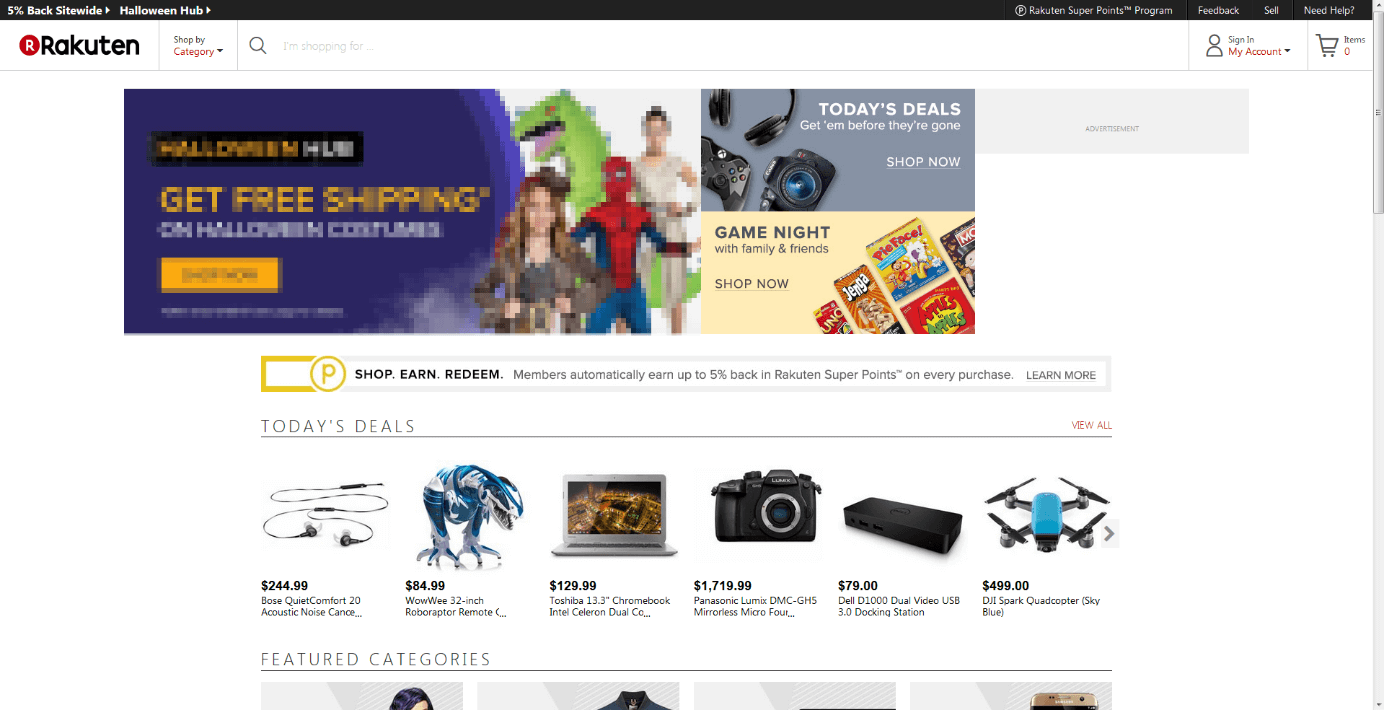
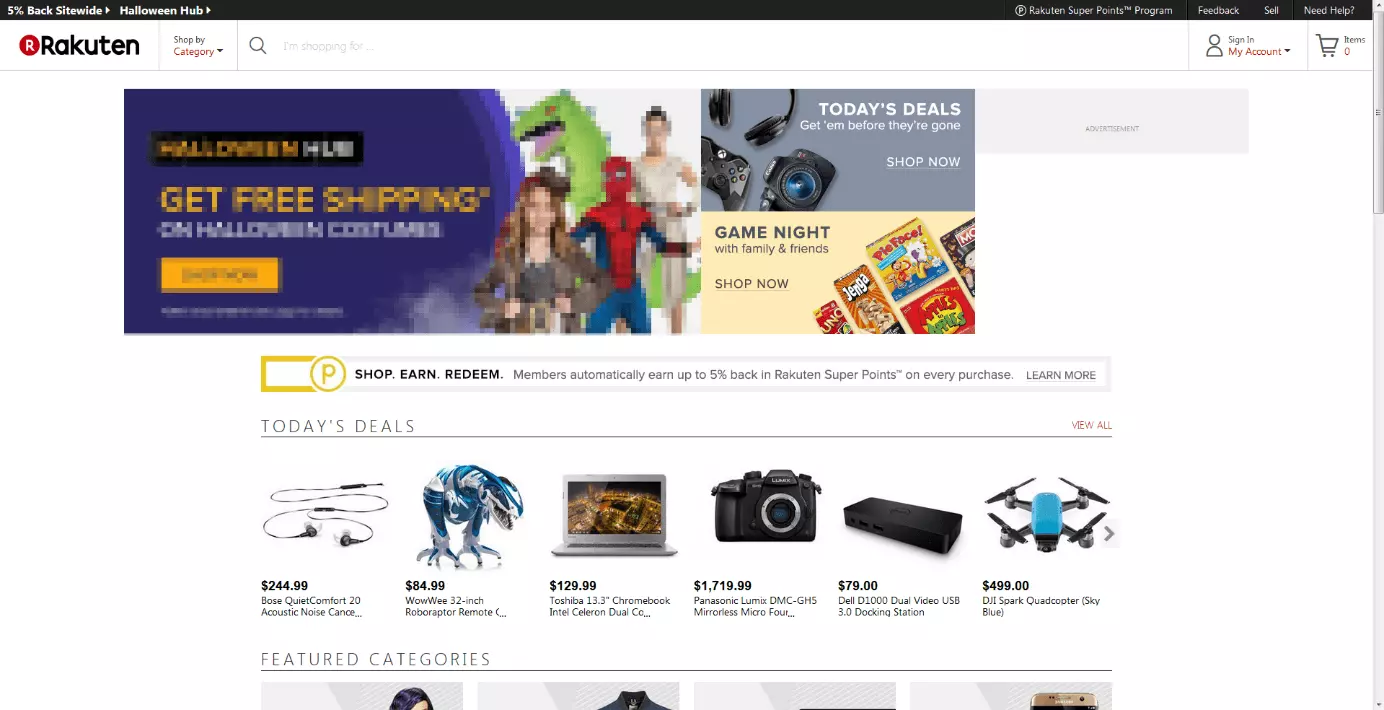
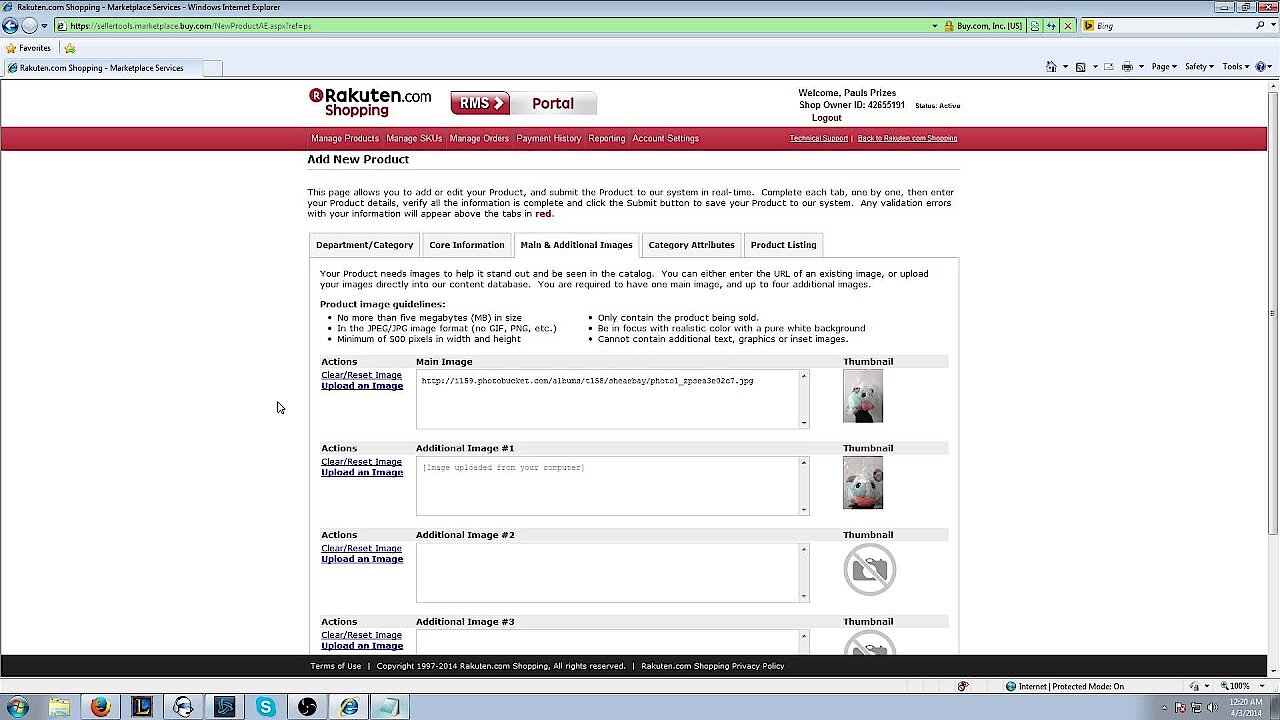
The number 1 online marketplace in Japan, Rakuten is also a top platform in the US. In its structure, the e-commerce platform from Tokyo resembles offers on Amazon. Here, visitors can also find everything that they could need in numerous categories. Much like Amazon: With the purchase of Viber, the company got its own app for IT phone service, and also has a streaming service with Rakuten TV, where blockbusters, classics, and current TV series can be watched. Customers are also tied to the platform through its own bonus program, called Super Points: For every dollar spent on Rakuten, customers receive a Super Point. These correspond to credit that can be cashed in with future purchases.
| Number of active sellers | 95.2 million members (2017) |
| Number of products traded | 33 million (2017) |
| Reach | 35 million visits a year (2016) |
| Sales | 7,1 billion dollars (Worldwide/2016) |
| Fees | $39,95–299 |
| Commission | 2–11 % |
The fee structure is also based on the big competitor, with a basic fee of $33 per month and additional commission fees based on category. By participating in the Super Points system (which only applies to goods that aren’t price-bound), Rakuten adds another percentage point. This means that the total percentage of turnover to the online marketplace will be a bit higher. If your products should be sold over an affiliate link, a further one percent will be added to the fees.
To stand out from the competition, Rakuten tries to strengthen the seller’s position. Under the keyword empowerment, the marketplace offers its partners multiple possibilities for positioning themselves better as a brand. The most important way that they differ from Amazon is that each seller appears separately with their product in the search results. In this way, sellers can equip their own store pages with individual designs, like with eBay. To further support the sellers, Rakuten also offers webinars, tutorials, marketing promotions, and personal advice.
Positioning a product functions just as easily as with other online marketplaces. Using a simple and easy-to-understand mask, sellers can enter products and their variants. Rakuten also offers interfaces that can link the e-commerce platform with external software and services.
 To display this video, third-party cookies are required. You can access and change your cookie settings here.
| Benefits | Drawbacks | |
|---|---|---|
| ✓ Seller empowerment | ✗ High fees | |
| ✓ Interfaces | ✗ Relatively limited range | |
| ✓ Opportunities for (paid) offer promotions |
Etsy
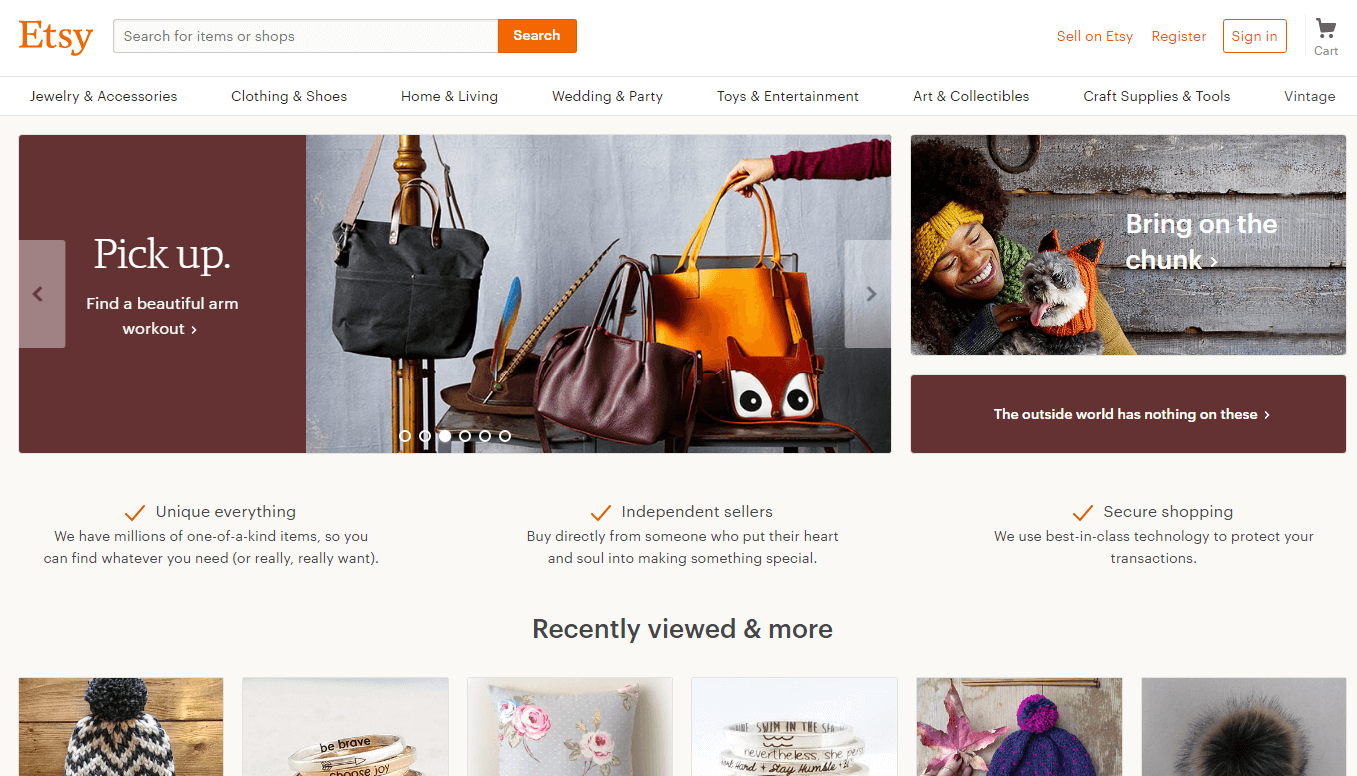
What started as an e-commerce platform for handmade arts and crafts has grown into one of the biggest competitors when it comes to buying and selling online. Etsy still specializes in unique items, and allows sellers to list handmade goods, vintage pieces, or craft supplies. While not offering the same range as the market giants Amazon or eBay, Etsy is the go-to online marketplace for handmade wares and draws a competitive number of active buyers.
| Number of active sellers | 1,9 million (Worldwide/2017) |
| Number of products traded | 50 million (Worldwide/2017) |
| Reach | Not specified |
| Sales | 441 million dollars (worldwide/2017) |
| Fees | None or 10 dollars (2018) / 20 dollars (from 2019) |
| Commission | 3,5 % |
To encourage sellers of all sizes, Etsy boasts a very transparent fee system. Listing on the platform costs only 20 cents, and listings stay active for four months at a time. There is no monthly fee for sellers. Successful transactions are simply charged a 3.5% transaction fee as well as a small payment processing fee. Etsy also offers a second market, Etsy Studio, which is linked to a seller’s main Etsy shop but provides a second marketplace even more specifically tailored to the sale of craft supplies. In this way, sellers who already have their supplies listed on Etsy can also be listed on a second marketplace and boost their sales with no extra effort.
To help sellers build their brand, Etsy makes it easy to customize shop pages. Their external service, Pattern by Etsy, allows for the creation of custom domains and externally designed shops that are linked to an Etsy shop account. Both Etsy and Pattern can be managed simultaneously from the shop manager, and listings are synced to appear on both. Pattern also allows sellers to list items that don’t fit the permitted product range of Etsy. As opposed to listing normally on Etsy, using Pattern does cost a monthly fee. Customization on Pattern can be done with the use of templates, but experienced users are also able to customize their shop more extensively to fit their brand.
Etsy offers extensive support services, from a monthly seller newsletter, to a seller handbook, forums, and support staff. Management tools can be accessed online or through an app, and are consolidated to make the selling process as simple as possible. Sellers also receive detailed statistics about their shop’s performance.
| Benefits | Drawbacks | |
|---|---|---|
| ✓ Low, transparent fees | ✗ External customization costs monthly fee | |
| ✓ Centralized shop management | ✗ Relatively limited range | |
| ✓ Focus on DIY and crafting | ||
| ✓ Opportunities for (paid) offer promotions |
Bonanza
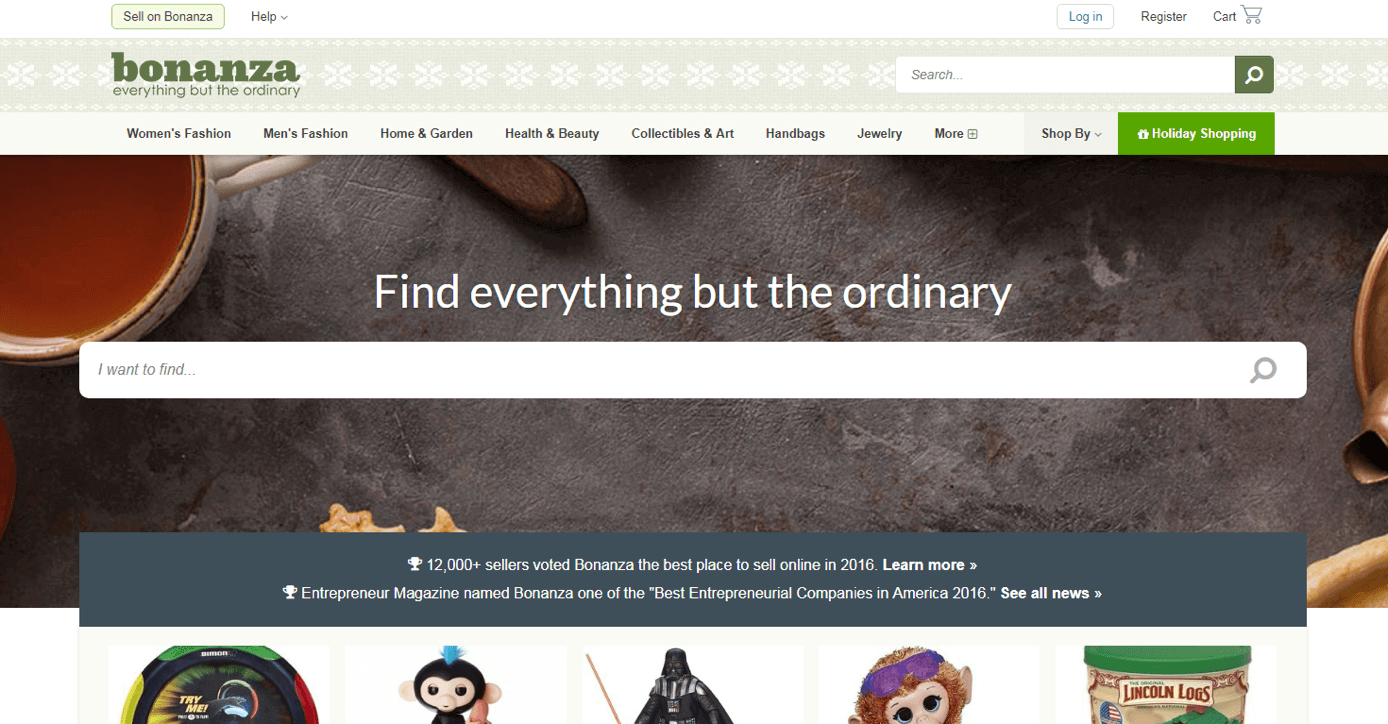
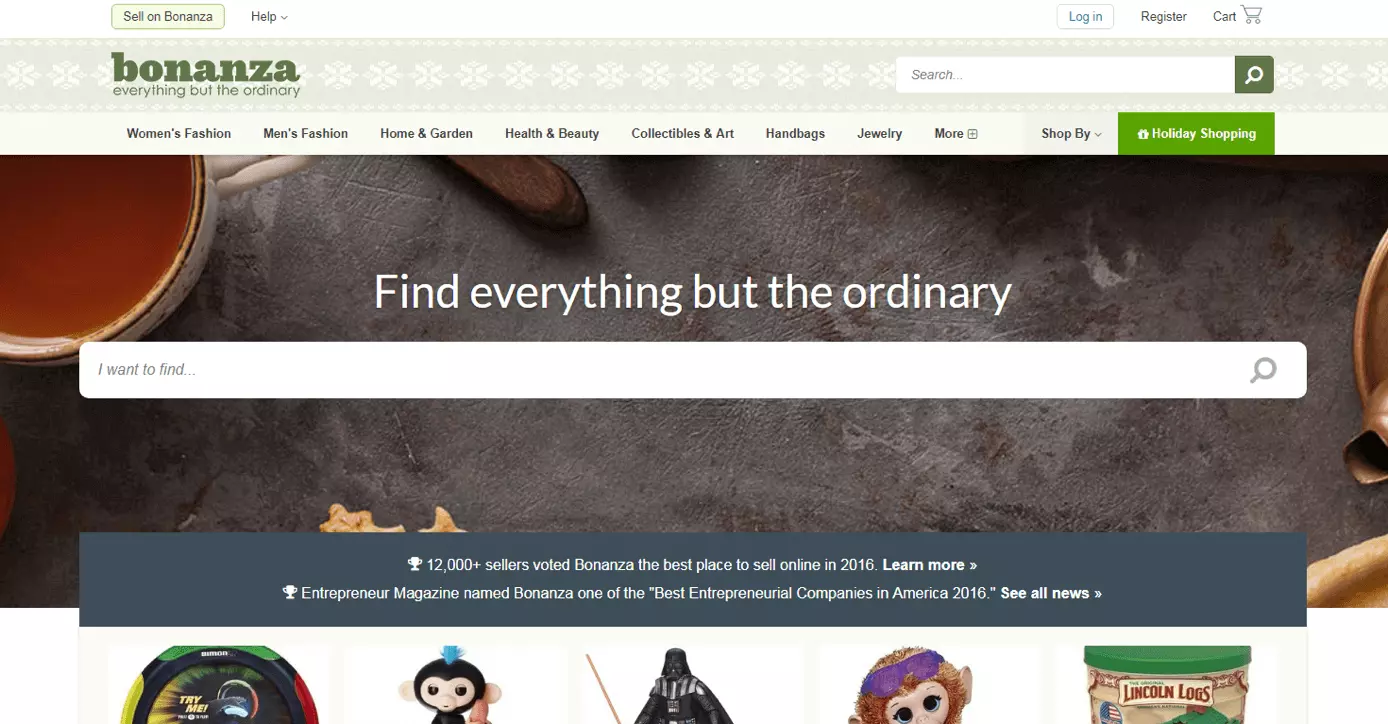
A self-proclaimed seller-centric online marketplace, Bonanza places a heavy emphasis on meeting the needs of its sellers and making their selling experience as simple and streamlined as possible. To keep the base fee as low as possible, Bonanza charges nothing to list or advertise items – in fact, the service is completely free until you make a sale. The base fee of 3.5% commission is only charged once an item has successfully sold. Bonanza also takes care of all advertising costs for items until their purchase. The commission rate for advertising varies based on the advertising plan that you opt in to. The higher the rate, the more exposure and buyer visits your products receive. Any sales made from direct referral links cost you nothing.
| Number of active sellers | 40,000 in the US alone (2017) |
| Number of products traded | 15 million |
| Reach | 2.2 million unique visitors |
| Sales | 12.3 million dollars |
| Fees | 0-55$ |
| Commission | 3.5 % |
As the first marketplace to heavily invest with Google Shopping, items listed on Bonanza enjoy well-placed Google Shopping ads based on a predictive bidding algorithm. Bonanza also automatically publishes listed items on other major third-party channels, so that sellers get maximum exposure to potential buyers. All listings are synced and can be managed at the same time through Bonanza, to save the effort of keeping track of all the places where you sell.
Bonanza is both a marketplace and webstore, which allows for a higher level of customization and brand building. Webstores are linked to a seller’s Bonanza account, and can be customized without any required programming knowledge. Running a webstore through Bonanza costs a monthly fee. All Bonanza sellers can set up customer marketing campaigns to help with customer service and the creation of customer loyalty programs. The campaign setup is a simple seven-step process, which can be previewed, edited, or published at any time.
| Benefits | Drawbacks | |
|---|---|---|
| ✓ Centralized shop management | ✗ External customization costs monthly fee | |
| ✓ Low fees | ✗ High customization requires programming knowledge | |
| ✓ Opportunities for (paid) offer promotions | ||
| ✓ Customer loyalty possible |
Zibbet
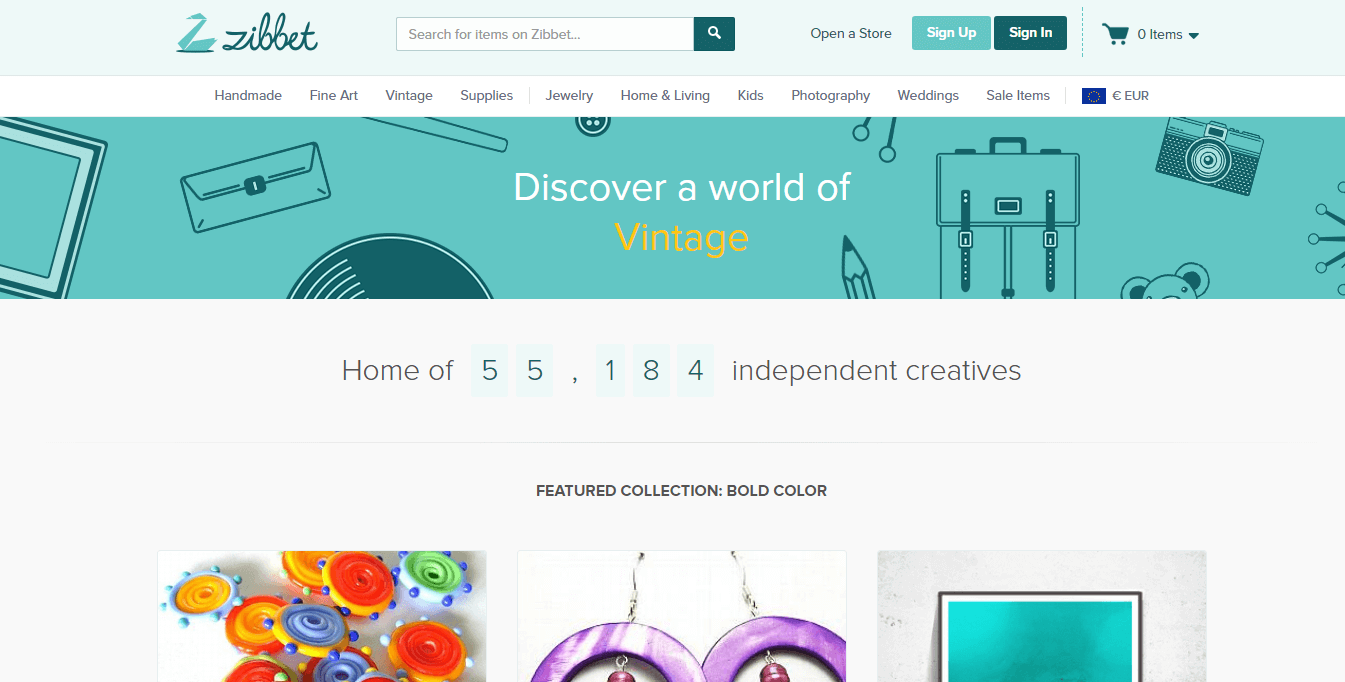
An online marketplace specifically geared toward the sale of handmade products, Zibbet makes it easy for sellers to set up their own shop without requiring specific business or programming expertise. The e-commerce platform emphasizes the creativity and independence of sellers – all of whom are artists, crafters, or collectors. Because Zibbet marketing is about supporting individual sellers, the platform also keeps the fees incredibly low: sales made on Zibbet charge no listing or commission fees. Sellers instead simply have to choose one of the three available pricing packages. The Starter package, available for as low as $4 a month, allows for limited customization and caps the number of permitted listings per month at 50. The Pro or Unlimited packages, however, permit an unlimited number of listings and greater customization.
| Number of active sellers | 55,000 (2018) |
| Number of products traded | Not specified |
| Reach | 250k unique visitors per month |
| Sales | $20,000 per month |
| Fees | 4-16$ / month |
| Commission | 0 |
When you set up a shop with Zibbet, you automatically get access not only to their marketplace, but to your own customizable website – even at the Starter level. These are integrated into a single store manager. The platform also allows for sellers who are already listed on Etsy to simply copy their items over to Zibbet, instead of having to list everything again.
To help boost the success of your online shop, Zibbet offers analysis and optimization services such as SEO and promotional tools. The online marketplace is configured to be compatible across the globe, and accepts multiple forms of payment as well as payment in multiple currencies. It also keeps track of any necessary accounting data for you, so that reporting your earnings is as easy as printing off your records.
| Benefits | Drawbacks | |
|---|---|---|
| ✓ Low fees | ✗ Full customization only at higher fee levels | |
| ✓ Cross-listing with Etsy possible | ✗ Limited range | |
| ✓ Centralized shop management |
Shopify
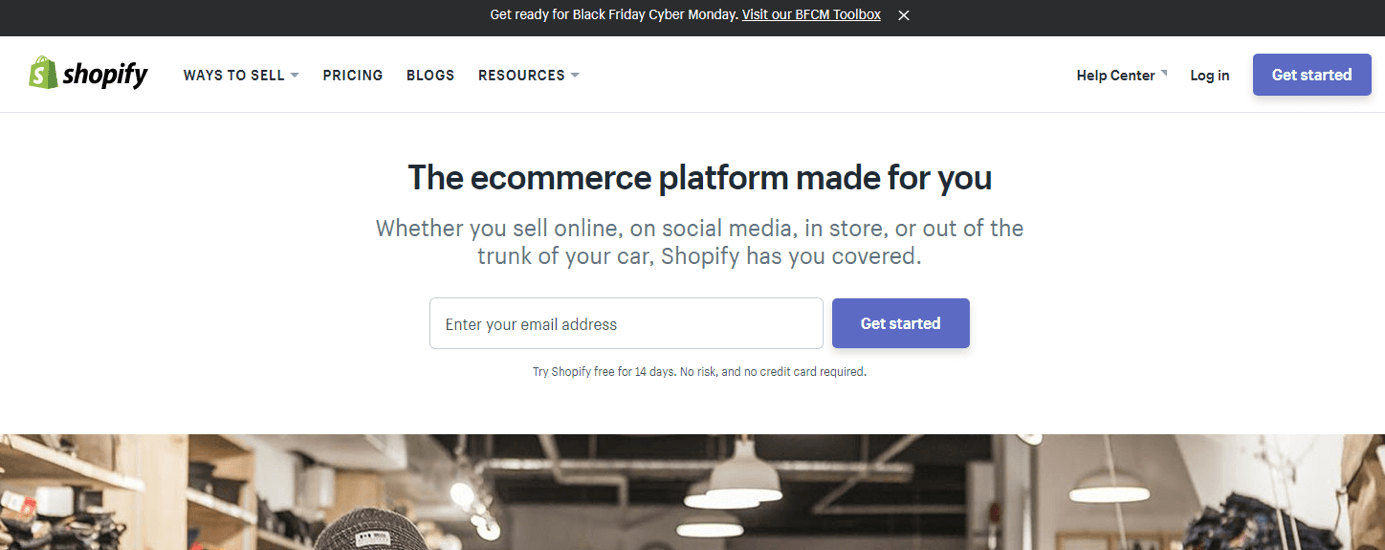
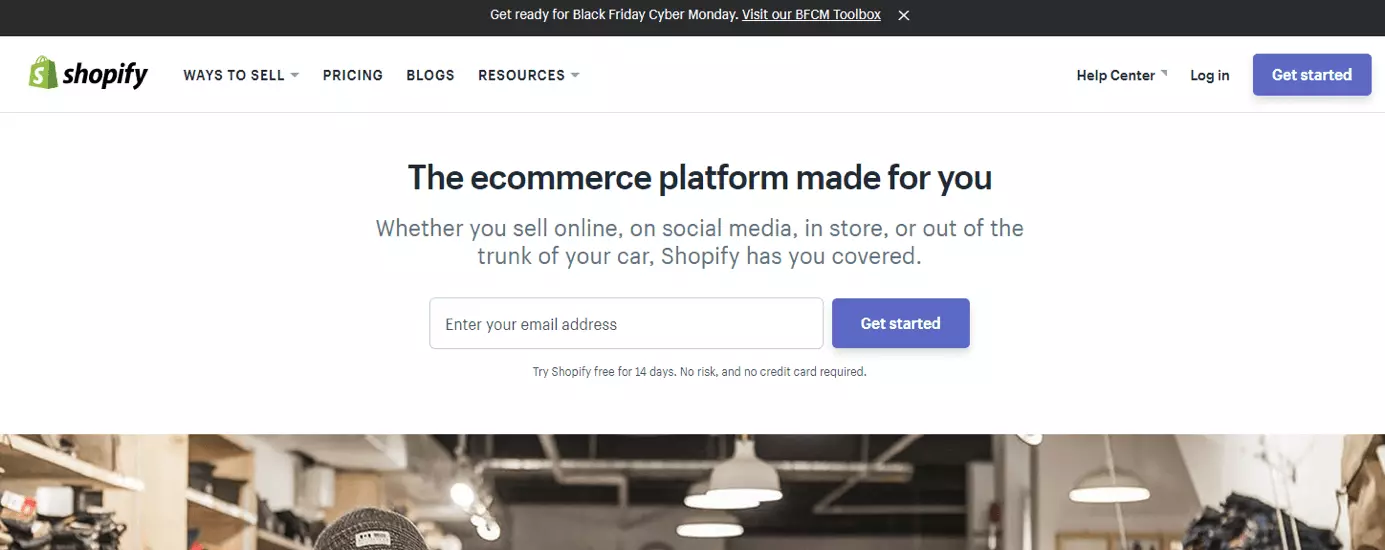
Regardless of how or what you sell, you can host your online shop using Shopify. The online marketplace is less focused on presenting your products to customers, and instead more focused on allowing you to tailor your own presentation and easily manage your online business. Using a unified platform, Shopify simplifies the listing process by allowing you to list your products on multiple channels – including Amazon, eBay, Pinterest, and others – using a single interface.
| Number of active sellers | 500,000 (2017) |
| Number of products traded | 131 million sales (Germany/2018) |
| Reach | Not specified |
| Sales | $40 billion (2017) |
| Fees | $29 - $299 |
| Commission | 0 |
Rates are based on one of three Shopify fee plans: Basic Shopify, Shopify, or Advanced Shopify. The monthly fee-based plans cover everything from the management of your own Shopify store to the processing of payments made by your buyers. Customization of your Shopify website is done primarily through HTML and CSS coding, though there is also a large selection of professional themes available in the Shopify Theme Store. Shops are fully customizable to help you build your own brand and make your platform appear exactly how you want it to.
Shopify helps ease the business side of selling online by offering inventory management, product organization, and SEO services for your shop. The e-commerce platform’s in-house shipping service makes it easy to get your products delivered to your buyers, and it also works with fulfillment centers and drop shipping providers. A range of analytics tools are also available to help you optimize your business, with statistics available on a centralized dashboard.
| Benefits | Drawbacks | |
|---|---|---|
| ✓ Highly customizable | ✗ High fees | |
| ✓ Centralized shop management | ✗ High customization requires programming knowledge | |
| ✓ Seller empowerment via integrated cross-listing |
Overview: Online marketplace comparison
| Amazon | eBay | Alibaba | Rakuten | Etsy | Bonanza | Zibbet | Shopify | ||
|---|---|---|---|---|---|---|---|---|---|
| Range | ↑ | ↑ | ↑ | ↓ | ↓ | ↑ | ↓ | ↑ | |
| Competition | ↑ | ↑ | ↑ | ↓ | ↓ | ↑ | ↓ | ↑ | |
| Listing fee | ✗ | ✓ | ✗ | ✗ | ✓ | ✗ | ✗ | ✗ | |
| Base fee | $40 | $39.99 - $4999.99 | 0–5.999$ | $33 | ✗ | ✗ | $4 - $16 | $29 - $299 | |
| Commission | ✓ | ✓ | ✗ | ✓ | ✓ | ✓ | ✗ | ✗ | |
| Interfaces | ✓ | ✓ | ✓ | ✓ | ✓ | ✓ | ✓ | ✓ | |
| Focus | ✗ | ✗ | B2B | ✗ | Handmade | ✗ | Handmade | ||
| Custom shop design | ✗ | ✓ | ✓ | ✓ | ✓ | ✓ | ✓ | ✓ |
Reviewer

Melissa Senn
Melissa Senn has been with IONOS since 2016 and focuses on the areas of websites, e-commerce, social media, and AI in the Digital Guide. As a digital strategist, she draws on her extensive SEO and GEO experience to translate complex technological trends into practical content.