

Writing a Project Plan: This is How You Lay the Foundation for a Successful Project

A project plan (also called a project management plan) forms the foundation for any project. This document combines all the individual plans that are required for a project’s successful execution. It is a timetable that the project manager will create at the beginning of the process and that should be highly detailed.
What is a Project Plan?
Each project should be implemented using a project plan. However, in the field of project management there is no exact formula for which documents exactly are needed. Often, very different planning tools are referred to as a project plan:
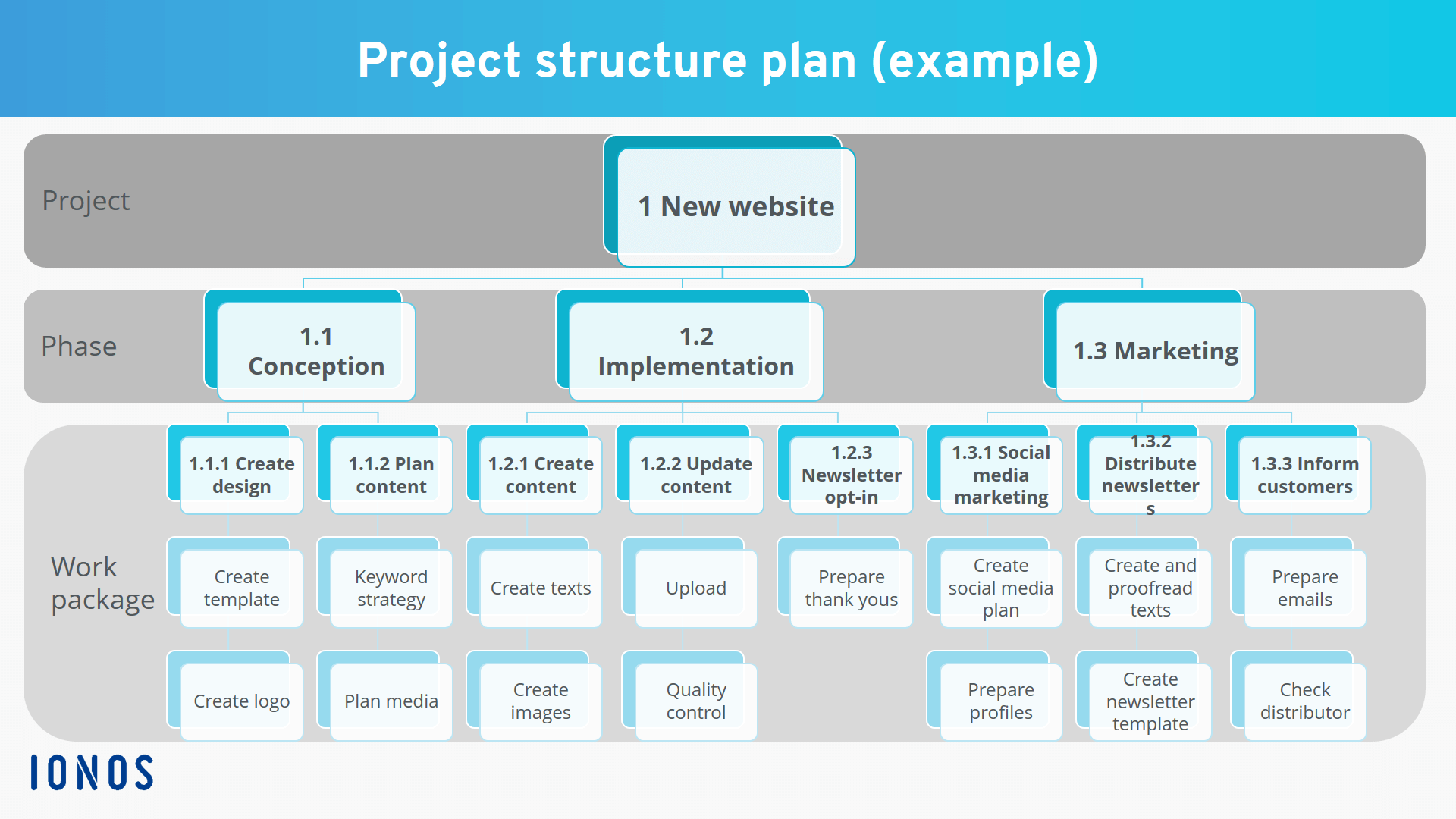
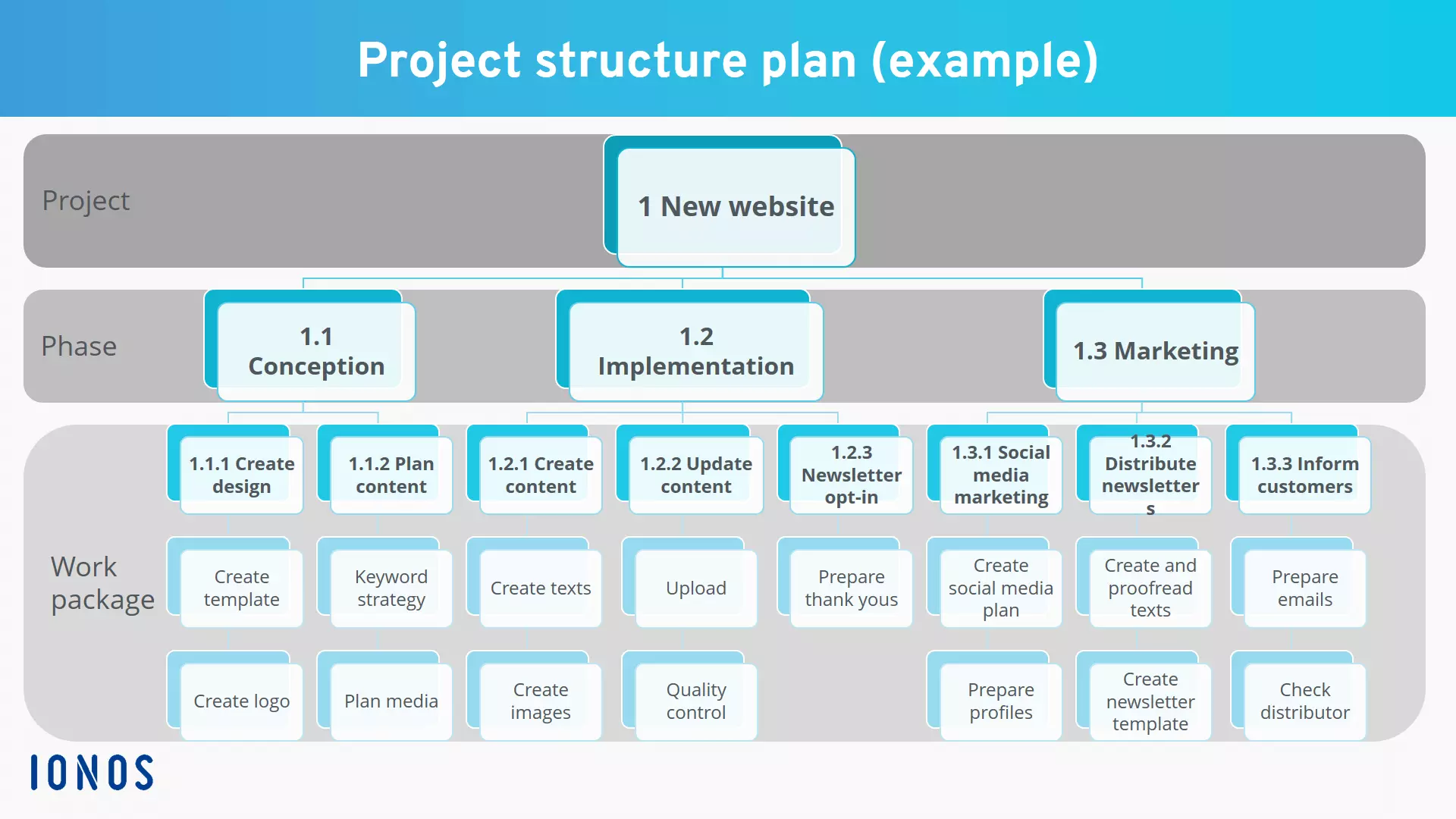
- Work breakdown structure: This provides a breakdown of the tasks to be completed by displaying them as subprojects and work packages.
- Project schedule: This determines the project’s time schedule, with start and end dates for specific work packages.
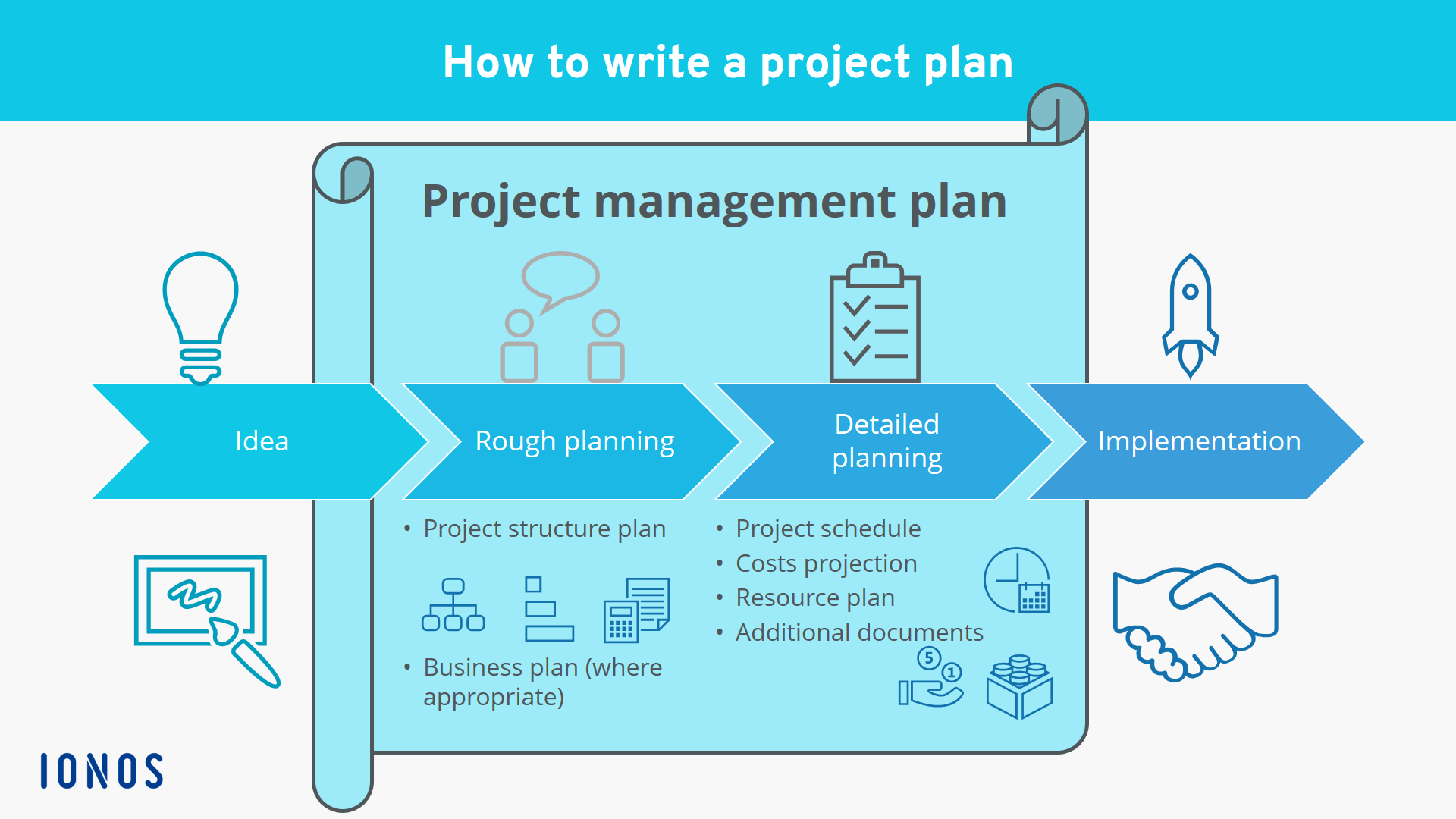
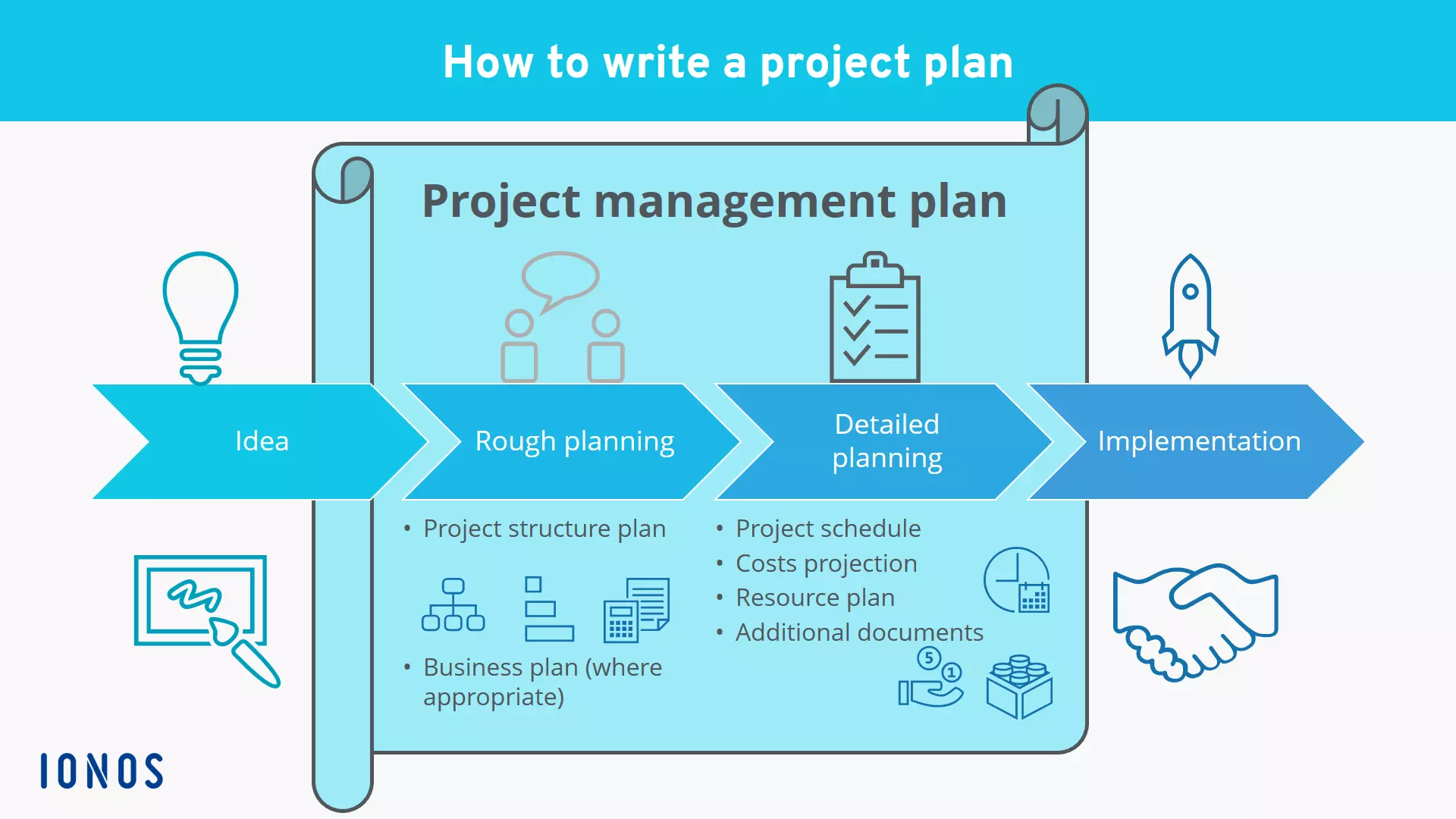
- Project management plan: This combines the project structure plan, the project schedule and all the other required project documents. According to DIN 69901-5:2009-01, it is the plan being referred to when the term “project plan” is used. In the course of this article, when we write project management plan, we also mean project plan.
The PMBOK guide (Project Management Body of Knowledge) is used internationally for project management, and currently only uses the term “project management plan” instead of the once commonly used “project plan” designation. This is to avoid confusing the terms.
A project management plan comprises several different documents to suit the scope of the project. It should at least contain the following documents:
- Work breakdown structure
- Project schedule
- Costs projection
- Resource plan
In the case of more complex projects, additional plans can be added, such as those for risk management, quality management and configuration management.
Why You Should Write a Project Plan
To begin with, writing a project plan is a good idea for projects of virtually every size. This is because when writing a project plan, you must think about the question of how you can achieve your project goal with the least possible risk in a short period of time, and with the least possible resources. Furthermore, you’ll think of potential problems during the planning and come up with solution approaches. This way you can respond quickly if there turns out to be any problems.
Normally, a project plan is approved by project partners, and serves as a basis for future action. Therefore it should be written at the beginning of the planning phase.
The document can also serve as information for your customers and project partners. Through a written plan they receive an overview of the separate work stages and can verify if the planning considers all their wishes. If this is not the case, you can still modify the plan before the actual project begins.
Furthermore, the written plan functions as a working tool for the project manager in charge. During the project, it helps them to maintain focus as well as adhere to budgets and deadlines.
The plan should be detailed enough so that the project manager can use this document to hand over their work to a new project manager without any difficulties. So that this can provide a quick overview, it also shouldn’t be crammed with too much information of secondary importance. The rule of thumb is: as detailed as necessary, as brief as possible.
7 Key Questions for Writing a Project Plan
It isn’t necessary to create a large volume of different sub-documentation for every project. With smaller projects, it is often enough if you specify the answers to the following key questions beforehand:
- Where are you in the project: How does the starting situation look and what information do you possibly still need in order to be able to fully assess this?
- What is the project’s market economy value and when should you calculate the Return on Investment (ROI)?
- What project outcome do you aspire to achieve: What is the project’s main purpose? What should the result show?
- Who is participating in the project: Who are the stakeholders? Who should be actively involved in the project team and which roles should the individual team members assume?
- How do you want to structure the project: What tasks must be completed? How can the project be divided into work packages and subprojects? What risks are there in the specific sections and how can these risks be reduced?
- How long do you have to achieve the project goal: Until what date do you have to complete the specific project phases so that the project can be carried out within the planned timeframe?
- How much can the project cost: What resources are available to you and how are these supposed to be divided among the specific work packages?
If you wish to create specific plans for your project’s various sub-components, you can familiarize yourself with our sample templates for the work breakdown structure and project schedule.
Among the most frequently used tools for displaying a project schedule are the network diagram, road map and Gantt chart.
Which Tools Can You Use to Write a Project Plan?
A simple project plan that just briefly and concisely answers the key questions above can also be created quite easily without complex software – for example, using an Excel spreadsheet or any other form of spreadsheet calculation software.
With a more comprehensive plan, you can have recourse to special project management software for writing specific documents, such as MS project, or use online tools such as Smartsheet, Trello or Wrike.
Summary: Application is the Determining Factor
A good project plan does not necessarily have to be comprehensive. What is crucial in ensuring its quality is whether it covers the most important project planning components, and whether there are guidelines that provide info on when each project phase has to begin.
So that the implementation goes as smoothly as possible, a kick-off meeting with the project team should take place beforehand. As project manager, use this appointment to communicate the essential project information to each team member, to define responsibilities, and to choose common methods and tools for the project’s execution. In the end, the project plan serves no purpose if it’s not wisely implemented.
Click here for important legal disclaimers.
Reviewers

Anne-Laure Wolber
Anne-Laure has been part of the IONOS Digital Guide since its inception in 2016. As an expert in the startup category, she focuses primarily on the strategic integration of SEO, GEO, and conversion rate optimization. Over the years, she has also gained extensive experience in related performance disciplines such as lead generation and native advertising. As a polyglot, she leverages her multilingual background to develop content strategies with precision and impact for international audiences.

Christian Heldmaier
Christian Heldmaier is an experienced online marketing and SEO specialist from Karlsruhe. He has been working as an SEO Manager at IONOS since July 2020.