

Job reviews – what is important for companies and employees

Have you ever reviewed a hotel or a café online? These kind of review sites exist for workplaces too. Employer ratings follow the same principle: As an employee, you can share your opinion about your employer with the public and give potential new employees an advance impression of what awaits them in the company. It could be very bad for employers to get a poor review on the internet. Company review sites contribute to the public perception of the company, which will usually do their best to seem positive. But what is the value of these kinds of assessments? And what are the most commonly used platforms?
What are job review sites?
Job review sites serve to give potential applicants an impression of a company other than the way it presents itself. In a direct employer comparison, companies are assessed on the basis of criteria such as employer behavior, the working atmosphere, how cohesive teams work together, and career and further training opportunities. The exclusively anonymous job reviews are rated via points, stars, or school marks and can be supplemented by an individual comment. These job review platforms generate their income mainly through employer branding measures. Functions such as your own company profile, video and image material, and job advertisements are often subject to a fee for companies.
How important are job review sites for companies?
More and more employees evaluate their current or former employer on the internet. The increasing spread of job review platforms is mainly due to the war of talents, which gives skilled personnel the privilege of being highly sought after on the market. It is clear that most people want to obtain comprehensive information about a potential employer before deciding to apply for a new job.
How should a business handle the job reviews? A rating can be positive, neutral, or negative, and the right way of dealing with the assessments and open communication is crucial. It is important that you show that you take the feedback seriously. In general, you should look at the assessments in terms of the improvement aspect, because the assessments show you specific topics that your employees are dealing with. It is also advantageous if you are actively involved. Here’s how to use the job review sites for yourself:
- Handling negative feedback: Interact with your target group by actively responding to feedback. Ultimately, you benefit from the employee’s assessment and can develop further as a company.
- Comparison of self-image and external image: Does your company correspond to the reviews and experience reports of the employees? The views should be as consistent as possible to convey an authentic image of your employer brand.
- Actively communicating your strengths and benefits: What distinguishes you from other employers? Be open and honest as an employer to recruit suitable employees.
- Create your own company page: Meanwhile, almost all platforms have the function of their own company site. This can include a company profile, a direct link to your website, photos and job advertisements, for example.
It is more often unhappy ex-employees who will seek out these platforms to provide feedback. You can increase the number of positive reviews by pointing out the review options to existing employees. A suitable opportunity for this can be an appraisal interview, the end of the trial period, or even after a job interview. Kununu provides a free toolkit with various templates for banners, posters, or other material that you can use to invite your employees to participate in.
What is important for employees?
Assessing your own employer can be both an opportunity and a risk. Above all, as an employee, you should pay close attention to your wording. Even if you write the article anonymously, there is the risk of being identified by giving too many details. Depending on how harshly you word your criticism, you could put yourself in the firing line.
Another issue is the lack of general context within the job reviews. These may tend to be exaggerated, especially if someone is very unhappy, or on the other hand, facing a promotion. When you write a review, you should think first of the readers: Does your contribution help them to assess the employer? Statements based on emotion quickly become implausible or unfair, and make it difficult for outsiders to form their own opinion.
A positive or negative opinion can always create more transparency if it is both honest and factual. Only in this way can your assessment contribute to better working conditions and serve as orientation for future applicants. Are you satisfied with your employer? Even then, an assessment is worthwhile, because a positive employer image ensures higher quality applications in the long term. More suitable applicants, in turn, can improve the working atmosphere and ultimately also the performance of the company.
Are job review sites trustworthy?
As dissatisfied employees tend to be more active on review platforms, the question of the credibility of these reviews remains. If an employee feels unfairly treated, it is easy to show your frustration under the protection of anonymity. Another danger of anonymous participation is that employers themselves make assessments. If a company does poorly in the company review sites, there is often the temptation to polish up its own image there on its own. On the basis of the following quality criteria you will succeed in distinguishing serious job reviews from dubious ones:
- Number of ratings: The more often a company is evaluated, the more trustworthy the reviews will seem. Comments are also easier to classify: Is it only one person complaining about poor air conditioning, or is it a company-wide issue?
- How up-to-date the reviews are: If the last review was some time ago, this means that the conditions could’ve changed a lot since then.
- Number of review criteria: Is it only possible to select “good” or “bad” in the course of the review, or are there other possible answers? And are only a few or a whole series of questions asked about the individual criteria? The more precise and differentiated the evaluation, the more representative the result.
- Search function: Can you search for a specific company and possibly filter the results by industry or region?
- Information about the employer: Is information available about the company – such as industry, product range, and size? Ideally, current vacancies would be displayed too.
- Ease of use: Is the platform interface user-friendly, can you find relevant information quickly, and are they freely accessible or can they only be viewed after registration is complete?
You can recognize a fake entry, for example, by the fact that it contains no concrete facts, and the review is worded vaguely. The more concrete, fact-based, and specific an assessment is, the more credible it is.
Comparison of the most important job review platforms
It is a good idea for employers to regularly check relevant assessment platforms to find out about additional assessments. Among the best-known platforms are Kununu, Glassdoor, and Indeed – we’ve also included a smaller site, which may have more local businesses. Social networks such as XING or LinkedIn may provide insight, too. Even if these platforms do not make it possible to evaluate employers, it is possible to contact current and former employees via the search function. Ask them about topics related to working conditions and activities. In the best case, you will receive reliable and personal answers.
Kununu
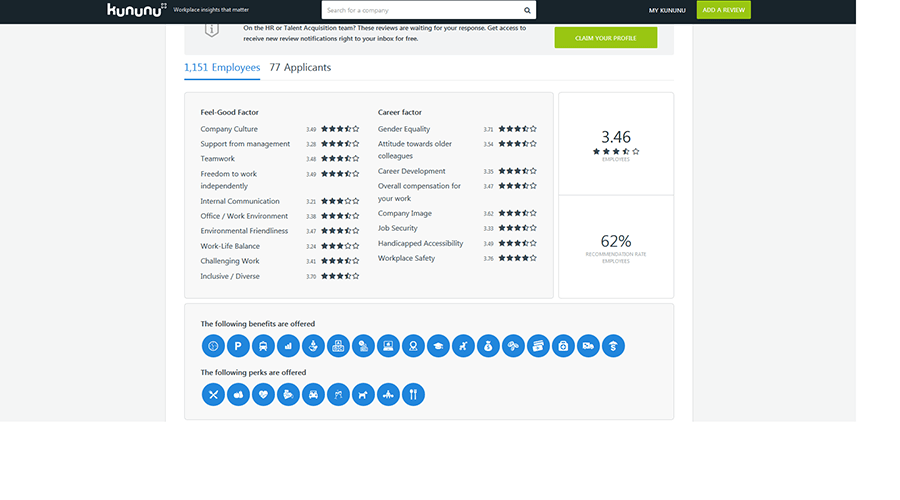
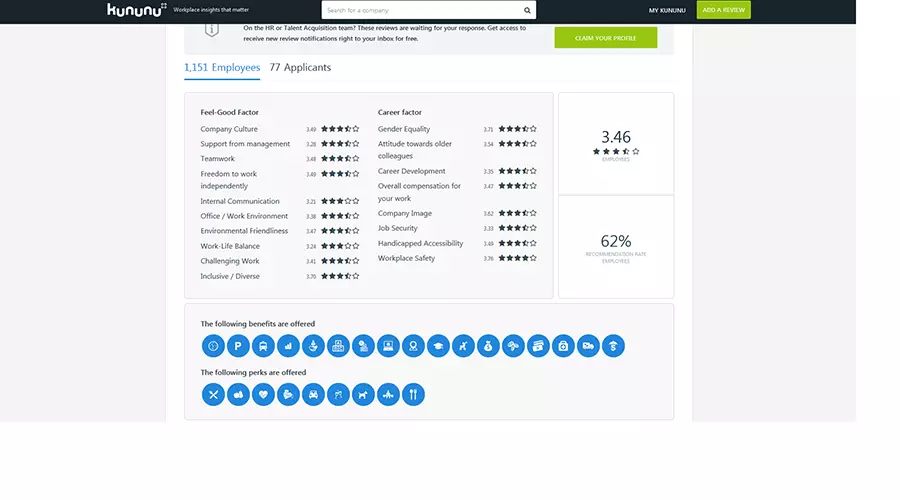
Kununu is a big employer rating platform. The platform was founded in 2007 and is now part of the XING business network. The platform enables anonymous assessment by employees, trainees, and applicants. The categories open for assessment are supervisor behavior, colleague cohesion, interesting tasks, working atmosphere, internal communication, and equality.
Look before you leap
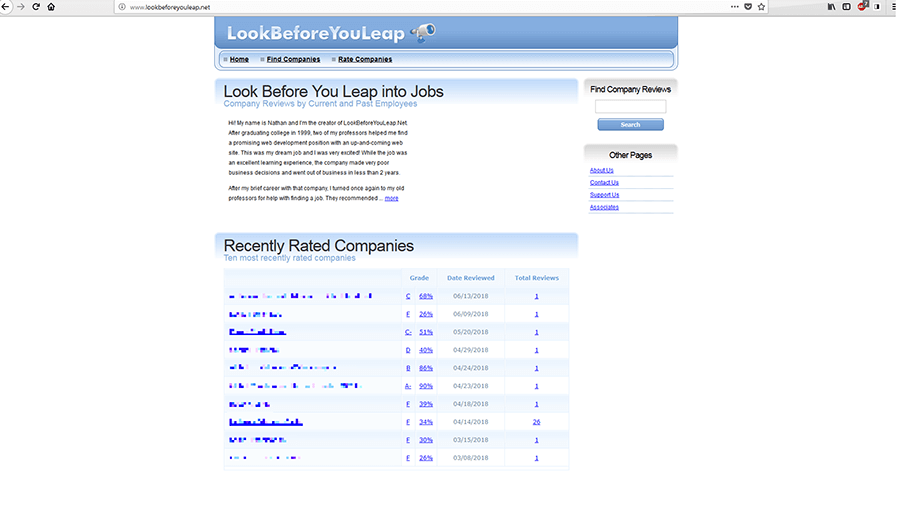
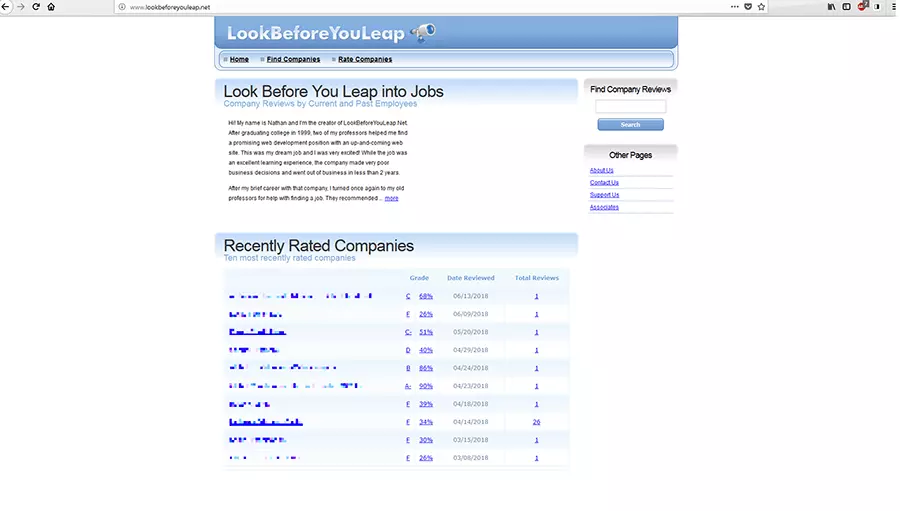
Look before you leap, was created in 2003 by someone who had had poor experiences job-hunting in the past, and wanted to help others avoid the same experience. The website shows the most recently rated companies, best rated, and worst rated companies. The companies receive an alphabetical grade, as well as a percentage of how well they’re doing. You have to create an account to rate a company – probably to avoid spam job reviews, and increase the reliability of the platform.
Glassdoor
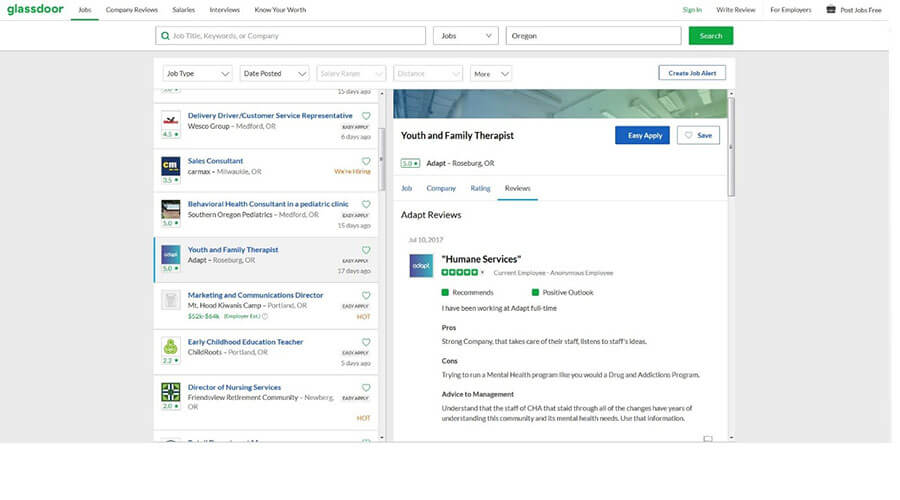
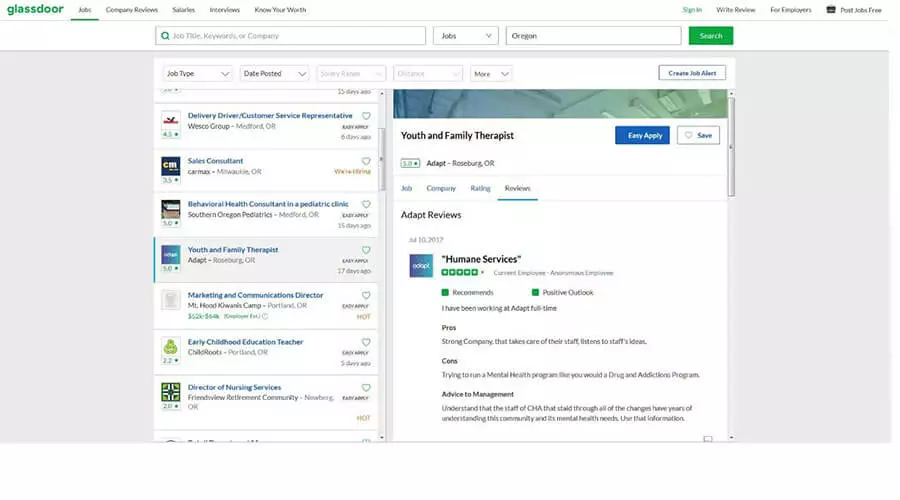
The US job review platform Glassdoor was founded in 2007. Glassdoor focuses on information about the employer and assesses the level of salaries and the quality of the interviews. In addition, the reviews often include questions from the interview, which allows applicants to prepare themselves well.
Indeed
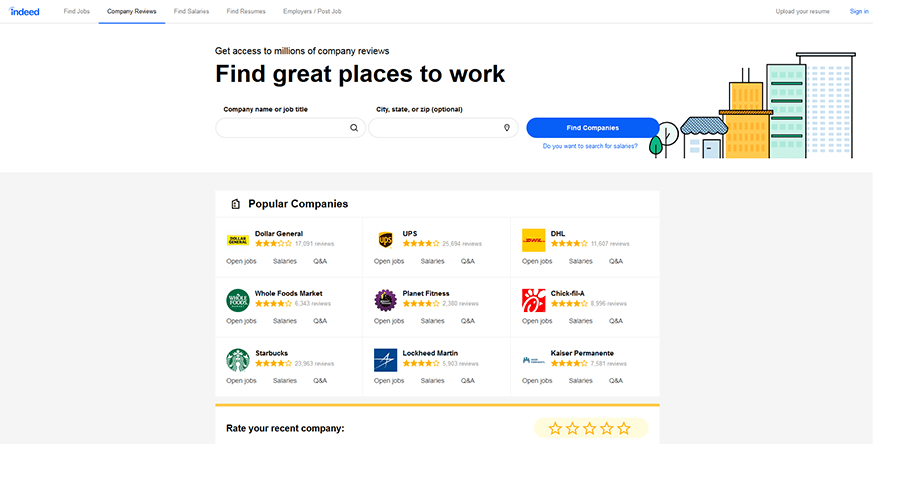
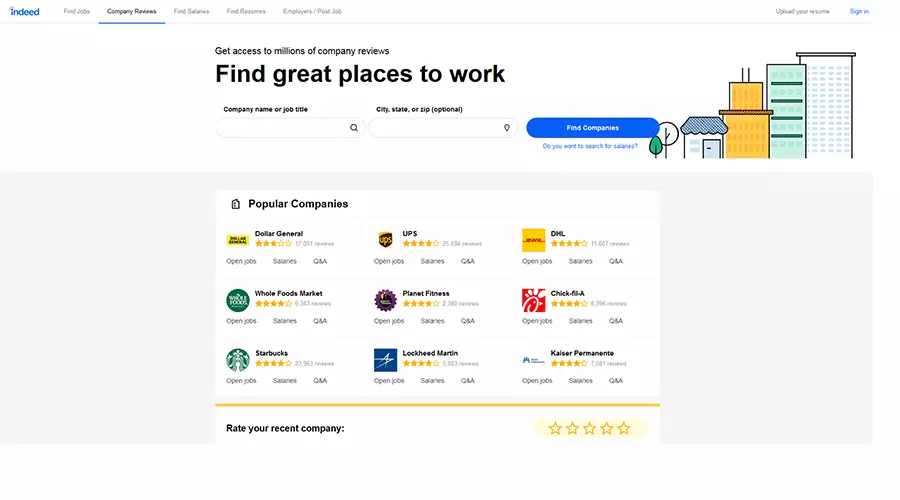
Indeed is used widely for searching for a job, but it also contains several ratings for most companies that post jobs via the platform. The search function allows you to search via location, or for a specific company. If you search for a location, then the top 50 results will be displayed, sorted by rating and relevance. Here you can see information like detailed job reviews, salaries, and jobs on offer.
Reviewers

Anne-Laure Wolber
Anne-Laure has been part of the IONOS Digital Guide since its inception in 2016. As an expert in the startup category, she focuses primarily on the strategic integration of SEO, GEO, and conversion rate optimization. Over the years, she has also gained extensive experience in related performance disciplines such as lead generation and native advertising. As a polyglot, she leverages her multilingual background to develop content strategies with precision and impact for international audiences.

Christian Heldmaier
Christian Heldmaier is an experienced online marketing and SEO specialist from Karlsruhe. He has been working as an SEO Manager at IONOS since July 2020.