

How to create a club website

An association website helps to promote the club and its activities, ensures that it stays in regular contact with its members and also attracts new ones at the same time. But what kind of content belongs on a club or society website and what should be the focus? What general conditions must be observed when creating a club website? Our guide summarizes the most important information when learning how to create a club website.
- Get online faster with AI tools
- Fast-track growth with AI marketing
- Save time, maximize results
What is the best domain name for a club website?
A domain is the unique internet address that opens up a website when it’s typed or copied into the browser. The domain name should lead directly to the target and, if possible, refer to the content and/or regional focus of the association. The website will be found more easily if the terms people are most likely to search for to find your club are included in the domain name. It’s important to think about SEO when choosing your domain name. You should pay attention to:
- The type of activity that the society undertakes should be reflected in the domain name, for example “table-tennis-meetup…”, “singing-get-together…” or “chess-friends…”.
- For geographical orientation, it makes sense to include the location or region. State abbreviations are a good idea as they’re so short and are easy to add to the name. For example, “Lacrosse-club-NY”, “Brass-band-MS”, or “Arts-and-crafts-TX”.
- With currently available domain extensions, the domain name can also be adapted in terms of content or region. Not only is .miami or .boston available, but also .football, .pet or .run. These are just a few examples out of more than 1,300 available domain endings.
- If several domain names are used, redirect all additional domains to the main domain for the club website.
Once you’ve found the perfect domain name for your society website and also bought it, you should also set up club email addresses, so for example “boardmember@exampleclub.tld” or “mail@exampleclub.tld” for general inquiries or “run-coaching@exampleclub.tld”, depending on the different activities offered.
How much does a domain actually cost? We answer this question in more detail in our article on the topic.
Use a website builder to create the club website
Using a website builder is a good idea for creating an association or club website. The advantage here is that you can start straight away because you don’t need any programming knowledge and can plan the costs precisely. Think in advance about what you want to publish on your club website. Look at photos and texts that already exist and showcase the club well.
Free website builders are usually financed by advertising. This could possibly scare off potential sponsors for your club.
The advantages of using a website builder for creating a club website is that you have peace of mind that your website will be displayed properly on mobile devices, and you don’t have to worry about mandatory content such as the imprint or data protection regulations thanks to pre-built templates. However, with a website builder you are limited when it comes to design and individuality.
Advantages of IONOS MyWebsite
The website builder, IONOS MyWebsite, makes it possible to create appealing websites without needing any web design knowledge. The intuitive and easy-to-use drag-and-drop interface helps you to build your club website according to individual wishes and needs. If you do run out of inspiration, that’s not a problem either. The builder contains numerous design templates tailored to clubs. In addition, you receive text creation support and an extensive photo library. Features like search engine optimization, website security, your own domain and a professional email address are of course also available.
- Intuitive website builder with AI assistance
- Create captivating images and texts in seconds
- Domain, SSL and email included
Have your club website created by a service provider
If you commission a professional service provider to create the website for your association or club, you will end up with more design freedom, but the whole thing is usually pricier. In return, you don’t have to worry about (almost) anything, provided that you have thoroughly briefed the service provider. At IONOS, you can also have your club website created by in-house professionals, including comprehensive consulting, SEO expertise and ongoing support.
Alternatively, you can choose a content management system for creating your club website and create a website with WordPress or an alternative CMS from our article on the best CMS platforms.
In our article entitled “What does a website cost?”, we go into more detail about the costs and effort involved in creating and operating a website.
What kind of content belongs on a club website?
The content placed on a club or association’s website is as diverse as the different types of clubs out there. Those searching online for a particular association or club are very likely to have a thematic interest. Therefore, the website’s image language and text design should match the purpose of the club or association. Look for suitable photos that radiate positivity. This can really help when trying to acquire new members.
If your club website is in the process of being created or redesigned, you can let visitors know about it with a coming-soon site. Remember to use a good image that reflects the club and ensure you provide essential contact information.
The content mentioned below should be included on the website:
Home i.e. “the club”
A website’s homepage is the central point of contact. It explains the goal and purpose of the association. It’s a good idea to include a thematically appropriate photo or illustration here. First and foremost, the aim is to captivate website visitors so that they continue to engage with the content. Quotes from satisfied members, outstanding competition results or a prize that the club recently won is sure to draw attention. It is not so much about showing off, but about appealing to potential members. The article “How to create an “about me” page” contains lots of tips and tricks.
Transparency also includes providing information about membership fees and what is expected of association members on the website. To do this, you could set up a separate subpage called “Membership” where potential members can find the membership form, the club rules and other official documents to download.
Current topics
Under this menu item, you can describe what life in the club is like. How many members are in the club? Has a certain member achieved something special for the club? Where was the last competition won? Has a new piece of equipment recently been purchased? This information is usually arranged with the most recent at the top. Older news can be shown as a teaser or displayed in a sidebar on the homepage.
However, integrating a news section like this into your club website does end up increasing the effort required to maintain the website. The saying “Nothing could be older than the daily news, nothing deader than yesterday’s newspaper” is quite fitting here as it also applies to club websites. A News subpage whose most recent entries are from a year ago will make the reader doubt whether the club even exists anymore.
Event calendar
Clubs thrive on their members regularly meeting up. Whether fixed dates or special, one-time events, a well-filled events calendar on a club or society’s website is always an indication of a lively club. To add a calendar in WordPress, there are various plugins available. The Google calendar can be adapted with a few clicks and placed as an iFrame on the website.
Our team
Providing short profiles of club members creates trust and transparency for the club website. The club’s board of directors, department heads, trainers or professional supervisors should be included along with a photo of them. This lets potential members know early on who they can expect to see in the club. However, it’s important to first ask the team for consent before publishing their photo.
Member administration
A separate area for member administration or for events that require registration or fees should also be included in a club or association’s website. Make sure that users first have to log in in order to access this area. To implement this, you’ll need a database. Since personal data is stored here, it’s paramount that security is top notch in order to prevent data leaks.
Newsletter
Sending out newsletters is a good way to make sure that association members are regularly informed. It’s also a good opportunity to recruit new members. Newsletters need to be well designed and filled with interesting content to make sure they actually get read. There are numerous professional (fee-based) providers that can help you create newsletters.
Place a registration form on your association’s website to increase readership. To give readers (and yourself) peace of mind, it’s a good idea to implement the double opt-in procedure where a confirmation email containing a link is sent out. This is done so that users whose email addresses are involuntarily entered into mailing lists are protected from spam. Remember to also integrate an unsubscribe option.
Legal requirements
If you are collecting any personal information from users, it is absolutely essential to have a privacy policy on your website. Personal information usually includes name, email address, phone numbers, addresses and, in some cases, even IP addresses. Legislation like the GDPR in Europe and the CCPA in California actually require more than a privacy policy. Users have to be given the option to request a copy of their collected data or for it to be deleted if they wish. It makes sense to place a link to the privacy policy page in the footer of your club or society’s website.
Pros and cons of running a club website
Whether sports, music or a charity association, creating a website for your club makes it appear more serious. On the whole, it’s a good idea to run a website, but, depending on the chosen website type there can also be downsides.
Pros of a club website
The association website provides visibility and visibility provides reach. Information about the club, its activities as well as any upcoming events can easily be made available to a wide audience via the website.
Club members will also find it easier to communicate with one another, which is especially helpful if they don’t live near each another. Information about goals, projects, dates and contacts are transparent and publicly accessible, as are the club rules and minutes of any recent meetings. This strengthens member loyalty and the interest of potential members.
A club or society website also provides a place to raise donations or to obtain sponsors, depending on the purpose of the association, of course.
Cons of a club website
Once created, a lot of time, effort and possibly money is required to keep it running. A club with limited funds and personnel can quickly reach its limits when attempting to maintain a professional website.
A club or association website can also pose privacy and security risks. As the operator, you have to make sure that sensitive information (member data) remains protected. A club website, like any other website, must be protected from malware and other threats and this can prove challenging.
In an age where practically everyone uses social media platforms, a website’s reach is limited since not everyone visits websites regularly. Some target groups, i.e., older and very young people could possibly be better reached via other channels.
Examples of appealing club websites
The often-limited financial resources, especially regarding small clubs, means that there are still quite a number of clubs that have no website or if they do, it’s not optimized for mobile. Below we present three examples of successful club websites, which also have good visibility on mobile devices.
Factual, informative and accessible
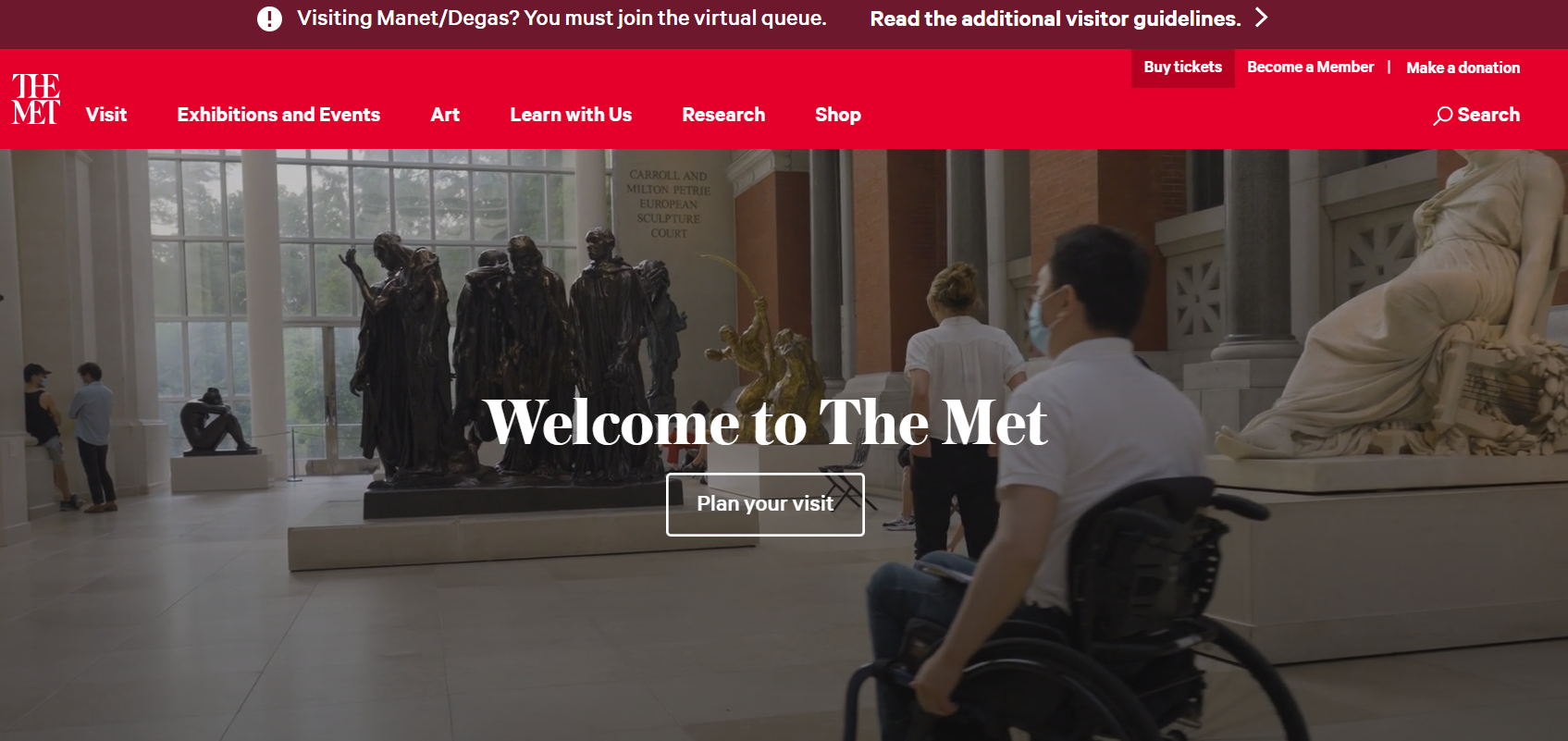
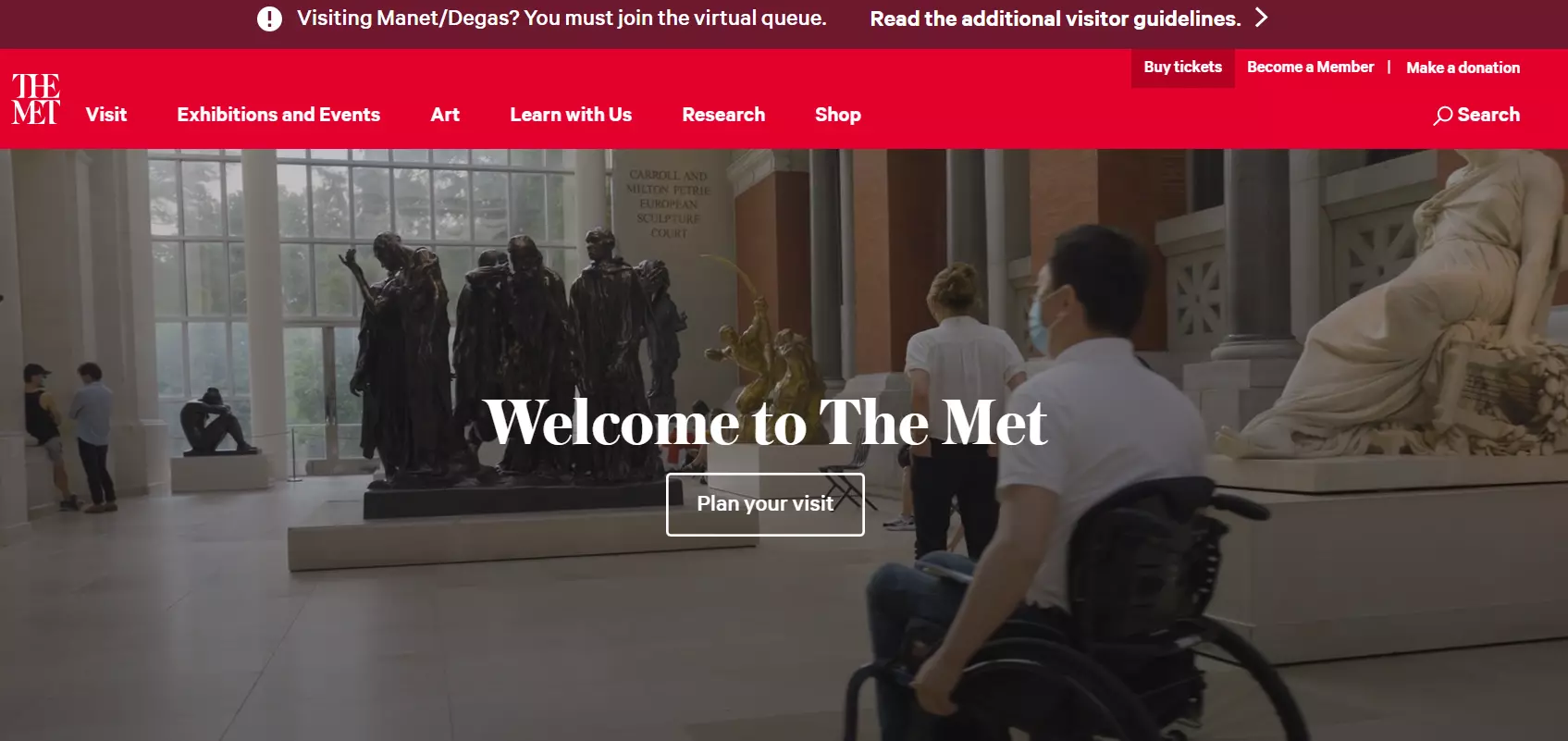
The Metropolian Museum of Art’s website offers all important information at a glance. The “Plan your visit” CTA button is the first thing the visitor sees. Clicking on it guides the visitor through a seamless process of purchasing tickets, finding directions, and becoming familiar with the current museum rules and guidelines. The video on the main page also gives the visitor a taster of what awaits them at the museum.
All information included and yet approachable
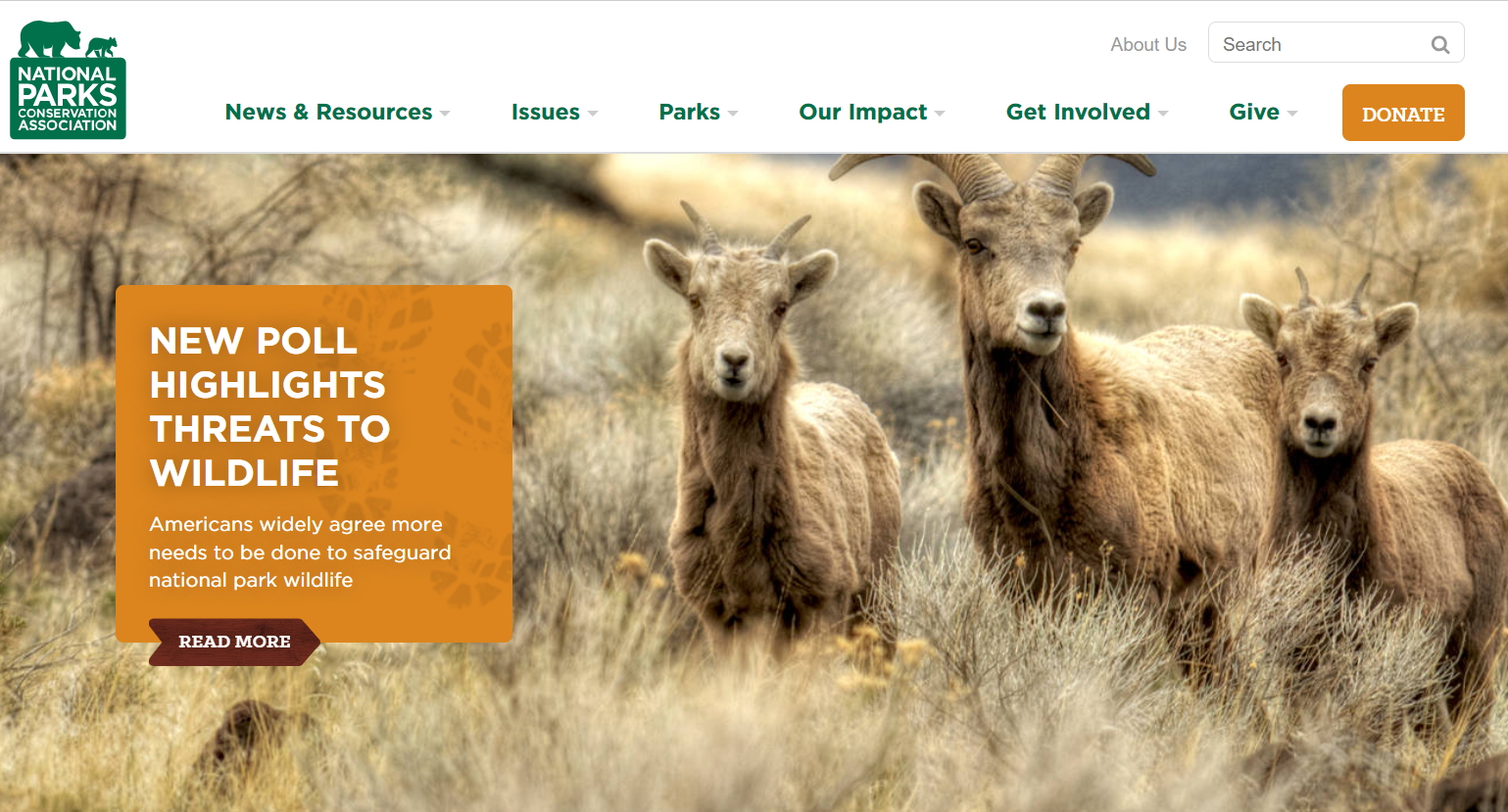
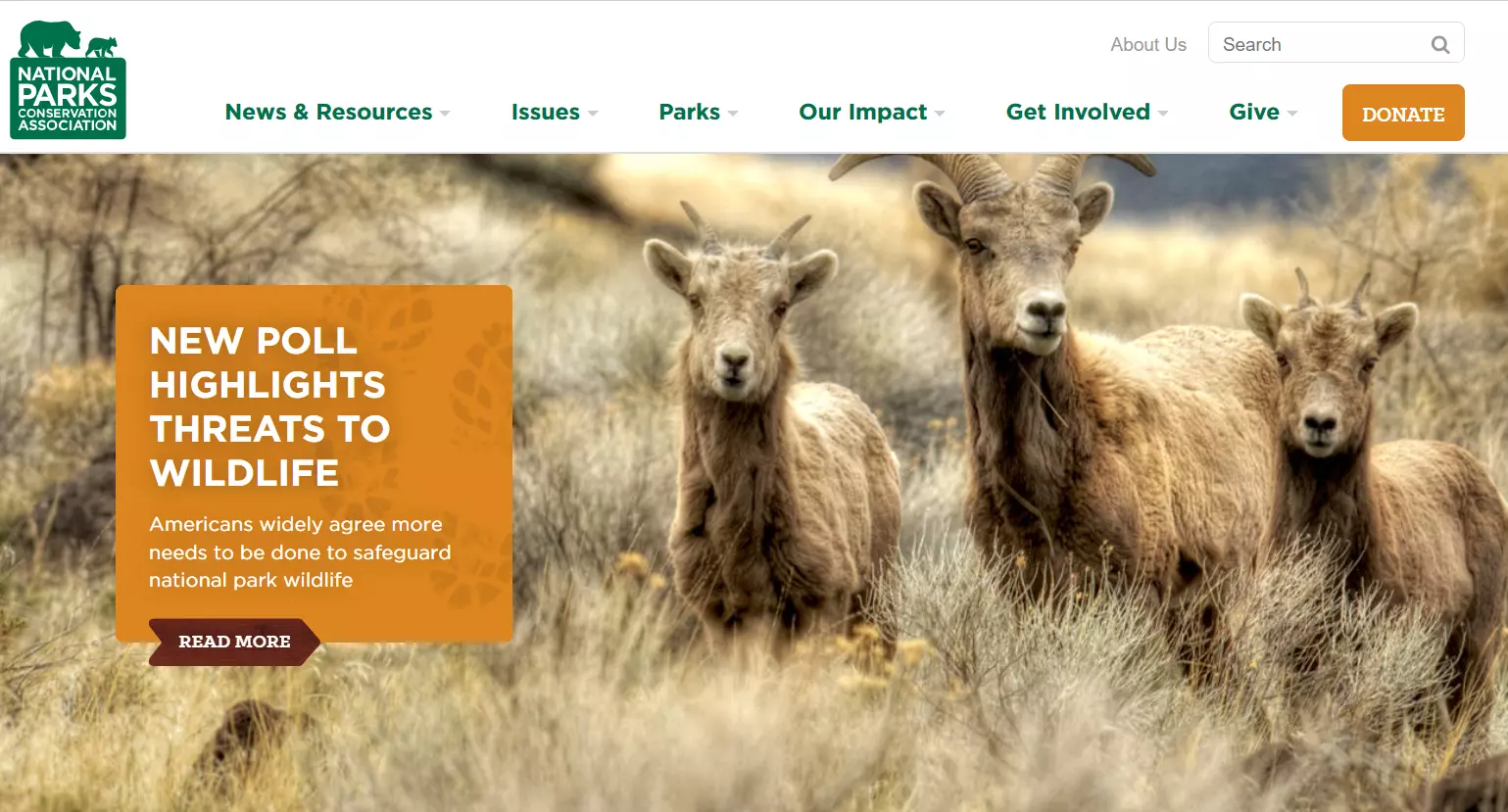
The National Parks Conservation Association (NCPA) has been conserving the nation’s parks since it was founded in 1919. All essential information is presently clearly on their website and sections can be accessed via the header menu. Visitors can access information on numerous topics such as current environmental issues to park-specific informational pages while at the same time being awed by beautiful imagery.
Emotional and oriented to the fans
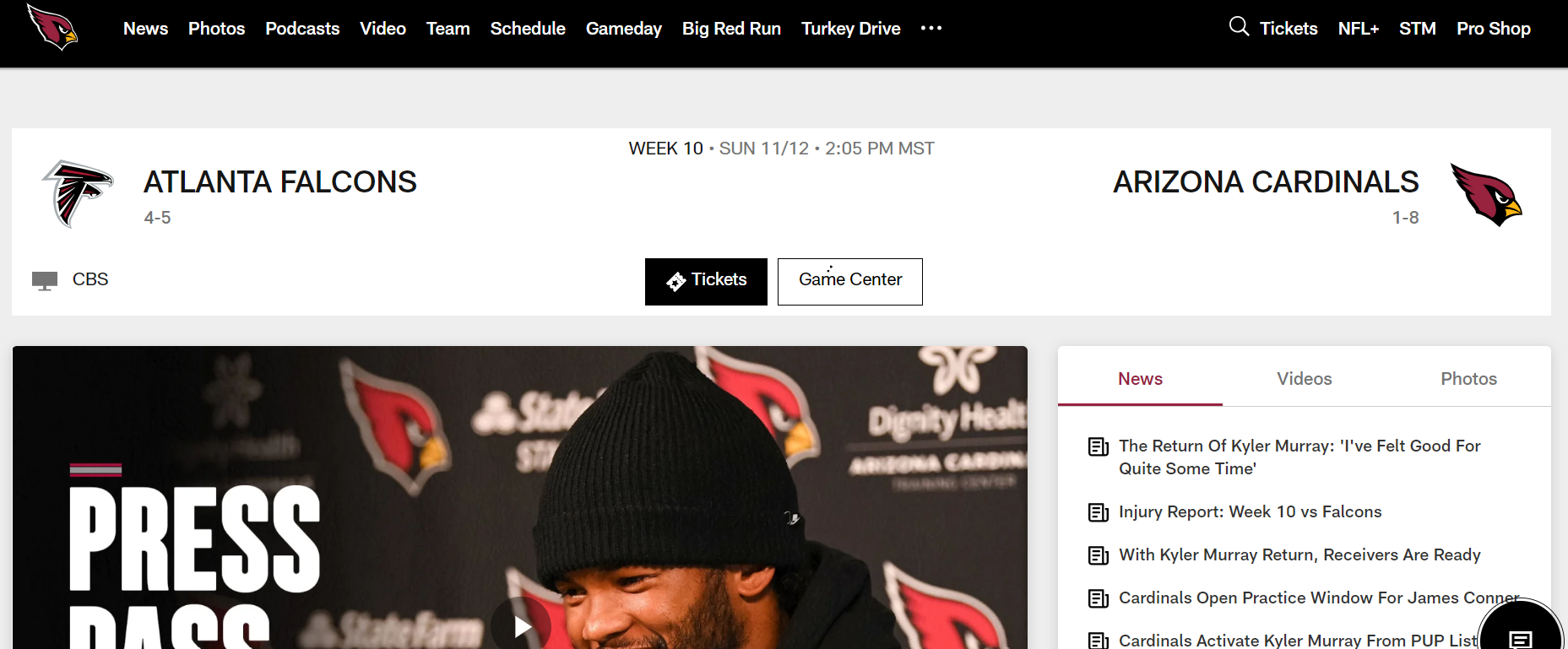
This American Football club’s website is very matter of fact. The website of the Arizona Cardinals is packed full of information that reflects the club’s activity. Straightaway visitors can see when the next game is scheduled and against whom as well as news teasers on the right-hand side. The option to buy tickets is right there in the middle so it cannot be overlooked.
Social media for that extra reach
Depending on the kind of association and the target audience, activity on social media can be used to boost the website. In our guide “The most important social media platforms at a glance” you can find out which platform is most suitable for your club or association. However, trends in social media use and user behavior change quite rapidly so make sure to stay up to date.
How can a club use social media to increase awareness of its website? One trick is not to spread the news yourself, but to simply show a headline as a kind of teaser and then to link to the association’s website and let the reader find the rest of the information themselves. Hopefully the user will stumble across other information about the association while they’re on the website and may even decide to sign up. Whether this works or not could depend on the clever use of popular or trendy hashtags. In addition, the channel should be regularly updated. This should happen at least once a month.
When to use which platform
- an Instagram account is perfect for sharing photos and short videos. You can also place links in your club’s Instagram stories.
- a Facebook account can be used as an event page for the club.
- a YouTube channel for the club works well if the activities undertaken can be presented well in videos.
- TikTok has great potential for reaching a younger demographic.
- WhatsApp groups allow you to reach members quickly and conveniently.
A website is a must for every club. But before creating a club website, the pros and cons should be thoroughly weighed up. Only then can an informed decision be made as to how the website will be created and used for the association and what the aims are. In many cases, it makes sense to combine the website with alternative communication channels or social media.