

Infrastructure as Code (IaC)

When it comes to IT infrastructure, there is basically no way to get around virtualized software-controlled hardware nowadays. You can assemble storage, server and network resources as well as complete data centers with precision and scale them at any time without having to manually access the devices. Through Infrastructure-as-a-Service providers, you can even rent the underlying, software-defined hardware at a reasonable price, rendering in-house infrastructure completely obsolete.
Nevertheless, it is still difficult to manage the various resources, specifically due to the ever-increasing demands on IT infrastructure and the fact that multiple IaaS providers are often used simultaneously. Infrastructure as Code (also known as programmable infrastructure) is thus becoming increasingly important.
What is Infrastructure as Code (IaC)?
Infrastructure as Code (IaC for short) is an IT paradigm which defines software and the infrastructure required to run it (e.g. storage space, computing power and network resources) in a programming language. It is also basically programming hardware infrastructures as executable code which can be easily adapted, copied, deleted or versioned at any time. Infrastructure as Code is based on modern cloud technologies such as virtualization and software-defined resource management. These make it possible to manage hardware without needing to manually access the devices.
Infrastructure as Code: Infrastructure as Code (IaC) is an IT paradigm which defines hardware in machine-readable code. As a result, the creation and management of IT infrastructures can be automated to a high degree so as to be able to react to new or changing demands with precision.
What is the objective of Infrastructure as Code (IaC)?
In recent years, the demands placed on software products have rapidly grown. As a result, development cycles have become increasingly short, and more importance has been placed on the quest for maximum availability and flexibility. Therefore, in addition to optimized code development, the key to a successful, stable and, above all, competitive infrastructure is continually refining and maintaining the underlying hardware infrastructure. This is where Infrastructure as Code comes in. After all, the concept of “programmable infrastructure” was specially developed to increase the quality and efficiency of infrastructures. The following are some of the primary tasks and objectives of IaC:
- Automate manual processes as much as possible.
- Remove the boundaries between applications and the environments in which they run.
- Create a flexible workflow which simplifies company-wide collaboration for everyone involved in the development process.
- Make content movement and modifications transparent and easily traceable at all times.
- Make hardware set-ups as “testable” as software.
How does Infrastructure as Code differentiate itself from previous methods?
In the traditional, non-virtualized environment, all resources are always directly tied to physical hardware. This results in a less flexible infrastructure which requires a lot of manual work in order to make any changes to the set-up.
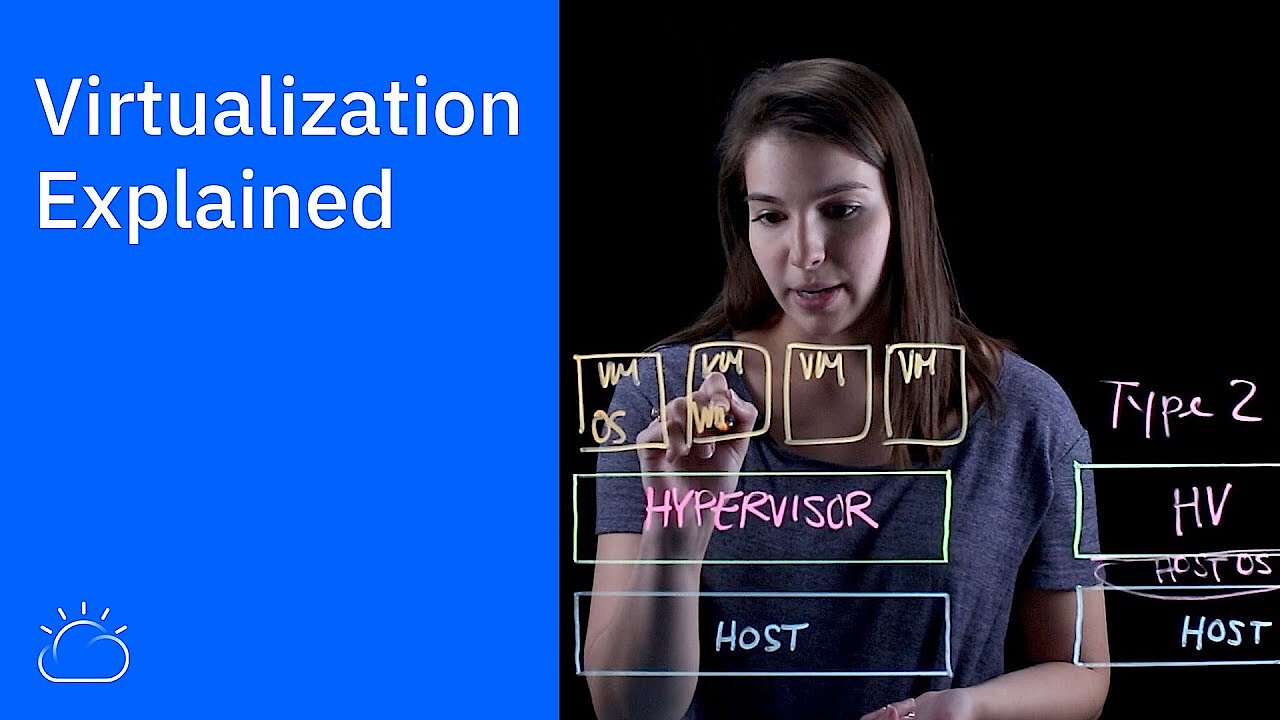
Through the virtualization of server hardware, storage and network structures, this has changed considerably. This technology has enabled providers to offer customers the ability to centrally manage resources without needing to assign dedicated hardware to the task. This ensures a significantly higher level of reliability since defective hardware can be replaced immediately. It is also much easier for both sides to add new resources or remove previously rented resources.
 To display this video, third-party cookies are required. You can access and change your cookie settings here.
 Software-defined environments go even further than standard virtualized environments. These environments are differentiated by the fact that their control logic is completely abstracted from the individual hardware components and implemented in a centralized control software application. Using the requisite interfaces and tools, providers and customers can easily operate this control unit, set up IT structures individually and scale them with precision. In addition, both sides will benefit from increased hardware performance since the hardware is not responsible for data processing.
For software-defined services, you can choose between individual packages such as software-defined storage, software-defined computing or software-defined networking and the comprehensive package software-defined data center.
Infrastructure as Code uses the previously mentioned technologies to automate the software-controlled management for various virtualized resources in order to tap into the full potential of the cloud. Subsequently, IaC should not be seen as an alternative but rather as a way to extend or optimize software-defined infrastructures.
What are the advantages and disadvantages of Infrastructure as Code?
Infrastructure as Code contributes greatly to meeting the demands of agile software development. Using pre-configured scripts, necessary changes to the infrastructure can be made at a rate which you simply cannot achieve through manual administration. These adjustments can be made in the middle of the night, on weekends and even on public holidays. This also reduces the potential for human error, especially for administrative tasks which have to be frequently repeated, because it is no longer possible to make input or typing errors. In addition to being fast and less error prone, Infrastructure as Code offers the following advantages over manual administration:
- High efficiency: IaC allows you to automate most of resource management and thus greatly contributes to optimizing the Software Development Life Cycle (SDLC), or in other words, the entire development process.
- Reusability: Once the code has been written for an infrastructure, it can be executed at any time and as often as required to deploy that infrastructure. The same also applies, for example, to sandbox environments in the development stage(s).
- Version control: If there is code, it is possible to have version control. Infrastructure as Code thus enables any changes made to an infrastructure to be tracked and documented. One of the advantages of this is that a previous set-up can easily be restored.
- Minimization of costs/effort: Automating infrastructure management saves a lot of time and money which could be better used for other things.
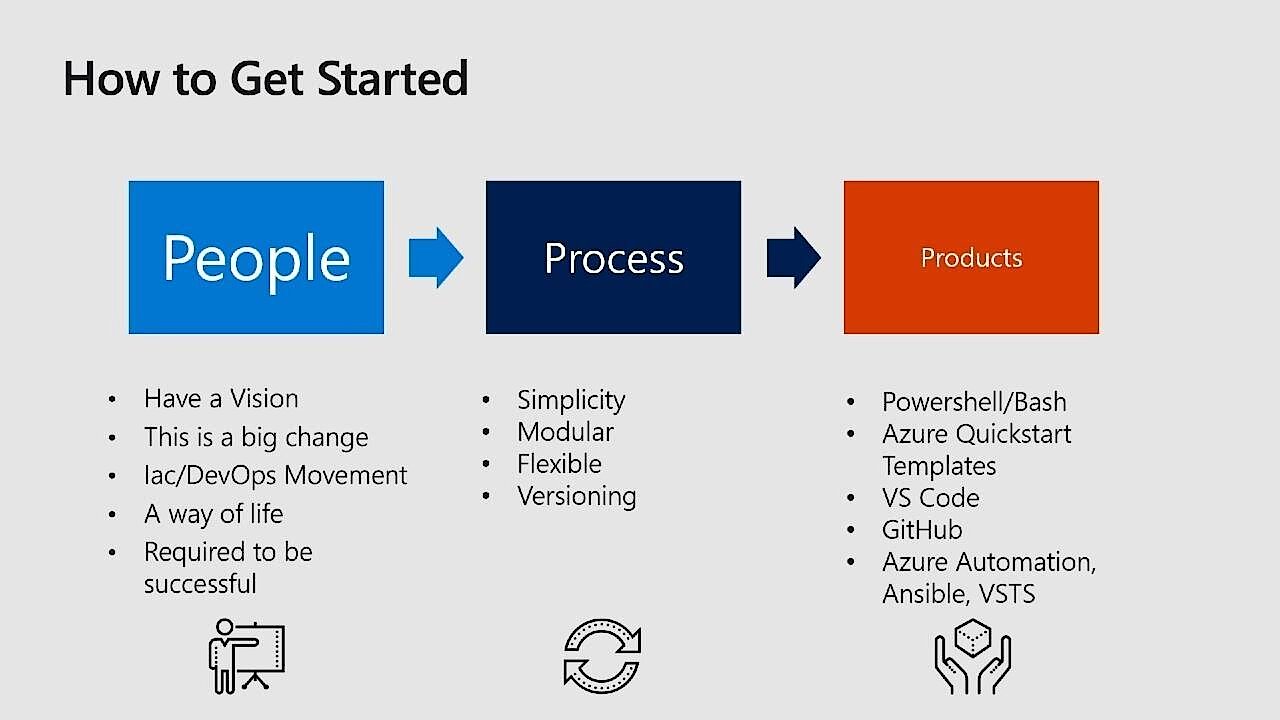
However, this last advantage does have its limits. When it comes to a properly programmed Infrastructure-as-Code environment, this advantage holds true. However, you should not underestimate the amount of effort that goes into its design and implementation. For many administrators involved, the IaC model implies there will be major changes. After all, you need a comprehensive understanding of cloud architecture concepts, experience with APIs and knowledge of programming languages such as Java, Node.js and Python (to name but a few) if you want to be able to switch to an automated infrastructure or implement one. Therefore, you must be prepared for comparatively high costs and a lot of training in the beginning.
 To display this video, third-party cookies are required. You can access and change your cookie settings here.
 IaC tools: important tools for programming Infrastructure as Code
As we mentioned previously, companies will usually use the services of multiple different IaaS providers. As a result, administrators have to deal with each platform’s quirks and, even more importantly, their different interfaces. As an alternative, there are special IaC tools or frameworks which provide their own configuration languages. These enable you to manage resources independently of providers and to eliminate the need for specific knowledge of the APIs used. The following are some of the most popular solutions:
- Terraform: It is essentially open source and was developed by HashiCorp. You can download and use the basic version of Terraform free of charge. There are two paid versions which offer features for collaboration, governance and facilities.
- AWS CloudFormation: CloudFormation is a proprietary IaC tool of Amazon Web Services (AWS), so it is basically essential for anyone working with AWS products such as ELB, S3 and EFS. There are no additional costs to use it. Users only pay for the resources they have reserved.
- Google Cloud Deployment Manager: What CloudFormation is to AWS, the Deployment Manager is to the Google Cloud platform. This means that those who receive their IaaS resources from Google can use this free tool to easily manage them via central configuration files in the markup language YAML.
- Chef Infra: Chef Infra is the American company Chef’s IaC solution. Chef Infra has been free to use under the Apache 2.0 license since April 2019 and is used by Facebook, among other companies. Supported platforms include Google Cloud, Microsoft Azure, Amazon EC2 and OpenStack.
- Red Hat Ansible Tower: The IaC tool Ansible was created by the software company Red Hat in 2015. It offers a visual dashboard, its own command interface and a powerful REST API. However, both available packages (“standard” and “premium”) are paid packages.
Examples of Infrastructure as Code:
The Infrastructure as Code model is useful for any company which develops and runs complex applications and thus requires an equally comprehensive and powerful infrastructure. The following are some of the top reasons to use a programmable infrastructure:
- You use a large amount of IaaS resources.
- Your infrastructure is rented from many different providers or platforms.
- You need to make regular adjustments to your infrastructure.
- You need proper documentation of changes made to your infrastructure.
- You want to optimize collaboration between administrators and developers.
Although some companies can and do program their own IaC configuration files, all administrators who work with IaC will likely use the above-mentioned tools and frameworks regularly. Instead of providing you with concrete examples of Infrastructure as Code here, you can watch the following clips to see how infrastructure code can be programmed using practical IaC tools such as AWS CloudFormation and Terraform.
 To display this video, third-party cookies are required. You can access and change your cookie settings here.
  To display this video, third-party cookies are required. You can access and change your cookie settings here.