

What are the best alternatives to Facebook?

Are you on the hunt for a good Facebook alternative? Whether it’s because of hidden terms and conditions, data protection issues, or platform rules and regulations – the reasons for finding an alternative to Facebook are common and more and more users are looking to avoid the Californian social media giant. But whether Twitter, Instagram or Google+, concerns and reservations about user privacy and data security prevail for most social media platforms. One common complaint targeted specifically at Facebook is that the Facebook Newsfeed algorithms decide exactly what you do and don’t see. Another problem is personalized advertising, which is of course only possible through accessing and interpreting personal user data. As you can see: the list of criticisms for the social network market leader is long. So it’s good news that there are a few other alternatives to Facebook on the market.
- Great premium TLDs at affordable prices
- Simple registration & transfer
Overview of the best alternatives to Facebook
Facebook has been and remains the undisputed king of the social network market. Facebook alternatives can be particularly impressive when it comes to data protection but they attract nowhere near the user numbers of the social media giant.
| Founded in | Users | Advertising | Data protection | |
| 2004 | Around 1.8 billion daily active users | Personalized advertising | Facebook’s constant troubles with data protection and claims to a lack of paid tax have damaged its reputation greatly in recent years. It openly admits to using user information to run targeted advertising campaigns, and it gives users the option to hand their Facebook data on to other third parties in exchange for faster registration on external sites | |
| Minds | 2015 | Around 2.5 million registered users | Not personalized | Based on decentralized blockchain technology |
| Mastodon | 2016 | Around 4.4 million registered users | Ad-free | Decentralized across different servers |
| Diaspora | 2010 | Around 800,000 registered users | Ad-free | Data can be hosted externally and privately on a private server |
| Vero | 2015 | Around 5 million registered users | Ad-free | No personal data is passed onto third parties; Private telephone number required |
| Clubhouse | 2020 | Around 10 million active weekly users | - | App accesses private contacts and may not be GDPR-compliant |
| 2005 | 52 million active daily users | Personalized ads can be deactivated | No personal data required |
All information up to date as of January 2022. The information on user numbers is partly based on older data or is a rough estimate as most social media platforms do not disclose current values.
Minds
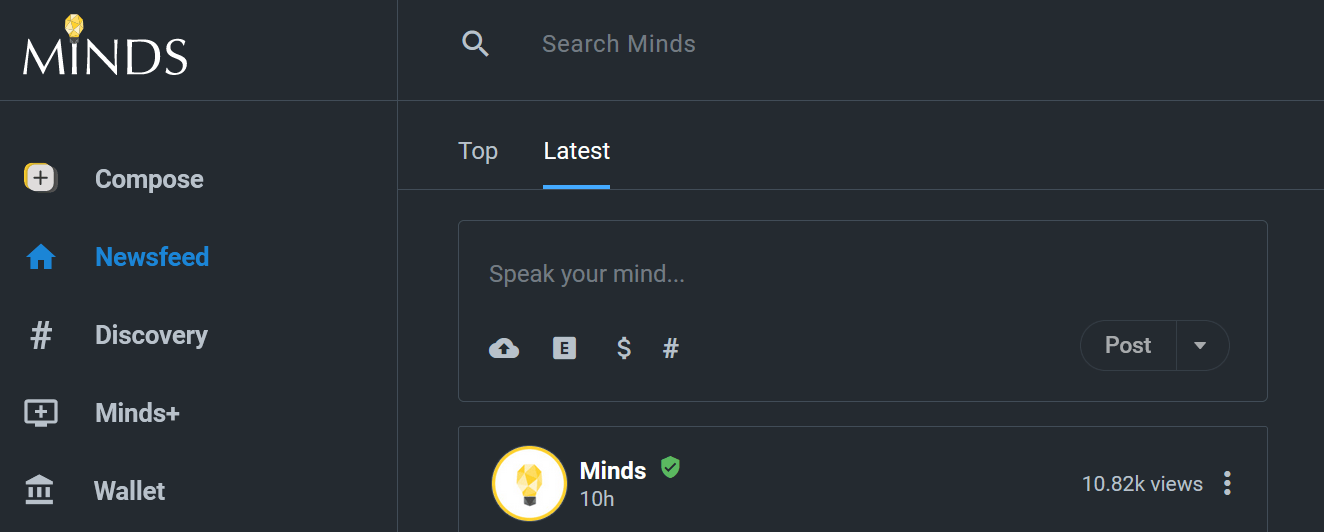
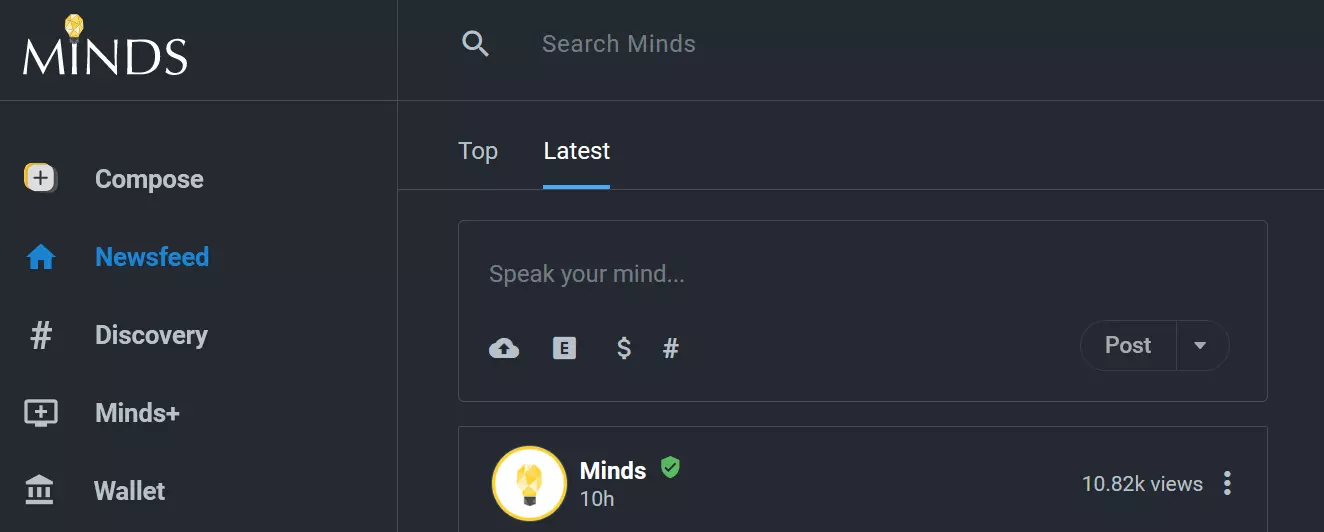
The social media platform Minds takes a modern approach. Instead of being stored on the company’s own servers, all information is stored decentralized in a blockchain. In addition, Minds is all about transparency; its code is open source and can be viewed by any expert.
On Facebook, good content tends to be rewarded through “likes”. Minds takes a different approach. Users collect tokens exchanged to expand their profile, for example, to increase their reach. In addition, users can opt to be paid in US dollars, bitcoin, or Ether. By linking content and cryptocurrencies, Minds is pursuing an idea that the art world is exploring with NFTs. Minds is monetized in part through paid subscriptions which unlock additional options.
Besides transparency and decentralization, freedom of expression is at the forefront of Minds. The platform’s developers claim they hardly ever moderate content. Posts deemed illegal are removed. As such, Minds attracts users with extreme opinions whose hate messages would be blocked on other networks.
While there are differences, Minds social media features are similar to those of competitors. Users exchange information on their personal wall or in groups. Hashtags are used to explore relevant content. The Facebook alternative can be operated from a browser and via the iOS or Android app.
| Advantages | Disadvantages |
| unfiltered, chronological timeline | attracts users with extreme opinions |
| decentralized blockchain technology | |
| interesting monetization options for users |
Mastodon
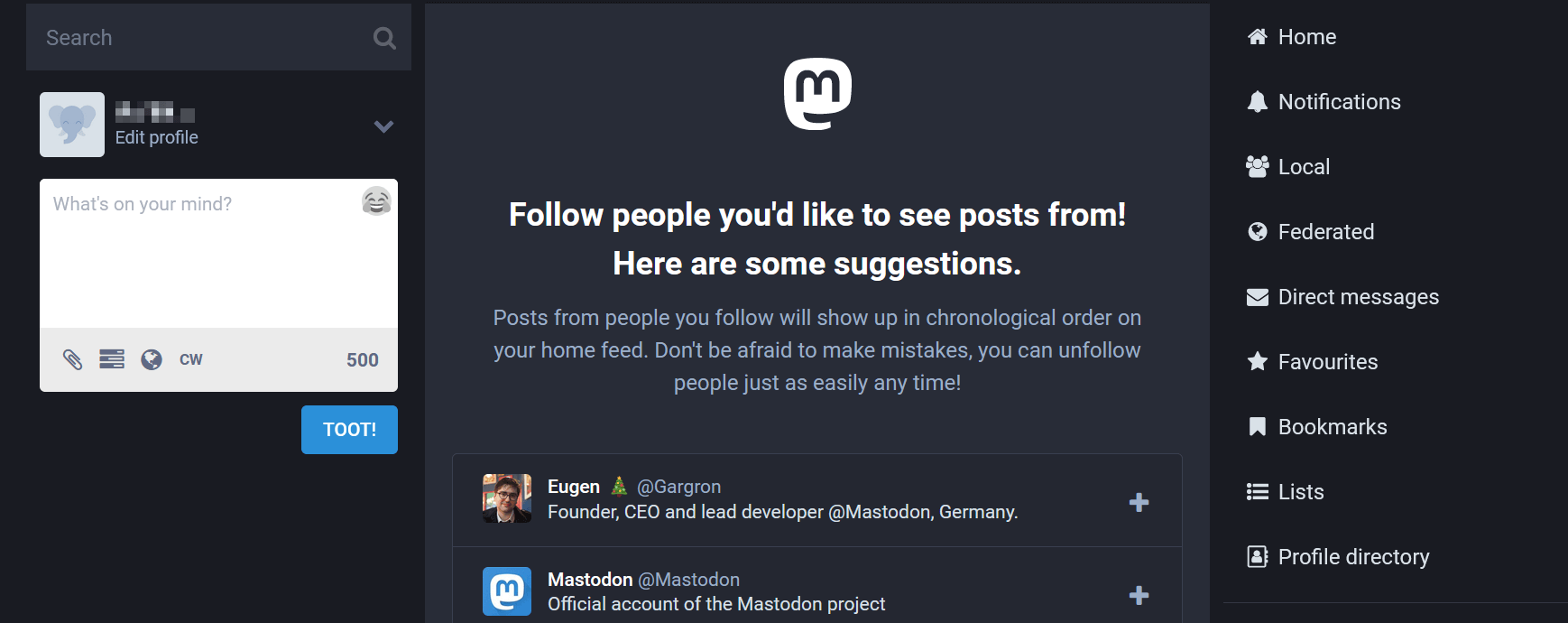
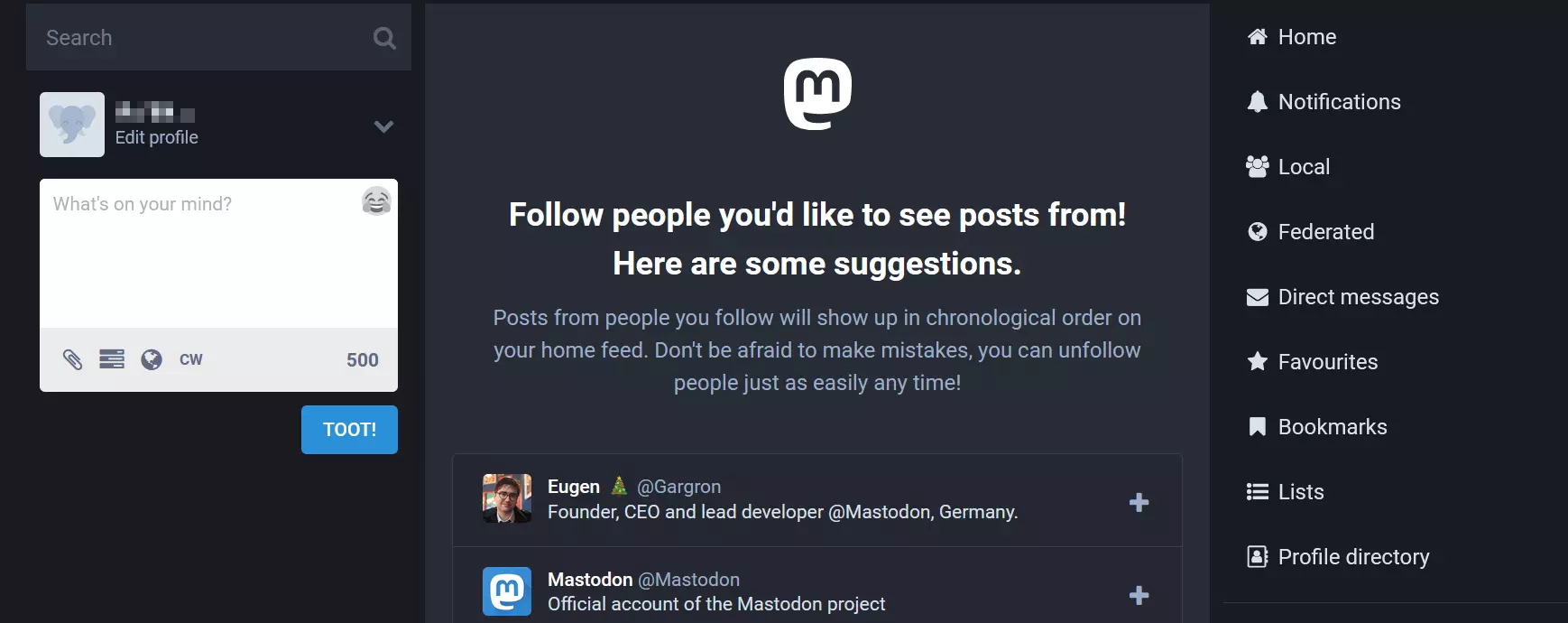
Mastodon is based on the microblogging platform Twitter. Instead of tweets, Mastodon publishes Toots of 500 characters or below in the standard version. Images, videos, and links can be shared in a Toot. However, Mastodon pursues a decentralized approach. Not all servers are operated by its developers. Instead, users can provide their own nodes. The admins of these servers (called: instances) can set up their own rules and decide whether they want to connect to the rest of the Mastodon network or use the server privately.
Much like Minds, Mastodon is open source. Anyone can view the software code and check out how their data is used. Mastodon uses the ActivityPub protocol managed by the World Wide Web Consortium (W3C). There is no algorithm to select content for users. Messages are displayed chronologically.
In addition to the web application for the browser, an iOS app is available. Thanks to the open API, users can explore numerous unofficial clients to use the network.
| Advantages | Disadvantages |
| unfiltered, chronological timeline | Few users compared to Twitter or Facebook |
| decentralized, partly via private servers | |
| ad-free |
Diaspora
Diaspora is a social world online that puts your data back in your own hands, according to its own slogan. Its range of functions is similar to those of Facebook. Users can publish status updates, share posts and images, and comment on other people’s posts. And just like on Facebook, you can control who gets to see your own posts as well. Diaspora uses hashtags to order posts, meaning that you can use these to find like-minded people who share your interests. Linking Diaspora to your Facebook profile is also possible, and the software has its own chat function. Diaspora is also an open-source project.
One of the main features that Diaspora prides itself on is its decentralization. This is to do with its technical background: the platform consists of many different networks, known as pods. User data isn’t collected and stored centrally by the provider, instead the infrastructure is distributed by users themselves, with data carried by these so-called pods. If you have good technical know-how, you can actually operate your own pod, which essentially functions as a server. This means that you can be certain that your private data remains private and in your own hands. Less technically gifted users can use ‘open pods’ in the network instead.
With an estimated 800,000 registered users, Diaspora is certainly only a very small drop in the ocean compared to Facebook. But its decentralized system and the control over your own data that comes with it makes Diaspora a definite option for users concerned about data protection. Lastly, Diaspora is completely ad-free.
| Advantages | Disadvantages |
| secure alternative to Facebook | prior programming knowledge required for managing your own pod |
| full control over private data | relatively few active users |
| decentralized system | |
| can be connected to Twitter and Tumblr |
Vero
An exciting Facebook alternative that was released in 2015, but has only recently seen a huge influx of new users, is the social network Vero. At the beginning of March 2018, for example, CEO Ayman Harari, worth billions of euros, announced an increase of more than three million users, after Vero had previously been a relatively niche app with around 200,000 active members. Not only effective influencer campaigns played an important role, but also the current offer of free lifetime membership won users over. The app, which is available for iOS, and Android, might only be available with a paid annual subscription in the future. However, the offer has been initially extended until further notice.
The annual fee, however, is intended to help out the developing company, Vero Labs, by being its main source of income. The idea is for the platform to remain free of advertising in the long run and not to share any user information to make a profit. In addition, the company generates revenue through transaction fees that merchants have to pay when selling products through Vero and implementing the “buy now” button.
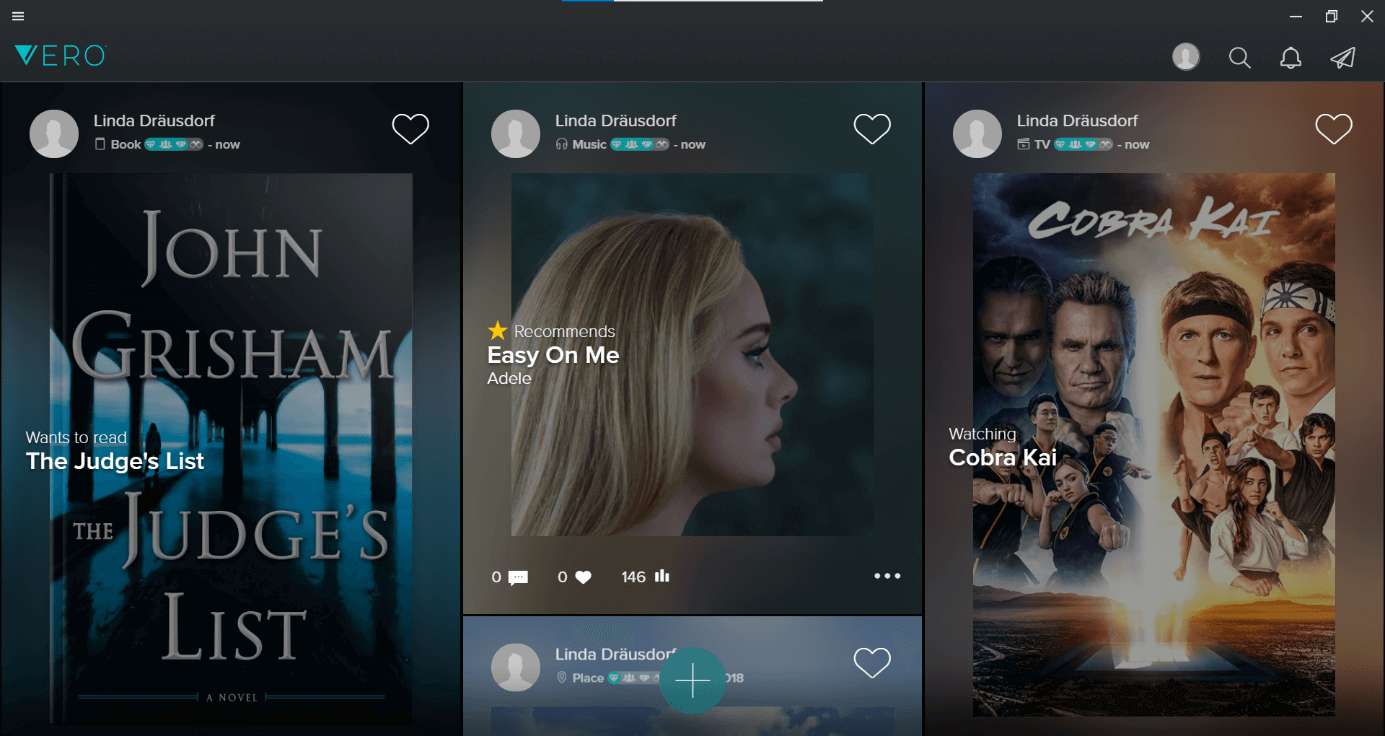
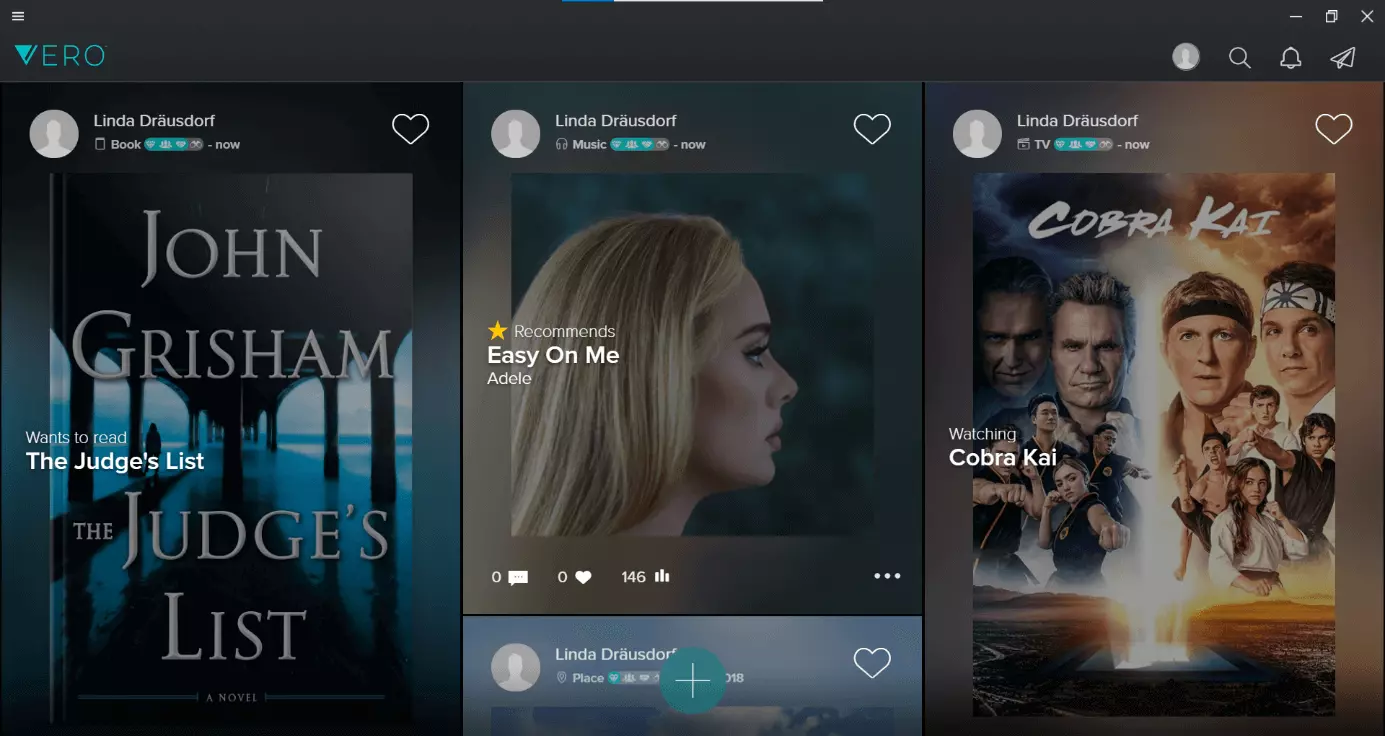
Although Vero is similar in many respects to competitors such as Facebook and Instagram (profile, structure, timeline, news feed), the platform offers some interesting unique selling points: The messages in the timeline are not pre-filtered by an algorithm, but appear in chronological order. Contacts can also be divided into four categories: “followers”, “acquaintances”, “friends”, and “close friends”. These groups can then be selected or deselected as the target group when a post is published, so that only the desired audience is informed. The app can now be used to make video calls too.
To create and verify a Vero account, a private telephone number has to be entered.
| Advantages | Disadvantages |
| unfiltered, chronologically sorted timeline | private telephone number required |
| ad-free | fee-based in the future |
Clubhouse
A mix of Messenger and podcast: The Clubhouse app attracts users through innovative features and the promise of exclusivity. The platform is based on the use of audio. While Facebook relies on images and text, Clubhouse lets users talk to one another. Users can open their own chat rooms to focus on a specific topic. They can moderate discussions or talk events with others. Listeners can raise a virtual hand and are allowed to speak using their smartphone’s microphone if a moderator permits them to.
The app was originally designed for business chats among Silicon Valley employees. Since then, the breadth of topics on the app has expanded enormously. This is in part driven by influencers who are invited to the platform to launch their own chat rooms.
Despite the elitist approach, the app’s data security has been criticized time and again. Users of the app are required to grant access to their private phone book. This means third-party data is being shared with other services. It’s not yet clear whether Clubhouse adheres to principles set out in the GDPR.
| Advantages | Disadvantages |
| innovative approach | sign-up only after invite |
| possibility for discussions on broad range of topics | data security concerns |
Stay social with the new .club domain extension. At IONOS you can register your own .club domain with just a few clicks.
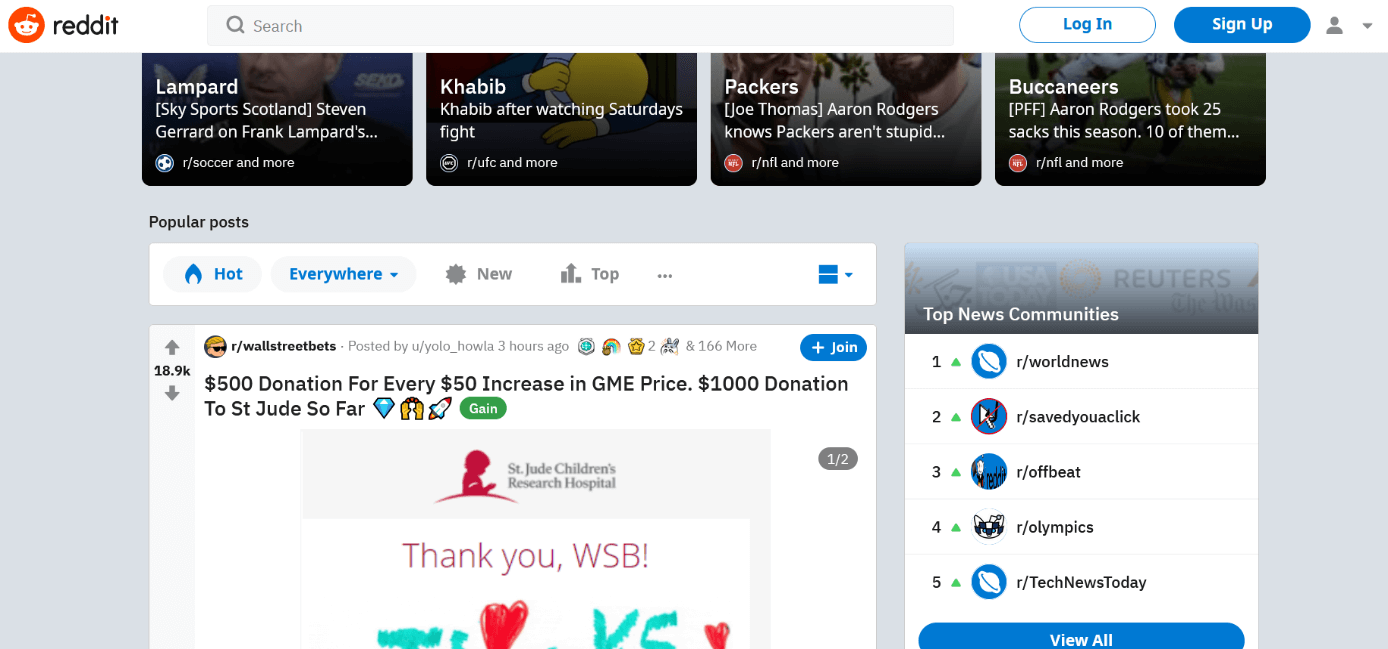
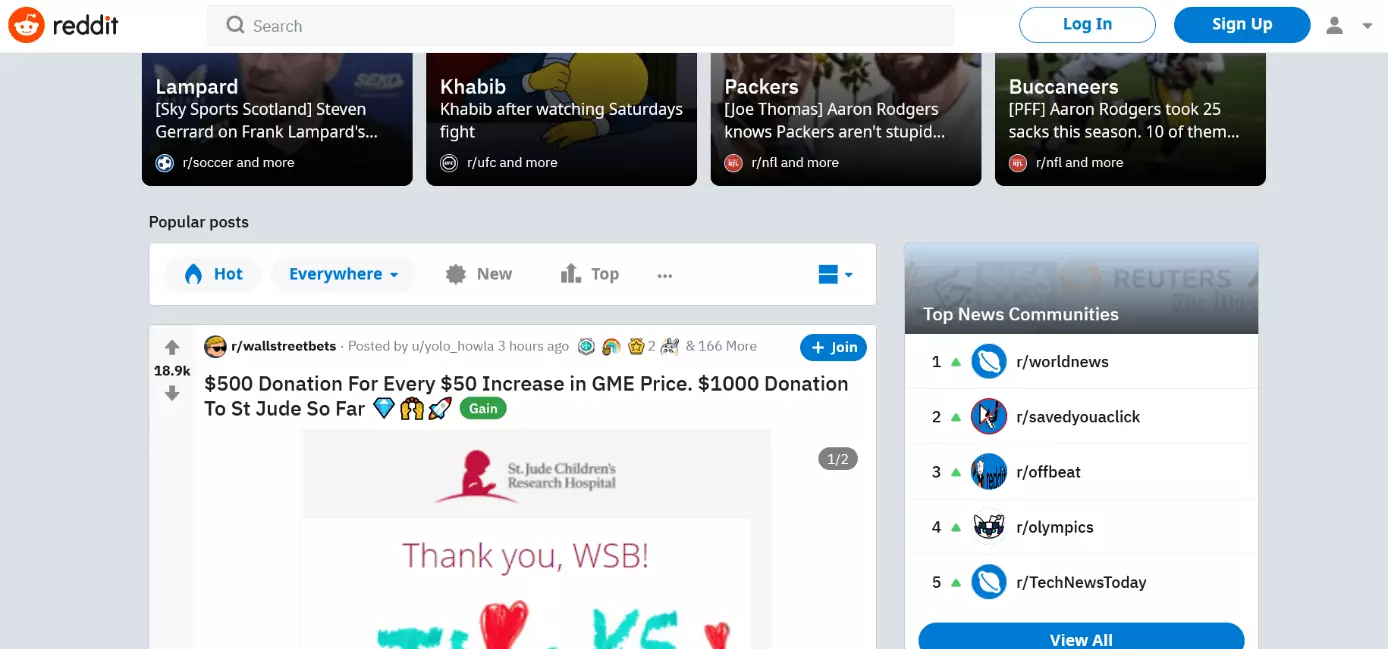
The so-called social news aggregator Reddit is an established alternative to Facebook, without ripping off some other heavyweights. The way it works is simple: users share content which can be up-voted or down-voted by others. This promotes interesting content while boring pieces quickly disappear. One incentive for this are Karma points. Users with a higher number of these virtual points are more respected across the platform.
The website is divided into sub-forums – so-called Subreddits. In terms of categories, Subreddits can be found for almost any topic of interest. From memes to popular culture to business to politics – users can exchange views on anything. Typical social media features like adding friends are not a feature of Reddit. Users do not have to join using their real names. They can sign up with any username of their choice; adding an email address is optional. The network has already enjoyed huge popularity in the US.
| Advantages | Disadvantages |
| users do not have to use their real name to sign up | few common social media functions |
| various topics |
Reviewer

Melissa Senn
Melissa Senn has been with IONOS since 2016 and focuses on the areas of websites, e-commerce, social media, and AI in the Digital Guide. As a digital strategist, she draws on her extensive SEO and GEO experience to translate complex technological trends into practical content.