

What are the best Joomla cookie consent plugins?

In order to comply with data protection regulations, it’s essential to handle cookies correctly on your website. There are a number of useful extensions for the Joomla CMS that will help you with this. These can be easily installed in the Joomla backend.
- Fast page loads while cutting costs by 60%
- Keep your site open 24/7 with 99.99% uptime
- Never run out of space with unlimited storage
Why do I see a cookie notice?
Personal user data is not typically stored directly in cookies. However, cookies—especially third-party cookies—can track user behavior across websites and may be used to collect personal data. These cookies fall under the scope of the European General Data Protection Regulation (GDPR), which aims to protect user privacy. In particular, the EU Cookie Directive requires that the use of third-party cookies, which collect data across different websites, be made more transparent to users. If your website is targeting EU individuals, you must comply with these regulations and directives.
Don’t have your own website yet? With IONOS, you can buy the perfect domain. If you’re building your site with the Joomla CMS, IONOS Joomla Hosting makes it easy to get your website online and accessible to users.
In the United States, there is no single federal law equivalent to the GDPR or Germany’s TTDSG (which stipulates that users must generally consent to the processing and collection of cookies - before they are collected). However, several states have enacted their own data privacy laws. For example, the California Consumer Privacy Act (CCPA) and its successor, the California Privacy Rights Act (CPRA), require businesses to inform users about data collection and give them the right to opt out of the sale or sharing of personal information.
Unlike the TTDSG, most U.S. regulations currently allow cookies to be set before the user gives explicit consent, as long as there’s a clear notice and a way to opt out. However, stricter opt-in requirements are starting to emerge, particularly for sensitive data or in states like Colorado, Connecticut, and Virginia.
There is also no general legal requirement in the U.S. to provide full website access without cookie consent, though this may be considered a best practice depending on your audience and industry.
Do you keep coming across the term “cookies” but don’t really know what it means? No problem! In our basic article on cookies, you’ll find all the information you need for dealing with cookies.
What are the key functions of a cookie plugin?
To comply with European data protection regulations, it’s essential to use a Joomla extension that supports key features, such as:
- Displaying a Joomla cookie notice
- Allowing users to accept or decline cookie usage
- Providing advanced customization options for user preferences
The Joomla cookie banners listed below include these features and are suitable for meeting current data protection requirements. You’ll find key details about each Joomla cookie plugin in our comparison table.
An overview of the 5 best Joomla cookie plugins
| Functions | Costs | Platforms | |
|---|---|---|---|
| CookieHint and Consent | - All types of cookies can be blocked - Customizable text and style |
Free | Joomla version 3, 4 and 5 |
| GDPR | - Complies with GDPR guidelines and other European laws - Automatic creation of a log - Various languages |
One-off fee of around $55 | Joomla version 3, 4 and 5 |
| Cookies CK | - Different languages - Creation of log files |
Free | Joomla version 3, 4 and 5 |
| Cookies Policy Notification Bar | - Database connectivity - Cookies can be blocked - Various languages - Various styles |
Various plans, starting at $39/year | Joomla versions 3, 4 and 5 |
| EU Cookies | - Freely customizable style - Easy integration of Google Analytics |
One-time fee from around $14 | Joomla versions 3, 4 and 5 |
Information correct as of February 2025
The 5 best Joomla cookie plugins in detail
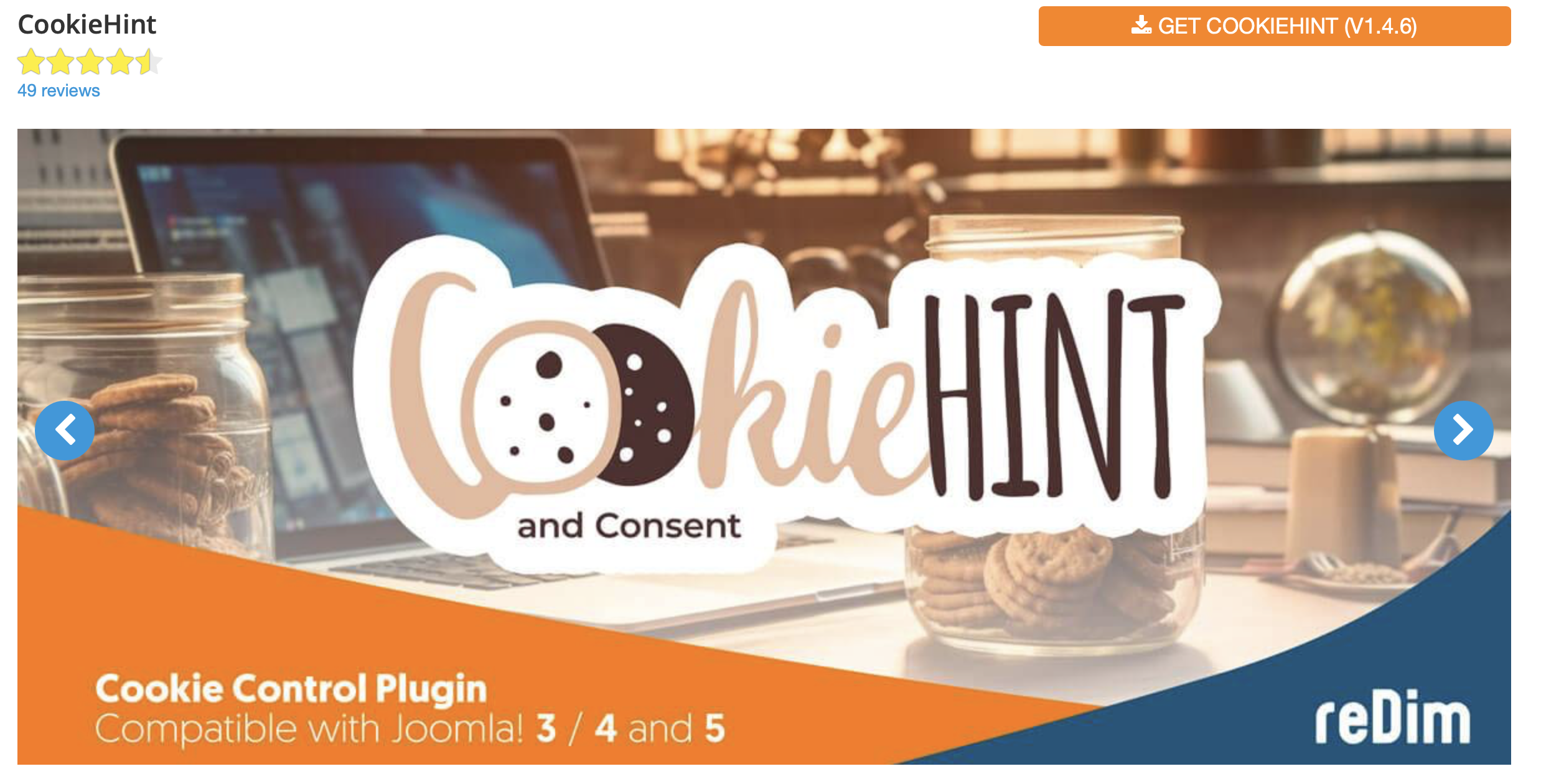
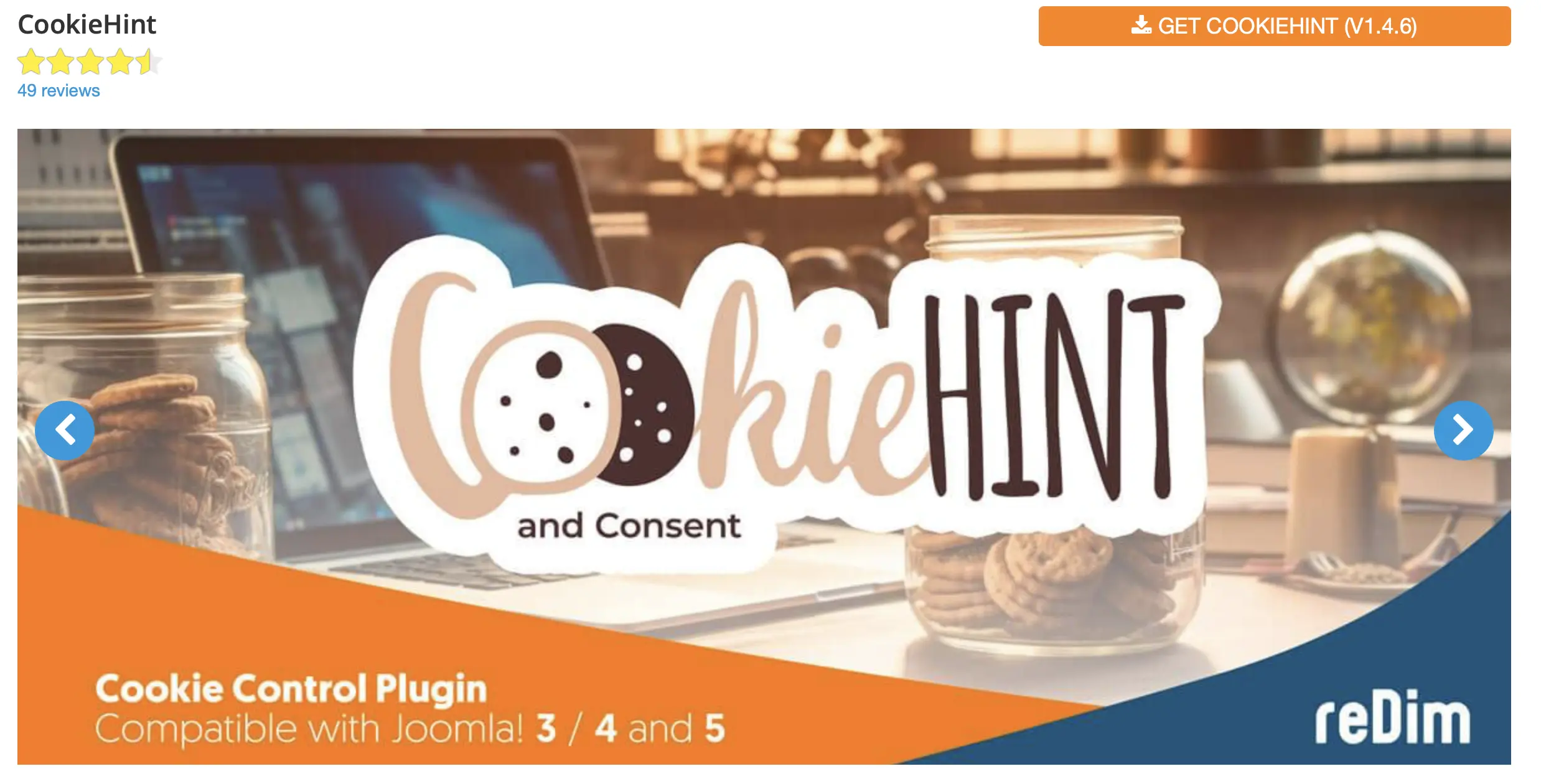
CookieHint and Consent
The Joomla cookie plugin CookieHint and Consent is a simple and free option for integrating cookie notices on your Joomla website. Both the latest and the current version of Joomla are supported. The plugin, which was specially developed for Joomla, also allows you to customize the banners to match the design of your website.
| Advantages | Disadvantages | |
|---|---|---|
| ✓ Free plugin | ✗ No creation of a log | |
| ✓ Simple application | ✗ No integration of Google Analytics or similar | |
| ✓ Supports different languages |
GDPR
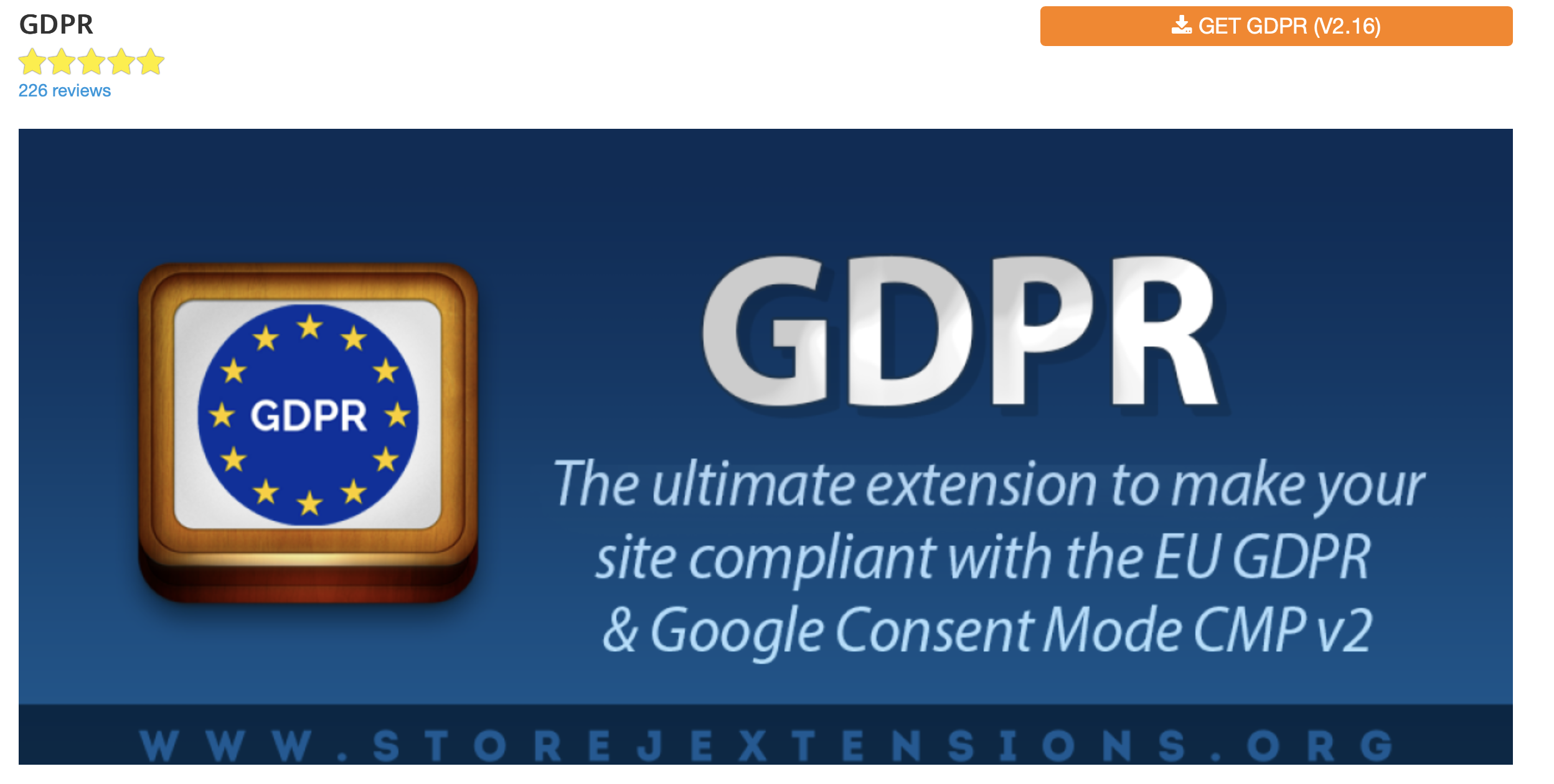
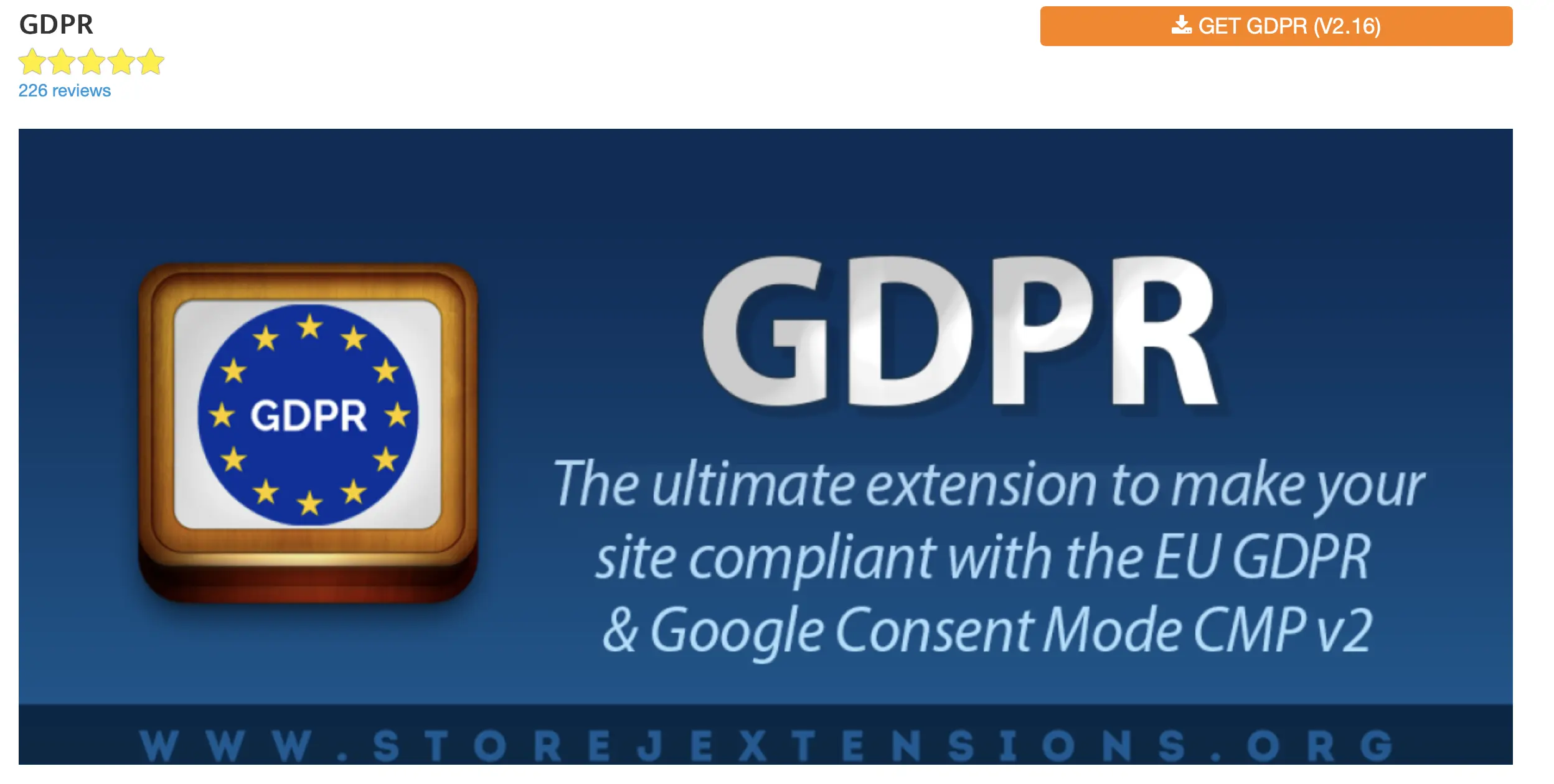
The Joomla cookie plugin, which is specifically adapted to the European General Data Protection Regulation (GDPR), can not only act as a cookie banner, but also tracks everything that happens. Whether you’re interested in users’ IP addresses or whether you want to view your users’ settings, it’s no problem with the Joomla extension GDPR. The logs created in-house can be easily viewed by the website operators.
| Advantages | Disadvantages |
|---|---|
| ✓ Customizable | ✗ Comparatively high costs |
| ✓ Creation of different logs possible | |
| ✓ Supports different languages |
Cookies CK
Another free alternative is the Cookies CK plugin, which blocks cookies until the user agrees to them. Although the setting options in terms of design are less extensive than with the paid plugins, there should still be something to suit everyone. In addition, the user’s consent is stored in a log.
| Advantages | Disadvantages |
|---|---|
| ✓ Creation of logs | ✗ Not so many design options |
| ✓ Simple operation | |
| ✓ Supports different languages |
Cookies Policy Notification Bar
The Joomla cookie banner Cookies Policy Notification Bar stands out with its database integration. It also allows you to customize the duration before cookies are automatically deleted. The Joomla extension allows you to integrate your own JavaScript and CSS code, so that customizing the plugin is simple. Special debugging options also make it easier to find any errors that may occur.
| Advantages | Disadvantages | |
|---|---|---|
| ✓ Database connection | ✗ Annual billing | |
| ✓ Integration of own code | ✗ Possibly too complicated due to detailed customization options | |
| ✓ Debugging mode |
EU Cookies
The cookie plugin EU Cookies, which is also available for WordPress, offers you various stylistic customization options as well as a simple connection to applications such as Google Analytics or Facebook Pixels. You can add your own code for these extensions as you wish.
| Advantages | Disadvantages |
|---|---|
| ✓ Stylistic adaptations | ✗ Fee-based |
| ✓ Connection to Google Analytics or similar | ✗ No logs |
| ✓ Supports different languages |
How to integrate a cookie plugin in Joomla
Which Joomla cookie plugin you ultimately choose is essentially a matter of preference. Regarding installation, there are no significant differences. Below you’ll find simple instructions for installing extensions in the Joomla backend.
Step 1: Access the backend of your Joomla website
The first step is to log in to the backend of your Joomla website. Then select System>Install>Extensions.
Step 2: Install the plugin
By clicking the “Install” button, you’ll have the opportunity to browse your computer for the plugin you wish to install. Select the desired ZIP file. The extension will then be uploaded.
In some cases, it may be necessary to unzip the ZIP file before uploading. In this case, Joomla will display an error message stating that the file was uploaded in the wrong format.
Reviewers

Julia Hertler
With over 18 years of experience in content marketing, Julia Hertler has deep expertise in digital communications. For the past 10 years, she has specialized in the areas of domains and hosting at the IONOS Digital Guide, making complex technical topics easy to understand.

Christian Heldmaier
Christian Heldmaier is an experienced online marketing and SEO specialist from Karlsruhe. He has been working as an SEO Manager at IONOS since July 2020.