Small business website builder
- Customizable templates for SMEs and the self-employed
- Industry-specific designs, content, and image library
- Free domain, SSL, and email

Why should independent businesses need a website?
In short, a small business website is crucial for getting found by potential customers. Think of your website like an online business card that’s easy to update and accessible 24/7.
After all, most people look online when they’re interested in a product or service. And if your company doesn’t have a website, then you might be missing out on potential customers searching online for a product or service like yours. If you add search engine marketing and SEO to your new website, you can increase your chances of getting found even further.
Building your own small business website means you can design it to meet your exact needs. This isn't possible with just a social media presence on Facebook, Instagram or any of the other social media platforms.
What information belongs on a small business website?
To get the most out of your small business website, there's certain information you need to include. Your site doesn’t have to be complicated with a lot of content to be successful — just listing your company's contact info is a great way to start. Here's a few things that every SME website should include:
- Contact info, business location (preferably with a map), plus a written description of how to get there
- Your mission and a little bit about what you and your team do
- Photos, logos or other images that can help people remember your company
- Links to your social media channels
- Reviews and comments from existing customers

Create your small business website with the right template
Finding the right design is key to creating your small business website. You can either get creative or choose a template and edit it to match your business. There are templates for lots of industries and just about every business or SME type.
If you need a logo for your site, create it with this free Logo Generator. A favicon is also a great idea, check out our Favicon Generator for an easy way to do this.
Still don’t have a business name? The Business Name Generator can help you find a name that you can also use for your site's domain name. Creating your small business website has never been easier with the small business website builder from IONOS.
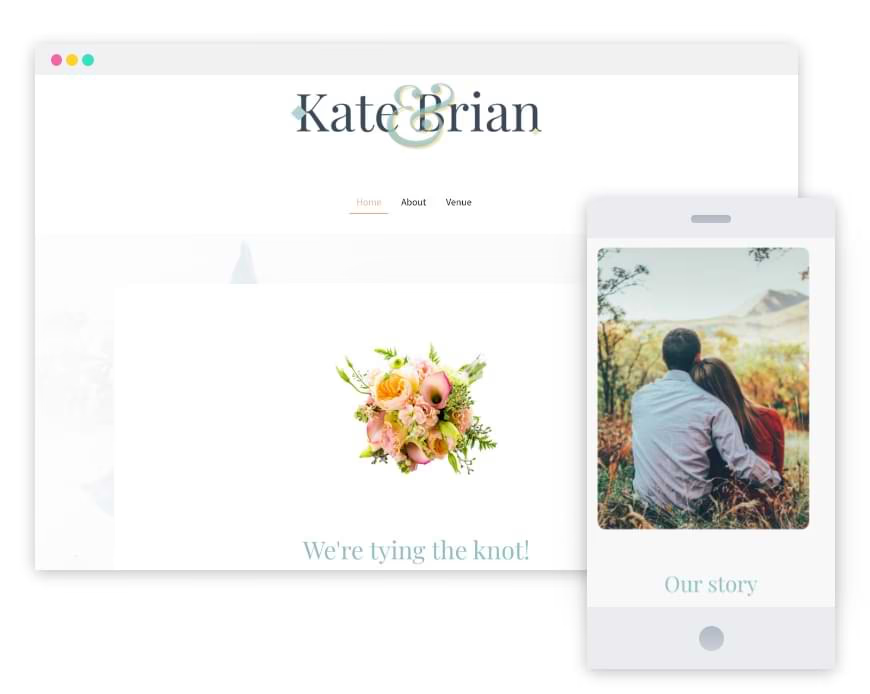
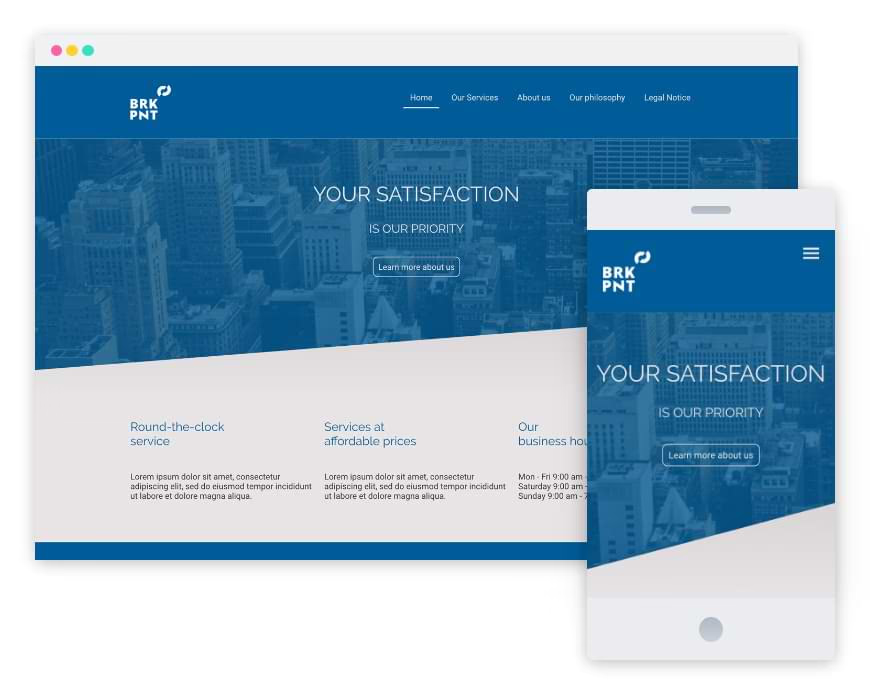
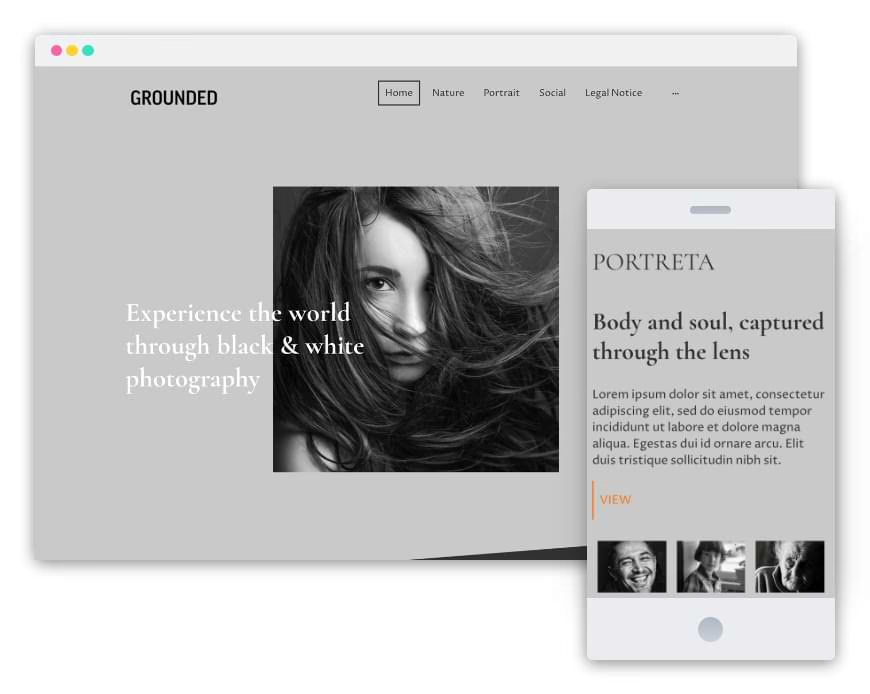
Everything you need for your online presence
Professional email
Domain and SSL
Responsive design
Easy analytics
Built-in privacy tools
Grows with you
Choose how you want to build your website
Federal and provincial sales taxes may apply. See General Terms and Conditions.

Only at IONOS
Your personal consultant
Not only do you get the latest AI tech, but you get your own personal consultant to guide you every step of the way.
24/7 expert support
Technical questions? Our award-winning experts are always available to help by phone, chat or email.
Websites for SMEs
Attracting visitors to your small business website should be one of your first goals. An easy way to get started is to fill out the company profile on your website. It contains important data such as the company’s address and email address, This not only keeps your customers up to date, but it's also really important for search engines. Keeping your contact info updated and consistent on your website can help improve your rankings.
If you want to improve your reach even further, list your businesses in popular directories with local business listings. You can verify your company profile on Google Maps, Yelp, or other directories. This way you'll be found both online and off.
You can create a website for your small and medium business in just a few steps — even if you don’t have any knowledge of programming languages like HTML or CSS. First, choose the right plan and create an account with IONOS. After you pick a custom domain, you can choose a website template. Then all you have to do is fill it with great content! The IONOS website builder makes it all simple and intuitive.
You can also be creative and design the website yourself with our small business website builder. Search engine optimization (SEO) is definitely something you should think about, especially if you want more people to find your site. In Search Engine Optimization from A to Z, you'll find some great explanations for the most common SEO terms.
All IONOS websites include an SSL certificate. This protects any data that visitor's transmit to and from your website. However, there are also other regulations that may affect your small business website.
Canada currently has its own regulation in the works, the Canadian Consumer Privacy Protection Act (CPPA). If passed, it would take over from the Personal Information Protection and Electronic Documents Act (PIPEDA) and be one of the strictest privacy laws in the world. Fines could be as much as 3% of an organization’s worldwide annual revenue or up to 10 million Canadian dollars.
You are required to obtain user consent and be clear about how a user’s data is collected and used. You can do this with a privacy policy. If a user requests access to their personal data, you must be able to provide it to them. The same applies to deleting their data if they ask.
Although the General Data Protection Regulation or GDPR is largely an European Union (EU) initiative, if your website handles data from visitors who live in the EU, then your website has to comply with the GDPR.
 Website with your own domain
 Domain name generator
 Create a business website
 Free online store
 Free Website Hosting
 PrestaShop hosting
 Mobile website
 .shop domain
 .pro domain
 Clan website
 Business hosting
 Server hosting
 Email hosting
